
Effects pedals have always gone hand in hand with electric guitars and amplifiers to produce everything from sumptuous ambience to wild, cascading distortion. Acoustics don’t necessarily have that same historic relationship with pedals. The thing is, a huge proportion of the acoustic guitar market will now come equipped with a pickup and preamp, allowing you to plug your acoustic into an amplifier, PA, or today’s subject, the best acoustic guitar pedals.
Truthfully, there’s no singular ‘best’ pedal for acoustic guitar; it just depends on what you want to do with your tone. If you’re looking for an acoustic preamp pedal, then check out the Fishman Aura Spectrum. If it’s reverb you're after, I love the EQD Avalanche Run. For those who need a looper, have a look at the Pigtronix Infinity II.
If you’re unsure of which pedal is best for you, visit the how to choose section below. If you have any other questions, scroll down to the FAQ section, where it might already have been answered by the gear nuts here at Guitar Player. I’ve also included a glossary of key terms for complete beginners, which breaks down the techno-babble frequently used when discussing acoustic pedals.
Best acoustic preamp

👟 Excellent for performers looking to shape their tone to their perfect specifications, but really any acoustic player.
✅ Buy if: You’re looking for an all-in-one, ‘make me sound great’, acoustic pedal.
❌ Avoid if: You already have a compressor and EQ pedal, as you may not make the most out of the Aura’s functionality.
Overview
Fishman is among the most revered brand names when it comes to electronics for acoustic guitars, be that integrated preamps, pickups, or, in this instance, pedals. The Aura Spectrum DI Preamp is a surefire way to get consistent live (and recorded) sounds out of your acoustic guitar at every single gig.
Build quality
The Aura Spectrum is definitely designed to be taken on the road, with a durable all-metal construction that is made to last. While you can easily adjust on the fly, I see the Aura as a perfect set-and-forget pedal, with the ability to access an unlimited number of acoustic sounds via the Aura gallery and apply them to 16 user preset slots, build your presets, and guarantee great tones.
Usability
Despite its powerful tone shaping, the Aura Spectrum is extremely easy to use, with every knob and control simply labelled, so you’ll struggle to go wrong. The addition of EQ, compressor, feedback suppressor, and even a tuner makes this an all-in-one dynamic and tonal-shaping solution, particularly for live performance.
Sounds
But it isn’t just good for live; the fact of the matter is that an acoustic guitar plugged in anywhere rarely sounds like it does unplugged, but the Aura makes sure this isn’t the case. Utilizing the sound of your acoustic’s pickup and transforms it into a far more organic, mic’d-up sound. That doesn’t mean you can’t have plenty of your original tone, though, with a blend control to balance the two. It pretty much guarantees perfect acoustic tones wherever you are, so it could also be ideal for the recording studio.
Best reverb

👟 If you’re looking to add a never-ending array of ambient sound to your acoustic, including not only reverb, but delay too.
✅ Buy if: You want to combine delay and reverb to create huge soundscapes.
❌ Avoid if: You’re not interested in one of either reverb or delay, there are plenty of standalone options for each.
Overview
Your one-stop shop for ambience and described by Earthquaker Devices as a “dreamy stereosonic exploratory multi-tool” – I usually take manufacturers’ descriptions with a pinch of salt, but in this instance, I’d say they’re spot on. The Avalanche Run has delay and reverb integrated, plus it’s stereo, so if you want to transform your acoustic’s tone into something truly enormous, this is the pedal for you.
Build quality
Built with a dual footswitch design, with each engaging the effect and the tap tempo functions respectively, the Avalanche Run isn’t a small pedal, but considering it has two effects in one, it takes up significantly less real estate than standalone delay and reverb pedals. It also features unique Flexi-Switch® Technology which allows you to simultaneously use momentary and latching style switching, which is a cool addition.
Usability
At first glance, the Avalanche Run might seem a little bit intimidating, but in practice it’s very quick to achieve great results. The expression control is a nice option, giving you the ability to grow your ambience from distant to engulfing with the rock of your foot on an (external) expression pedal. Another thing I’d recommend exploring is the pedal’s ins and outs, which have some secret tricks to provide some quirky stereo output options, including all-wet left and standard mixed right-hand channels.
Sound
The specific types of ambience that the Avalanche Run produces are virtually limitless, with options that include reverse delay, sound-on-sound lo-fi looping, swells, and so much more. The drawback being that there is so much to choose from that it may be more than many need; however, if sending your sound to space is what you’re looking for, this is the pedal for you.
Best looper

👟 Any player who is serious about practice or performance, particularly those who are looking to add additional creativity to their songwriting.
✅ Buy if: You want to take looping seriously and want a lot of control over your loops.
❌ Avoid if: You want the simplest looper around, there are much simpler options.
Overview
Loopers and acoustic guitars go better than cereal and milk. You’ve got players like Ed Sheeran who have massively commercialized the world of loopers, bringing about the arrival of some seriously powerful and complex loopers, which, frankly, totally terrify me and take a lot of the fun out of looping. The Pigtronix Infinity II Hi-Fi Double Looper is the perfect combination of (relative) simplicity and professional-standard. Just as good when used at home or for live performance.
Build quality
I love the feel of the large ‘Decay’ and ‘Volume’ knobs, made from solid metal with round engraving on the top – little details, but it makes it feel special. The rest of the build is equally solid, with a metal chassis and classic, rugged switches.
Usability
Operation isn’t quite as simple as on some single looper pedals, so if you want extreme ease, then perhaps look elsewhere, but after a brief play, I found the Infinity II to be pretty straightforward, with a combination of six controls/functions that were easy to navigate.
Sound
Pigtronix has made it clear that the Infinity II has hi-fi audio quality, meaning your audio doesn’t degrade when looped. The standout, fun audio effect is the ‘Octave’ mode, which switches the sample rate from 48kHz down to 24kHz, dropping the sound by an octave in the process.

Ambient loopers will appreciate the latter, as it will allow separate processing of the loop, but it’s solo performers of song-style material who will get the most from Infinity 2. With instant switching that makes hitting those turnarounds easy, a fabulous form factor and an affordable price tag, this pedal earns an Editors’ Pick Award.
Read more: Pigtronix Infinity 2 review
Best compressor

👟 The player who is looking to tighten up and refine their sound, rather than totally transform it.
✅ Buy if: You want a compressor that specializes in acoustic guitar and takes up only a little room on your board.
❌ Avoid if: You want lots of control over the parameters, the two knob design is effective, but some players may want more.
Overview
There are a huge number of brilliant compressor pedals that work superbly with acoustic guitars, but my choice would always be to go with a pedal that is optimized for your instrument, which is why the AFX AcoustiComp Mini Compressor from acoustic experts Fishman is my go-to choice for an acoustic compressor pedal.
Build quality
Built into a compact form factor at just 1.9” wide and 3.8” tall, this would easily fit on most pedalboards, and if it’s the only pedal you use, it will fit in most guitar cases. The tough aluminium enclosure will also mean it travels well.
Usability
I think what I like about it most is its simplicity in operation, with just two knobs controlling the effect. Fishman have made some decisions internally to make sure that wherever you set your controls, you can pretty much guarantee that the compressor will sound great, so it’s ideal for those new to effects, and particularly compressors, which can take some getting used to.
Sound
Tuned specifically to add more subtle compression to your acoustic, the ‘Comp’ knob can be turned up to provide a fatter sound, or backed off for a lighter compression that is ideal for sitting in the mix. The level control can help you balance it with your dry sound, making it seamless when you engage the compressor, rather than there being large volume jumps.
Best delay

👟 If you want to add expressive swells of ambience to your sound in a controlled and performed manner.
✅ Buy if: You want control of your delay tones, being able to introduce it gradually, and change on the fly.
❌ Avoid if: You are lacking real estate on your pedalboard; this isn’t a small pedal.
Overview
Unconventional at first glance but absolutely perfect in application for acoustic guitars, the Ernie Ball Ambient Delay is an expression-pedal-based delay that allows you to gradually engage the effect, creating big swells of delay.
Build quality
The Ambient Delay is extremely solid, being made from aircraft aluminum, and the hinge feels particularly smooth, while the top of the pedal has a non-slip surface, so it can be used with confidence. The only downside is that it takes up a lot of room on a pedalboard – though less than a delay with an additional expression pedal, so it may work out as a more efficient use of space. If you do want to introduce a secondary pedal, it does have a tap-tempo input.
Usability
The biggest selling point of the ambient delay is its versatility, with delay time, delay feedback, and reverb level controls giving you a broad ambient palette, but when combined with the foot-sweepable effect level control, things go to another level. The ability to adjust the level of your sound in real time is above anything traditional on/off pedals can create. Using the foot-sweep takes a little bit of getting used to for those who aren’t used to expression pedals, but you’ll pick it up quickly.
Sound
The sound from this thing is big and can only be described as “lush”. The plate reverb is particularly special and pairs really well with the delay, which can be anything from a short slapback to a big 1-second echo.
Best chorus

👟 If you want to add one of the most legendary and recognisable effects ever to your acoustic to totally transform your sound.
✅ Buy if: You’re looking for timeless chorus tones, plus a vibrato function.
❌ Avoid if: You are trying to find a more subtle ensemble effect, the CE-2W is a classic, but can be a bit over-the-top.
Overview
When it comes to effects pedals, there’s nobody more legendary than Boss, and of all their pedals, there’s an argument that the CE-2 chorus sits at the top of the pile. The CE-2W is the modern reissue of the pedal coming out of Boss’s Waza division – their “premium” department – featuring the same classic sounds as the original, but topped with additional features.
Build quality
The first thing you’ll notice about this pedal is that it is, of course, constructed with Boss’s legendary build quality. There’s absolutely no reason that the CE-2W won’t last for the next 40 years, even if you’re taking it out on the road with you, so in terms of a long-term investment, it’s about as smart as you can make in the world of pedals.
Usability
If you are new to the world of acoustic pedals, as a “starter effect”, it may be a little on the expensive side, but it is extremely simple, with just two knobs – rate and depth – making it very easy to get your head around. There are three switchable sound options, with two variations of chorus, plus a vibrato.
Sound
While all of the modes sound brilliant, the standout for me is the vibrato setting, particularly when paired with acoustic guitar. This adds a beautiful wobble to your sound when dialled in gently, which can be really impactful, despite it being subtle. Of course, it doesn’t have to be that reserved, and there is an option to go pretty outlandish with either the chorus or vibrato effects, which makes for a lot of fun.
Also consider
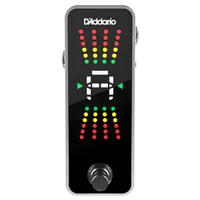
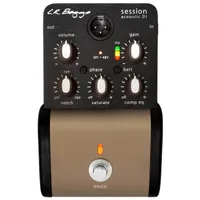
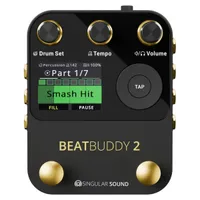
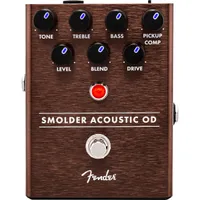
If you didn't find what you were looking for above, here are some more great acoustic guitar pedals for you to have a look at.
How to choose

Choosing pedals for acoustic guitars isn’t unlike choosing pedals for electric guitars – if there’s a sound you’re aiming to achieve, there’s almost certainly a pedal out there that can help you get close to that goal. However, there are always a few things I like to consider when buying an acoustic pedal, which I’ve shared below to help you choose.
1. Starting out
You can trust Guitar Player. Our expert reviewers spend hours testing and comparing guitar products so you can choose the best for you. Find out more about how we test.
This might seem obvious, but, if you’re anything like me, I’ll buy a pedal on impulse without really thinking about what I’m trying to achieve, which can be fun if you’ve already got a plethora of other pedals to choose from, but if you’re delving into acoustic effects for the first time, there are a few really good places to start depending on your goal.
In the world of acoustic pedals, you might be looking for a consistent live sound, without having to rely on the sound engineer, or you could add a different feeling to your existing sound – to put it in simpler terms, you are likely buying a preamp/tone-shaping pedal, or buying an effects pedal. While both sit at your feet and can be stomped on, they achieve different things, and both can work excellently together too.
If you’re new to acoustic guitar pedals, consider what your priority is and choose that. And don’t forget to make sure to put a tuner pedal somewhere towards the top of your list too.
2. Signal chain
Whether I’m buying a pedal for electric or acoustic, I try to consider where exactly this pedal is going to sit in my signal chain. There’s no harm in moving things around, but it’s nice to try and work out exactly where a pedal is going to fit in your chain before you buy.
For example, if you play with an acoustic amp and are buying a delay pedal, does your amp have an effects loop? Or perhaps you are happy with it going into the front end of your amp? You should also consider any other pedals you may have and how these could work together. There’s nothing worse than buying a new pedal and finding out it doesn’t play nice with one of your old favorites.
3. Feedback issues
Acoustic guitars when plugged in are generally prone to feedback even before you add any pedals to the signal chain, and those issues are only exacerbated when pedals come into the mix – particularly pedals with any kind of gain. If you want to add some dirt to your acoustic, I’d definitely consider pairing that with an EQ or notch filter, both of which can be used to mitigate feedback.
FAQs

Should I get a DI/preamp pedal for my acoustic guitar?
If you play live regularly, I think a preamp pedal with DI is a wise investment as it means you can be pretty much certain that your amplified tone is going to sound good, without having to rely on the sound technician. An acoustic preamp will also have a DI that is optimized for acoustic guitars – most venues should have DI boxes that will suit acoustics anyway, but don’t take it as a given.
Where in the chain do I put reverb, delay, and chorus pedals?
Generally, time-based effects (reverb and delay) go right at the end of your chain, with modulation such as chorus, just in front of it. Bear in mind that pedals run one into another, so if you put chorus after reverb, the whole ambient sound of your reverb will be affected, which may sound muddy. There’s technically no right or wrong though, and some players have achieved amazing sounds by running unconventional chains.
Should my pedals go before or after my preamp/DI?
Generally, I’d place all my effects after my preamp/DI or in its effects loop (if it has one) as you wouldn’t want them to be impacted by the tone shaping on the preamp. That being said, if you want your effects to be sent to the mixing desk at a show (via the DI) you will want to have them in front of the preamp. Again, despite what some people will tell you, there’s no right or wrong way to order your pedals, but consider what is getting sent to the sound technician and what isn’t.
Do I need a buffer for my piezo pickup?
It’s a smart idea to invest in a buffer for your piezo pickup, as they are very high impedance and if connected straight into an amplifier/PA, they can produce a particularly tinny or harsh sound. A buffer helps to lower the impedance, which makes the piezo’s response sound much fuller.
Are chorus and tremolo good for acoustic guitar?
I’m a huge fan of tremolo on acoustic guitar, it gives a lovely movement to your sound, particularly if you play lots of strummed chords. For finger picking with lots of nuanced and delicate notes, it may not work quite as well, but I’d still encourage experimenting with it as an effect.
Chorus is another really interesting effect for acoustic, which, when used right, can give you a sort of 12-string quality to your acoustic. While super outlandish chorus might be a bit over-the-top for acoustic, I’m a big advocate for some subtle use of chorus with acoustic guitar.
Can I use overdrive pedals with an acoustic guitar?
You absolutely can use overdrive pedals with acoustic guitar, and it can also achieve some pretty cool tones, however, beware feedback. The addition of gain into your signal chain can accentuate feedback, which is notoriously particularly bad with the resonant, hollow body of an acoustic guitar anyway.
How do I avoid feedback when using pedals on stage?
over the topFeedback feels like a bit of an inevitability with acoustic guitars when mixed with effects, but there are several steps you can take to mitigate and even eradicate it. Firstly and, potentially, easiest is to simply move yourself away from the amplified sound source for your acoustic – certainly don’t point the sound hole directly at the speaker producing your sound.
In small venues, being totally away from the amplified sound source might not be a possibility, particularly if using foldback monitors, in which case, using a soundhold blocker can help to lessen feedback, particularly when used with electronic assistance from EQs to cut the problem feedback frequencies or a dedicated notch filter (which performs the same function).
Most good sound technicians will be able to help with feedback issues directly, sweeping for any resonant frequencies and reducing them on their own EQ, however I’d always prefer to go prepared to deal with feedback myself.
A final option may be to use a noise gate pedal, though some players may find this is a little over-the-top for their needs. I would suggest this is a last resort or something that players who use distortion pedals regularly consider.
Which pedals are best for finger style?
For finger-style guitar, my favorite pedal to enlist is a compressor. It may not have the same kind of drastic impact on tone that distortion, modulation, or time-based effects pedals might have, but if dialled in correctly, a compressor can have a profound impact on your sound – many consider the best compressor pedals as always-on, “more-better” pedals, which elevate your sound to a consistent, well-defined tone that is smoother and better balanced.
Can I use electric guitar pedals on acoustic guitar?
Absolutely. You can use the vast majority of electric guitar pedals on acoustic – several of the pedals featured in this guide will have been made with electric guitar in mind, but happen to work just as well with acoustic. Bear in mind that electric and acoustic guitars have significantly different characteristics, so don’t expect every pedal to sound exactly like it would between each type of guitar interchangeably, for example fuzz can be a really fun effect to use on acoustic, but the results will be different from using an electric, with the effect often sounding more extreme, particularly in the lower end of the frequency spectrum.
Key terms
- Buffer: A device that can be found in some pedals or available standalone that converts a guitar's weak signal into a strong signal (by altering the impedance from high to low), helping to ensure it keeps its original tone and tone suck (the loss of high end).
- Chorus: An effect that produces a copy of the guitar signal but slightly adjusts the pitch and timing and then blends it back in with the original signal. This creates a dreamy sound that loosely replicates the sound of multiple instruments playing at once (ensemble).
- Compressor: A dynamic processing effect that brings up the low dynamics and brings down the high peaks, producing a slightly squashed, more consistent sound with more sustain to your sound.
- DI (Direct Input): Plugging your guitar straight into a DI is taking the raw, unprocessed signal and converting it into a balanced signal, preventing noise and preparing it to be sent to a mixing desk/PA system.
- EQ (Equalizer): A system to alter specific frequency bands of a sound to either boost or reduce those frequencies.
- Feedback: The phenomenon of a sound source being picked up by a pickup or microphone, being amplified, and then being picked up again in a loop, creating a screeching noise.
- Looper: A pedal that engages a record function on the first stomp and a playback function on the second stomp, creating a loop for the player to playback to.
- Modulation: An effects pedal that alters the guitar's signal over time, changing its pitch or amplitude. Chorus, phasers, and flangers are modulation effects.
- Notch filter: A filter used to remove unwanted, resonant/feedback frequencies from your playing. It is named ‘notch filter’ as on an EQ, it would look like a small notch downwards to remove only the specific unwanted frequency, and not impact the rest of the tone.
- Overdrive: A pedal that adds gain to your acoustic signal, introducing dirt and grit. This is more commonly used with electric guitars, but can have a great impact with acoustics, though can cause problematic feedback.
- Phaser/flanger: Phasers and flangers are modulation effects pedals that use a low-frequency oscillator (LFO) to create a swirling, sweeping, or "jet plane" sound by altering phase shifts or delay times.
- Piezo: A type of pickup technology that converts the acoustic guitar's string vibrations into an electrical signal, allowing the instrument to be plugged into an amplifier.
- Preamp: A device that boosts the weak signal from a guitar's pickup or internal microphone to a level that allows it to be amplified by a PA system or amplifier without being noisy or distorted. Many preamps also provide features like EQ controls for shaping your tone. Preamp pedals will also generally have a built-in DI.
- Reverb: An ambient effect that replicates the feeling of space. There are different types of reverb, including hall, plate, and spring (among others).
- Signal chain: The order in which your guitar signal flows from source – playing your guitar – to its end destination – generally, an amp or PA – between this there may be pedals, which are often placed in a specific order to have an optimized signal chain e.g., distortion/gain before time-based effects.
- Stereo: A sound that is across two channels - Left and Right. Some effects will convert your sound to stereo.
- Tremolo: An amplitude modulation effect, which quickly shifts your volume between loud and quiet, creating a fluttering effect.
How we test

When testing the best acoustic guitar pedals, we'll take the same process that we would take with any guitar pedal. We'll always try and spend at least a couple of weeks with any pedal to ensure that we get over the honeymoon period.
First, we'll look at the build quality of the unit in question. Guitar pedals need to be able to put up with plenty of abuse, espeically if you're playing them live, so we'll be sure to closely inspect every aspect of its build and all the components. We'll test footswitches, knobs, and regular switches for sturdiness, and of course we'll be sure to stomp the pedal repeatedly to test its durability.
Next we'll actually use the pedal in a variety of scenarios to see how easy or difficult it is to get the sounds out of it. From playing in the rehearsal room to taking pedals on stage, these tests are all about how it is to live with the pedal. We'll tweak every knob, press every button, and even open the pedal up to access the internal dip switches if necessary.
Finally, depending on what kind of pedal it is, we'll look at the overall sound. This is a very subjective thing, so each pedal is a different case. However, our review team has a lot of experience using different guitar pedals, so that helps us make a judgement on where a particular pedal might sit versus others in the same genre, or when comparing pedals of different types.
Read more on how we test gear and service at Guitar Player

