


In the pursuit of perfect tone, it might seem counterintuitive to invest in something that is designed to silence your guitar, but the best noise gate pedals can work with your tone to enhance it by removing unwanted noise or hum. The noise gate is a simple concept, and its name is pretty self-explanatory: a ‘gate’ opens and closes to allow or stop noise from going through. It’s really as simple as that.
Having experimented with my fair share of noise gate pedals over 20 years of playing, I’ve developed a keen understanding of what works and what doesn’t. Working in a busy guitar store for nearly 10 years has allowed me to interact with a plethora of different guitarists whose styles vary drastically, and whose use of the noise gate ranges from utilitarian to outright wacky. Relying on this experience, I’ve selected the best possible options for guitarists today.
For those after the best of the best, look no further than the Boss NS-1X. Part of Boss’s premium X-Series, the NS-1X takes everything great about the standard edition and utilizes advanced Multi-Dimensional Processing for better response and expressiveness. For those looking to save a buck, the TC Electronic Iron Curtain is a great option. For ease of use, build quality, and affordability, it’s a no-brainer.
If you’re just foraying into noise gates, I’ve written a helpful how to choose section for beginners, while the FAQ and our glossary of key terms cover common questions, address jargon, and help you make an informed decision. Without further ado, let’s take a look at the best noise gate pedals on the market.
My top picks

The best noise gate you can buy comes from the stompbox masters, Boss. Their NS-1X is a premium offering that delivers everything you could want from a noise gate with forensic tweakability, which is perfect for those who are serious about cutting noise from their sound, even when using the heaviest gain.

The TC Electronic Iron Curtain is an ideal entry-level noise gate that’s simple in operation and ideal for those looking for an affordable and elegant solution for removing noise without busting the bank or those interested in testing out a noise gate for the first time.

For those who are just getting started with their guitar playing journey, the Behringer NR300 Noise Reducer represents a great way of getting started without spending loads. Based on the iconic Boss NS-2, the layout is very similar to lots of other noise gate pedals, so you'll be well served when you're ready to move on to something more gig-ready.
Best overall

✅ Buy if you appreciate visual representation: The graphic LED lets you see the gate in action, whilst also hearing it at work.
❌ Avoid if you’re on a budget: There are other options here that will do the trick, whilst costing much less.
Overview: The NS-1X from Boss is the pinnacle of noise gates. With many noise gates, there can be a slightly jarring feeling, where notes are cut off abruptly, or their attack feels unnatural, but the NS-1X doesn’t have either of these problems, offering a fantastically musical experience and easily allowing the user to dial in the correct settings to reduce only what’s unwanted and retain tonal clarity.
Usability: A feature that sets the NS-1X apart is its graphic LED display which lets you see the gate coming into action. While some will be happy to set their noise gate exclusively by ear, the visual guide is super valuable and will really appeal to those who use software noise gates when recording their guitar.
Sounds: Featuring three modes – gate, reduction, and mute – the NS-1X is anything but a one-trick pony, catering to those who just want to remove hum or those who want a heavy gate that absolutely clamps down all sound between playing. It comes at a premium price tag, but this is everything you will ever want in a noise gate pedal.
Best budget

✅ Buy if you need quality on a budget: TC Electronic’s noise gate is not only affordable, but it's built like a tank.
❌ Avoid if you’re a tone sculptor: The simple controls and affordable components won’t give you as much tonal control as other options.
Overview: The Iron Curtain from TC Electronic is a brilliantly simple noise gate with only two controls to operate: threshold and decay. It is built like a tank, incredibly affordable and will appeal to those looking for a no-nonsense noise gate for their pedalboard.
Usability: Despite its simplicity, these two controls allow you to manipulate the reaction time of the gate drastically, taking you between a hard gate that aggressively slams shut to a more gentle, subtle gate that should be almost undetectable in use.
Sounds: It doesn’t have the bells and whistles of more premium pedals, but at only around $50, you wouldn’t expect it to. For those on the hunt for a super-accurate and endlessly adjustable noise gate, this might not fulfil all your gating desires. However, for those just looking to reduce hum – single coil players, we’re looking at you – this would be an excellent addition to your pedalboard.
Best for beginners

✅ Buy if you’re a beginner guitar player: The extremely affordable price tag allows a beginner to get familiar with noise gates without risking a heavy investment.
❌ Avoid if you have multiple gain stages: The NR300 doesn’t cope particularly well in super high-gain situations.
Overview: If you’re not sure whether you will need a noise gate regularly, the Behringer NR300 Noise Reducer is a perfect introduction to noise gates. Coming in at a, frankly, insane price point, it’s ideal for those who want to test how a noise gate can improve their sound.
Usability: Based on the Boss NS-2, the NR300 is laid out very similarly. Featuring a ‘threshold’ and ‘decay’ control, with both ‘mute’ and ‘reduction’ modes, a beginner isn’t going to be overwhelmed with the options on this pedal. The plastic chassis is surprisingly tough and should last well, though it does mean this pedal looks and feels as cheap as it is.
Sounds: For those who play with low to moderate gain, it functions particularly well, though it may struggle to cope with higher gain sounds. The NR300 is a good pedal for the casual gate user, but die-hard enthusiasts should only look here if they are on a very tight budget.
Best for metal

✅ Buy if you want a quick operation: Despite its modest layout, this pedal offers a lot of power with a flick of a button, ideal for chuggers playing live, looking for great results, fast.
❌ Avoid if you want more features: For the price tag, some will expect more features than the Smart Gate offers.
Overview: The majority of noise gate pedals will find their home in the realm of high-gain tones, and this is undoubtedly the genre that the MXR Smart Gate excels in. It’s remarkably simple in operation for such a powerful tool, with just one ‘trigger level’ knob that handles how quickly you want the gate to open, accompanied by a pair of switches (Mode and Hi Trigger). Don’t let the lack of knobs fool you, though; it’s mighty effective despite its simplicity.
Usability: Despite the wide range of gating options the Smart Gate provides through its one knob control, as a gate pedal that sits towards the higher echelons of the market, some users may expect additional controls, with the two switches giving limited parameters to edit the gate’s characteristics.
However, the vast majority will find that MXR has created a pedal that will suit their needs right out of the box, and the three settings of ‘full’, ‘mid’, and ‘hiss’ will generally cover all uses.
Sounds: Full mode offers a really dynamic, quick gate that snaps close and produces a tight sound that is ideal for chugging, while Hiss mode does an excellent job removing any trace of nasty noise in your sound, with Mid sitting somewhere in between.
Best for bass

✅ Buy if you’re a high-gain bassist: Darkglass knows a thing or two about this genre and style and the NSG handles low-frequency gain better than most.
❌ Avoid if you’re strictly a guitarist: There are more guitar-friendly options out there; let the bassists have their day in the sun.
Overview: As masters of high-gain bass amplification and tone shaping, Darkglass knows a thing or two about the heavier genres where noise gates come into their own. The NSG Noise Gate is certainly made with gain in mind, with an uncanny ability to deliver precise and transparent noise reduction, even when faced with crushing gain or complex signal chains.
Usability: Despite that, it’s really straightforward to operate, with a simple threshold control acting as your sole control option with an integrated switch between hard and soft gain reduction. Some users may prefer more options, and it may not be ideal for those who don’t play with lots of gain; however, it can comfortably remove noise in most applications.
Sounds: Although it features just a single knob, the range of tones on offer makes it well worth the investment. The selectable modes genuinely change the pedal’s character, allowing you to switch between hard and soft settings for either an aggressive or more subtle gate response.
Designed primarily as a pedal for bassists, guitarists may want to look for something built with guitar in mind, though the NSG can work just as well with guitar and even keyboards, so multi-instrumentalists should place this high up on their lists.
Best mini pedal

✅ Buy if you want a compact noise gate pedal: With its teeny tiny size and effective gating, the Gatekeeper 2 is an excellent choice for those who want to save on space.
❌ Avoid if you don't like tweaking: With just two controls, you really need to tweak this pedal's settings to get the best out of it.
Overview: There's surprisingly few compact noise gate pedals out there, but out of that select few, I think the Pigtronix Gatekeeper 2 is the best. It does a great job of cutting hum, feedback, and hiss, while remaining compact enough that you'll have plenty of space for more exciting pedals.
Usability: As it's small there are only two knobs, which means you will have to spend some time adjusting the controls to find the perfect balance. Threshold determines how much signal is needed to open the gate, with the release knob determining how long before it closes. It has a fairly limited range compared to other, more complex pedals, but for the vast majority of players this should be plenty.
Sounds: The Gatekeeper is great at keeping things tight and controlled, but you do have to be careful with the knob positions otherwise you will find sustained notes get cut off. It's probably not the best for those who want a more subtle hum reduction, but if you're playing overdriven and high gain tones, then it does a fantastic job.
Also consider
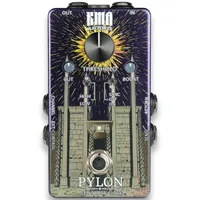
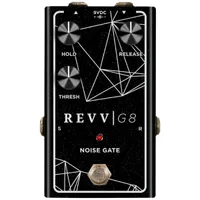

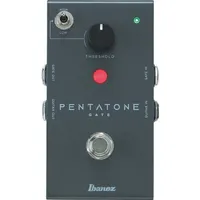
How to choose

If you’re new to the world of noise gate pedals, this section is for you. With over 20 years of playing, testing, and buying pedals – and nearly a decade working in a busy guitar store – I’ve helped countless players find the right noise gate for their setup. Even experienced guitarists will admit that noise gates can be a little confusing at first, but don’t worry. If you keep these three key points in mind, choosing your next pedal will be much easier.
1. Control
You can trust Guitar Player. Our expert reviewers spend hours testing and comparing guitar products so you can choose the best for you. Find out more about how we test.
First things first, how much control do you need over your noise gate? As our list of pedals states, there are noise gates that are incredibly simple in setup, to much more advanced options with multiple controls. If you don’t require or are just starting out, having a simple threshold control may be enough to get started and to clean up your signal. On the other hand, if you feel a bit more confident, a noise gate that allows you to control the attack, decay and release may be preferred.
2. Connectors
Next up, what connections do you need? If you run a fairly basic pedal setup with only one overdrive to tame, then a noise gate with an input and output will do you fine. On the other hand, if your setup is more complex, you have an overdrive, distortion and three fuzz pedals running into multiple delays and modulations, then a noise gate with a return/send will be better suited. This allows you to place the noise gate in an effects loop, which is beneficial for an advanced setup with more variables.
3. Playing style
Lastly, what do you play and how do you do it? Noise gates behave differently depending on how you play. If you have a tight, percussive playing style or play heavier genres, you’ll want a gate with a fast response that clamps down quickly between riffs. On the other hand, if you play blues, pop, or more expressive styles, a slower, smoother gate will sound more natural and preserve your note sustain. Before buying, think about how you play and what kind of response you will feel most comfortable with.
FAQs

Do I actually need a noise gate pedal?
Noise gate pedals are extremely useful to have on your board, particularly in a few specific situations. Firstly, if you play with high gain, a noise gate is invaluable for reducing the hum and hiss that come with cranking your amp. It can also help tighten up your riffs, making them sound more punchy and defined. Rests are crucial for creating impact, and a noise gate helps you achieve that precision. Players in genres like metal will almost always have one in their rig to cut unwanted noise, both live and in the studio.
On the other hand, if you use particularly noisy single-coil pickups, a noise gate can save the day. Strat players will be familiar with the 60-cycle hum, and if it drives you mad, a gate is a great solution. Likewise, if you have a large pedalboard or often play in venues with sketchy electrics, a noise gate can help eliminate unwanted buzz and interference.
Where should I put my noise gate in the signal chain?
Generally, you’ll want to place your noise gate after whatever’s creating the most noise. On most pedalboards, that means after your overdrives, distortions, and fuzz pedals. If your amplifier has a particularly noisy preamp, you can also place the noise gate in the effects loop; this helps tidy up the signal before it hits the power section.
For more advanced noise gates with send and return jacks, you can get a bit more surgical. You can send the clean signal from your guitar through the gate’s send, and return it after your noisy pedals or preamp. This setup allows the pedal to ‘listen’ to your clean playing while clamping down on the messy bits, giving you a tighter, more natural response.
How do I set a noise gate pedal so it doesn't cut notes off?
The easiest way to avoid this is to lower the threshold on your noise gate. A noise gate mutes all signals that fall below the set threshold, so reducing it means fewer notes will be unintentionally cut off. There is a bit of a trade-off, though; if you set the threshold too low, you might start hearing some unwanted noise slip through, since the pedal can’t always tell the difference between your notes and background hum.
Will a noise gate affect my tone?
If you haven’t set up the noise gate correctly or are using a lower-quality pedal, your tone may be affected. One of the biggest issues is cutting off sustain too early, which can make your playing sound abrupt or unnatural.
A well-calibrated noise gate, however, should leave your tone untouched. High-quality pedals are designed to react quickly and transparently, only engaging when unwanted noise creeps in. As long as you set the threshold sensibly and avoid being too aggressive with the controls, your core tone will stay intact, just a lot cleaner.
Where do I put a noise gate in relation to delay and reverb pedals?
Putting a noise gate before effects like delay and reverb pedals is generally the way to go. Since time-based effects like delay and reverb have longer tails, you want your tone to sustain and bloom naturally; otherwise, a noise gate will likely cut this off, hampering the effectiveness of those effects.
Where should I put a noise gate with my fuzz pedal?
Being one of the noisiest pedals out there, you’ll typically want to place your noise gate after any fuzz pedal on your board. Fuzz pedals are great fun to use, but they can get seriously noisy, and putting a noise gate after them is an effective way to keep things under control without your tone turning into an incoherent mess, unless, of course, that’s the sound you’re going for.
How does the send/return loop work on a noise gate pedal?
Using the send/return on a noise gate is a great way to target a specific noisy pedal without gating your entire board. For example, if you’re using a fuzz pedal and only want the noise gate to control its noise, connect the output of the fuzz to the return of the noise gate, and the input of the fuzz to the send of the noise gate.
The pedal before your fuzz should go into the noise gate’s input, while the pedal directly after connects to the output. This setup effectively isolates the fuzz within the loop, allowing the noise gate to tame just that pedal’s noise while leaving the rest of your signal path unaffected.
Key terms
- Attack: On a noise gate pedal, attack refers to how quickly the gate opens to let your signal through once it has hit the threshold.
- Bleed: This refers to any unwanted noise that might get through the noise gate pedal’s threshold.
- Chattering: This refers to the rapid, unwanted opening and closing of a noise gate when it struggles to distinguish between your playing signal and background noise, resulting in an uneven or stuttering sound.
- Decay: This control determines how quickly the gate closes after the signal drops below the threshold.
- Downward expander: A more technical version of a noise gate, a downward expander doesn’t completely cut off background noise; instead, it gradually lowers the volume, making the effect sound more natural.
- Floor: The floor, or noise floor, refers to the inherent background noise present in an audio signal or system, below which the noise gate begins to attenuate or mute the sound.
- Gate: This is the part of a noise gate that closes, stopping your signal from going through once the threshold has been reached.
- Hysteresis: This type of noise gate pedal essentially has two thresholds, one to open the gate and one to close it. This helps the gate operate more smoothly and prevents chattering.
- Hold: The hold control keeps the gate open for a certain amount of time after the signal drops below the threshold.
- Look-ahead: This is a feature that analyzes the incoming audio signal and reacts slightly ahead of time. It’s useful for preserving transients and keeping the gated sound more natural and transparent.
- Ratio: Simply put, the ratio control determines how much the volume is reduced once the signal drops below the threshold.
- Release: This affects how long it takes for the gate to fully close after the signal falls beneath the threshold.
- Send/return: Found on more advanced noise gates, this loop allows you to target specific pedals or parts of your signal chain. You can place particularly noisy effects between the send and return so only those pedals are gated.
- Sensitivity: This control adjusts how easily the gate reacts to your playing dynamics. Higher sensitivity means the gate will open more readily to quieter notes.
- Threshold: The level at which the noise gate activates. When your signal drops below this point, the gate begins to close, filtering out unwanted noise.
How we choose
At Guitar Player, our team of writers aren't just music enthusiasts; we're real-life musicians. Our hands-on experience with overdrive pedals ensures that our reviews and recommendations are backed by practical knowledge and real-world testing.
When it comes to selecting the best noise gate pedals, we leave no stone unturned. Meticulously evaluating factors like tonal versatility, sonic character, build quality, and value for money, it's only after rigorous testing in a variety of playing scenarios do we choose products for our guides. We stand by our selections, ensuring that every pedal we recommend is one we'd use ourselves.
Read more on how we test gear and service at Guitar Player
Related buyer's guides
- Check out the best distortion pedals
- Get it all in one with the best multi-effects pedals
- The best delay pedals augment your tone
- Add some space with the best reverb pedals
- The best looper pedals improve your playing

