
I remember it like it was yesterday, when mini amplifiers were little more than toys, built with terrible speakers that produced truly awful tones - think angry wasp's nest in a tin can. However, over the last few years, manufacturers have realized there is a place for great tones in compact packages that allow guitarists to practice at home or on the move. With the modern guitar player turning away from heavy and loud tube or solid-state amps, the best mini amps can deliver all those same great tones in a more compact package, and so much more.
A mini amp is defined by being lightweight and space-saving, even when compared to the sort of practice amps that typically come bundled with starter sets. They will have much smaller speakers than standard practice amps, and many are battery-powered. The ever-improving quality of passive radiators combined with amp modeling in small guitar amps means they’re quite capable of delivering room-filling sound, all whilst taking up a tiny amount of space. This means they not only cater to the beginner market, but also to professional players looking for a compact companion to practice at home with.
Perhaps my favorite option on the market, the Positive Grid Spark Mini distills the best qualities of a mini amp by utilizing technology alongside the power of smartphones. We were so impressed with the review model that we gave it five stars after rigorous testing. If you’re looking for something similar without having to spend as much, the Positive Grid Spark Go offers a similar experience in a smaller package. It’s a fantastic, affordable option.
I’ve relied upon extensive experience demoing and recommending mini amps in my day job in a guitar store, plus my two decades of playing experience, having seen the mini amp revolution in that time span. So, if you have any further questions you need to ask, have a look at our FAQs section for more information. Also, for complete beginners, my how to choose section will outline three key considerations when purchasing your first mini amp.
Best overall

✅ Buy if you want an all-encompassing mini amp: With a huge array of amps and effects alongside a trove of practice tools, the Spark Mini can cover pretty much all the bases for guitar players.
❌ Avoid if you don't like using an app: This amp works without the app, but you'll be very limited in what you can do with it. One to avoid if you want to do away with the smartphone.
Overview
The Spark Mini may be mini by name and size, but in every other department, it is anything but. Released in 2022, we are still surprised that an amplifier this size can sound so good. Despite advancements in technology, it is hard to wrap your head around it.
Build
An area where the Spark Mini stands above rivals is its build quality. While it’s only made from glass-fibre, the Tolex on the outside adds a layer of luxury, and the mesh grill is classy. This is an amp you’d be proud to have on display in your home.
Features
It comes loaded with four presets, which are great to get you going, but to unlock the depths of its abilities, the Positive Grid Spark app is a necessity. Technophobes may be put off by having to use the app, but it is generally very intuitive to use and gives you full control over the 43 effects and full amp catalog. If you’re not interested in building your own sounds, there are over 10,000 presets to choose from—no other mini amp can compete with that.
Sounds
Lastly, its two-by-two-inch, cleverly angled speaker design produces a much larger sound than it has any right to, with good, balanced detail and enough low end for most applications. The overall low-end response is impressive for an amp of this size, though really powerful bass sounds like those from bass guitars or baritone guitars can drive the speakers into crackling when driven hard.

"I took my test unit on a weekend getaway, along with my Fender Jazzmaster, an Arturia KeyStep Pro MIDI controller, and my laptop, and had a productive time writing, jamming, and recording using the Spark Mini as both my speaker and audio interface. Think of it as a Swiss Army knife for guitarists on the go."
Read more: Positive Grid Spark Mini review
Best budget

✅ Buy if you're looking for something to take on the go: Quite literally able to fit in a large pocket, the PG Spark Go is a proper take-anywhere amp that has all the sounds and features of its much bigger siblings.
❌ Avoid if you play bass: With such a small speaker, it's no surprise that it doesn't deal with the low end all that well, so give it a miss if you regularly play bass guitar.
Overview
The even smaller brother of the Spark Mini, the Positive Grid Spark Go is the most affordable amplifier in the Spark range, also in the smallest package. As with the rest of the Spark range, the Spark Go requires Positive Grid’s Spark app to unlock all of its features, with limited, but usable, options available via the amp itself.
Build
Aesthetically, the Go shares the hallmarks of its bigger siblings. We’re talking about the beautiful woven grille cloth with gold detailing and a custom black hardshell, with a handy carry strap attached. Although this is an affordable option, Positive Grid hasn’t skipped quality control, and the Go feels every bit as considered as the Spark Mini.
Features
When connected to the Spark app, there are pretty much limitless opportunities for sound creation, with 43 effects at your fingertips and 33 amp models to choose from. For some, this may seem overcomplicated, but it makes it extremely versatile. There are precious few physical controls
Sounds
It can’t match its bigger brother - the Spark Mini - for volume, but that is to be expected given its lower price point and smaller size, boasting a single 2” speaker, compared to the Mini’s 2x 2”. This will appeal to people looking for the smallest solution possible that still produces great sounds, or could be a nice addition if you already have one of the larger Spark amplifiers and want to take those tones on the go.
,"Spark GO’s compact form is a huge part of what makes it both fun and a boon for creativity and music making. Throw GO in your backpack or jacket pocket, or let it hang from your wrist or guitar strap, and you’ll have all the inspiring tones, jamming features and more you desire or require. You’ll undoubtedly play more often as a result, as I did, and that’s ultimately what great gear is all about."
Read more: Positive Grid Spark Go review
Best for metal

✅ Buy if you like aggressive tones: The Brown channel and its variation offer some of the best metal tones in the mini amp world.
❌ Avoid if you're short on space: The Katana Mini X definitely pushes the boundaries of 'mini', being considerably bigger than most of the other mini amps in this article.
Overview
Bigger and better than its little brother, the Katana Mini, the Katana Mini X is a concerted attempt by BOSS to put themselves at the top of the mini amp food chain, as they have done with the rest of their full-sized Katana range. While the smaller Katana Mini feels a little cheap and hasn’t really set the mini amp world alight, the Katana Mini X is a different beast.
Build
Standout upgrades include far more effects options and more. The big one for any player who plans to use this regularly on the move is the change from disposable batteries (6x AAs) to an integrated rechargeable battery, charged via USB-C. This is so much better, and it’s a real wonder why BOSS has taken so long to upgrade to this.
Features
As always with the Katana range, there is a great selection of BOSS effects, and this is a really exciting amp to add to any player’s collection to achieve great tones on the move. As far as mini amps go, it is on the larger side, so for anybody looking for the truly tiny, it might be a little too big, but it’s still very portable and, compared to the sound it produces, it’s minuscule.
Sounds
The 5” speaker packs plenty of punch and notably a good amount of low end. Switching to the Brown channel, you get an aggressive, thick saturation that gets you comfortably into chugging territory. The speaker can handle it well, but like any mini amp, too much volume and it can get murky. However, for its size, this will appeal to metalheads of all stripes.
Best for gigging

✅ Buy if you're looking to gig: This tiny head from Orange is a great choice if you want to gig but need something small enough to fit into a backpack. Pair it with a venue or practice room cab and you're ready to rock.
❌ Avoid if you need something for home practice: As it requires a cab for sound, it's not a great option if you're practicing at home and need something small.
Overview
The Micro Dark is the mini amp to beat when it comes to tiny amp heads. Other manufacturers have created their own microscopic heads to combat Orange’s Micro range - comprising the Micro Dark and Micro Terror - but they haven’t caught on in the same way.
Build
True simplicity is where the Micro Dark excels. A simple 3-knob setup gives a surprising amount of tonal control for the 20W of hybrid power—yes, the Micro Dark has a real ECC83 (12AX7) vacuum tube in the preamp. When compared to the extremely clever and powerful digital options on the mini-amp market, the Micro Dark may feel a touch simple, coming without many bells and whistles.
Features:
It has no integrated effects, but does have an effects loop, which will appeal to those with existing pedalboards. For those looking for a super versatile option with lots of features, this is one to avoid; however, if you are looking for a mini amp with the ability to gig, the Micro Dark is a great option.
Sounds
The obvious issue with the Micro Dark as a practice amp is that once you add a speaker cabinet - and it can even get a 4x12” cabinet pushing air - it’d be fair to argue that ‘the package’ would struggle to qualify as a mini amp. One that's only suitable for players looking for something compact to use at shows. The sheer capability of something this small filling up a venue is almost laughable, but it sounds big, can get aggressive, and punches well above its weight class.
Best for bass

✅ Buy if you're looking for something simple: The Blackstar Fly 3 Bass doesn't bother with apps, practice tools, and all that other guff, choosing instead to concentrate on ease of use and great tones.
❌ Avoid if you need lots of different sounds: With only a single EQ knob, one effect and two channels, there aren’t many bells and whistles with this one.
Overview
There’s an argument that when it comes to modern mini amps, the Blackstar Fly is the king. It’s certainly one of the first that took the mini amp seriously, creating an amplifier that was supremely compact but delivered genuinely impressive tones. Blackstar hasn’t forgotten about bassists either, as this legacy series includes the Fly 3 Bass, the best option for low-end warriors.
Build
The Fly 3 Bass is reassuringly solid, and you can find plenty of the original 2014 versions kicking about now, over ten years later. It’s an amp that lasts. The bass iteration uses the exact same DNA as its electric guitar sibling, and as far as portable mini amps go, the Fly 3 Bass shouldn’t give you any durability issues.
Features
Unique to the Fly 3 Bass is a built-in compressor and a ‘Sub’ control. This adds an extra layer of thickness to the low-end, producing a surprising growl for an amplifier this size. The EQ control allows you to adjust the depth of the EQ curve, a nice change from Blackstar’s sole ISF control found on the guitar version.
Sounds
Lastly, this is an amp that can be upgraded with the Fly 103 extension cabinet available to double your wattage (to 6W) and give you a stereo speaker set for music. For beginners, in particular, this is an amp that is perfect to start with, but it will also inevitably remain in your collection for years to come.
Best for acoustic

✅ Buy if you're an acoustic guitar player: Coming in around the $100 mark, the Mighty Lite delivers great sound and plenty of functionality for a relatively small amount of money.
❌ Avoid if you don't like using batteries: It doesn't feature an internal battery, so you'll need to invest in rechargeable AA batteries or keep buying fresh ones.
Overview
NUX has made an effort to stake a real claim in the small guitar amp market with the Mighty Lite BT MKII. Launching a mobile app to go alongside your mini amp is bold, given the quality of those already established in the market; however, the MightyAmp Mobile App is really simple to use with a graphic interface that even technophobes will be able to get their heads around. With the use of the MightyAmp app, the Mighty Lite has lots more tonal options, plus additional effects and presets for acoustic guitar.
Features
If you’re not keen on using an app, the Mighty Lite is ready to go from the box with delay/reverb (only one at a time) with tap tempo, plus your standard gain, volume, and tone to dial in a solid sound. This, alongside a drum machine featuring nine different patterns and Bluetooth connectivity, means you’ve got a really great practice amp.
Build
In terms of features compared to the price, the Mighty Lite is up there with one of the best mini amps on the market, which makes us almost forget it requires AA batteries rather than having an integrated battery. It does have the neat trick of being able to be powered by a third-party USB power bank - the sort you’d charge your phone with - which is a nice trick.
Sounds
While acoustic guitars thrive with full-range speakers to capture their harmonic detail, the 3-inch driver in the Mighty Lite does a remarkable job. You can’t max out the volume without encountering some distortion, but if you select an acoustic preset, the included cab sim provides a surprisingly natural and usable tone for such a small unit.
Also consider
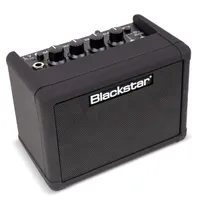
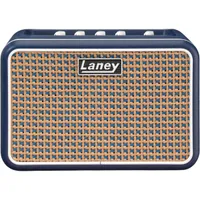
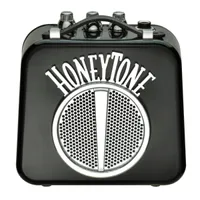
The above amps should, in our opinion, cover the bases for most guitarists out there. We appreciate there's no one size fits all solution however, so here's a selection of other options for you to consider.
How to choose

On a daily basis, guitarists would come into the guitar store I worked in and ask me to show them the best mini amp they could buy. Having done this for 10 years, I said the same thing to each player: you need to consider these three factors when selecting a mini amplifier, and more often than not, they’d walk away with the best option for them. Here are the three things you should consider.
1. Volume
You can trust Guitar Player. Our expert reviewers spend hours testing and comparing guitar products so you can choose the best for you. Find out more about how we test.
Firstly, how loud do you want your mini amplifier to be? This would usually take players by surprise, as mini amps are often considered to be on the quieter side. However, that’s not exactly the case. An option like the Orange Micro Dark can fill a venue, so volume considerations are important.
2. Features
Then consider the features you would like. Some mini amps are app-controlled, can Bluetooth stream, connect to extension cabinets, and have rechargeable power packs. You name it, if it’s been thought of in the amplifier world, there will likely be a mini amp that can do it.
Of course, you may want something simpler than a mini amp with all the bells and whistles. If you do, then fear not, as an option like the Blackstar Fly 3 offers a decluttered, easy-to-use mini amp that technophobes will love.
3. Power
I’m not talking about output power with this one. Instead, do you want your mini amp to be battery-powered or not? This is an important consideration, as many assume mini amps are all battery-powered. However, that’s not always the case. It’s a point that catches a lot of players out when they first purchase.
You may want a mini amp with a rechargeable built-in battery pack, perhaps you already have rechargeable batteries to use, or maybe you’re not bothered. Regardless, it’s something to decide before buying.
FAQs

Will a mini amp sound like a toy?
If you stick to any of the recommended products on our list, or even just reputable brands, the mini amp you purchase shouldn’t sound like a toy. Don’t get me wrong, there are plenty of cheaply made knock-offs out there that will sound like a wasp in a tin can, but brands like Positive Grid, Blackstar, and Orange are knocking it out of the park when it comes to mini amps.
Thanks to technological advancements, alongside much smaller and lighter components, the best mini amps can sound fantastic nowadays. I still remember 20 years ago when these things were a novelty, but mini amps have shaken off that bad reputation and will likely surprise you.
Do I need a smartphone to use a mini amp?
Captain obvious statement of the century: mini amps are typically very small. Therefore, brands are becoming reliant on smartphone apps to cram in as many effects, presets, amp voices, and memory settings as you’d expect to find on an amplifier three times their size. Most mini amps are best unlocked by using your smartphone.
However, there are still options out there for technophobes. Products like the Blackstar Fly 3 or the Orange Micro Dark are straight-shooting mini amps that don’t rely on smartphones at all. Although mini amps are certainly moving in a smartphone direction, there are still options if that’s not your thing.
Can mini amps work for busking or playing outdoors?
If you’re busking, a mini amp may not be your best option. Due to limited power output and small speakers, mini amps are unlikely to project your sound powerfully enough over weather elements, traffic, and pedestrians. If you are using a mini amp, the temptation may be to crank it as loud as possible, but you run the risk of blowing the speaker.
Plus, buskers typically use multiple instruments and gear, whether that’s an acoustic and a microphone, or a keyboard and a microphone. Running all of that through a small mini amp won’t just sound pretty bad; it could potentially damage the speaker.
Does the wattage matter with a mini amp?
Like any amplifier, wattage does matter with a mini amp. It will give you a good indication of its volume capabilities, but perhaps more importantly, it indicates how much headroom the amp will give you. Headroom describes how much signal the amp can handle while remaining clean before distorting. If you want louder volumes while retaining clarity, you’ll need to keep an eye on the wattage.
Can I use my pedals with a mini amp?
Yes, you can use your effects pedals with mini amps. In fact, you can plug them in exactly as you would with any other amplifier. Of course, if you’re using multiple gain stages or fuzz pedals, you’ll want to be mindful of how much you crank it due to the small speakers typically found in mini amps, but generally speaking, they handle pedals just fine.
Can I record with a mini amp?
Absolutely, you can record with a mini amp. There are plenty of mini amps, like the Positive Grid Spark Mini, that can be used as a USB-C interface, meaning you can connect it to a digital audio workstation, use its built-in amp voices and effects, and treat it like an audio interface. Otherwise, if you love the sound of your mini amp, you can do it the old-fashioned way and mic up the speaker.
What’s the difference between a mini amp and a headphone amp?
Simply put: a speaker. A mini amp is configured like a traditional amplifier and has a preamp, power amp, and speaker, meaning you don’t have to rely on headphones to hear your sound. A headphone amp, on the other hand, doesn’t have built-in speakers, so the only way you’ll hear your tone is through headphones.
Key terms
- Attenuator: This is a device, either built-in or external, that allows you to control the power output of an amplifier.
- Boxy: Terminology used to describe a tone that sits predominantly in the lower mid-range, creating a flat sound that feels like it’s being played inside a box.
- Busking: The activity of playing music in public, typically on a high street, to earn money.
- Cab sim (cabinet simulation): Software that replicates the sound of particular cabinets, typically famous models from well-known brands. Cab sims aim to capture the response, feel, and acoustics of the cabinet they are replicating.
- Chug: A technique in metal guitar where the player repeatedly palm-mutes downstrokes to create an aggressive, percussive sound.
- Clean headroom: An amp with clean headroom is capable of playing loudly while retaining clarity without distorting.
- DAW (Digital Audio Workstation): Software that allows you to record instruments and microphones, typically via an audio interface. DAWs often include effects, amp voices, and engineering tools for optimal recording.
- DSP (Digital Signal Processing): Computer algorithms used to create effects, tones, or emulate guitar amplifiers. This is the technology found in digital modeling amplifiers.
- FRFR (Full Range, Flat Response): Speakers designed to reproduce the entire frequency range with clarity. They provide a neutral platform for amp modelers.
- Fizzy: Terminology used to describe static, buzzy distortion that doesn’t sound particularly pleasant.
- Gain: A control typically found on amplifiers that determines the amount of signal being driven into the preamp, directly affecting distortion and saturation.
- GAS (Gear Acquisition Syndrome): A tongue-in-cheek term guitarists use to describe the constant urge to keep buying new gear.
- Impulse response (IR): A digital file that captures the sonic characteristics of a specific speaker cabinet, microphone, and room, allowing you to recreate that exact setup in a digital environment.
- Latency: The delay between striking a note on your guitar and hearing it through headphones, an amplifier, or an audio interface.
- Line in: An input used to connect pre-amplified signals, such as a smartphone or MP3 player, allowing you to play music through a guitar amplifier.
- Modeling: A type of amplifier technology that uses digital processors, such as DSP, to emulate the sounds of famous amplifiers and effects.
- Passive radiator: A speaker component that reinforces low-end frequencies without using additional power, helping smaller amps produce a fuller bass response.
- Solid state: A type of amplifier that uses transistor-based circuits to create sound, unlike traditional guitar amps that use vacuum tube technology.
How we test

Here at Guitar Player we've been testing gear since 1967, so it's fair to say we've got a great overview of guitar gear throughout recent history. We've reviewed all kinds of guitar amps from tube classics to modern modeling amps, giving us a great overview of how best to judge a mini guitar amp for our guides. When testing a mini guitar amp we'll take the same steps as we would a full-size guitar amp.
First of all, we'll look at the build quality of the amp. We want to determine the inputs and outputs, how it's put together, what size speaker it has, how many knobs, and any other physical features we can note. This helps us determine who the mini amp is for, and what sort of use case it'll be good for.
Next, we'll take a more in-depth look at the usability of the amp. If it's a modeling amp then we'll determine how many amp models you get and how to access them. We'll look at any effects it has built-in, as well as additional functionality like Bluetooth or an auxiliary output. In using the amp we're looking to see how easy it is to get to grips with it and start dialing in tones, as well as using any extra features it might have.
Finally, and arguably most importantly, we'll test the sound. Depending on the amp type, if it's more a classic type then we'll start with all the EQ knobs at 12 o'clock and start playing to see what a neutral tone sounds like. We'll then tweak to find various tones, making notes of everything as we go.
If it's a modeling amp then we'll start with the built-in presets to see how those sound, before beginning to tweak our own sounds. We'll try building a rig from scratch, seeing how easy it is to put a signal chain together and judging how realistic the models sound versus the actual gear from our own experience.
Read more on how we test gear and services at Guitar Player.

