
Fifty years ago at this time, the Beach Boys — and their record label — were able to declare that “Brian is back!”
It was at the end of January 1976 that the group hit the studio with Brian Wilson. The group’s leader Wilson had recently started undergoing treatment with the subsequently discredited psychologist Eugene Landy. Now he was back in the group’s ranks and producing for the first time since 1969.
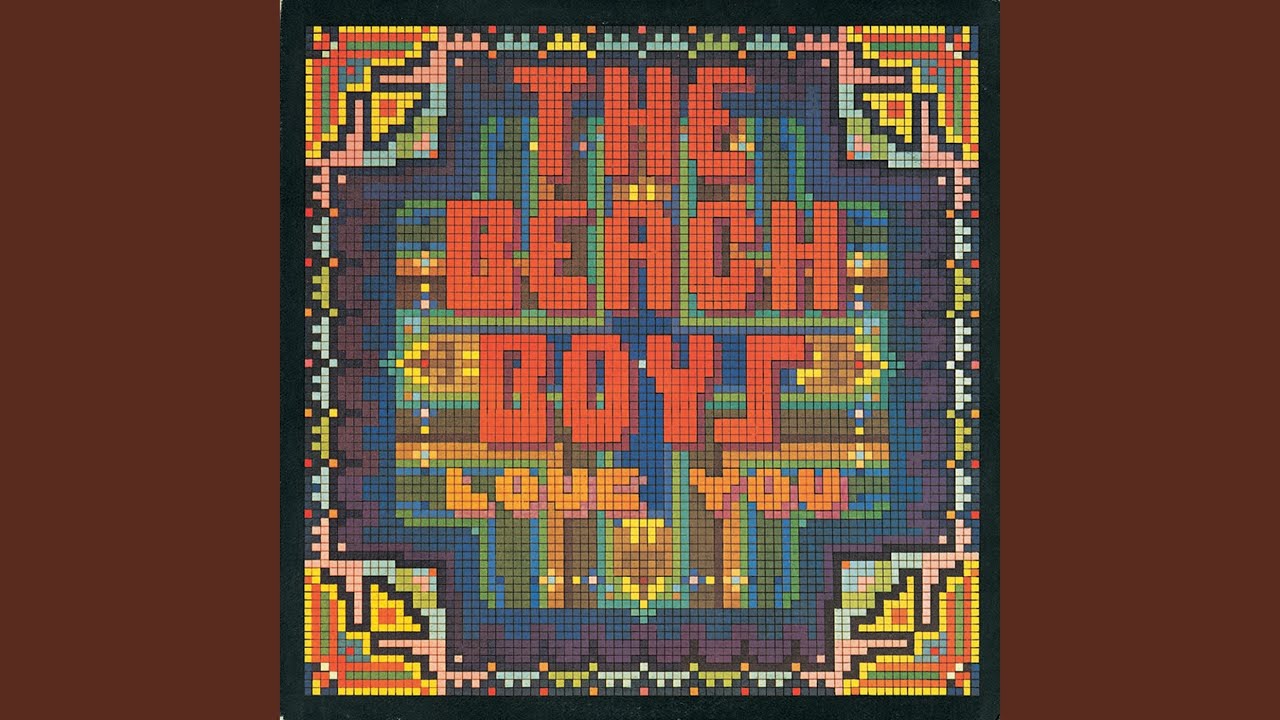
Buoyed by their new Brother Studios in Santa Monica, the Beach Boys would enjoy a prolific, if not polarizing, two-year period that yielded two albums: 1976’s 15 Big Ones, which blended originals and covers, and, released one year later, The Beach Boys Love You.
The sessions also produced an abandoned but frequently bootlegged album called Adult/Child. That record is finally getting released on February 13 as part of the new We Gotta Groove: The Brother Studio Years, a definitive 73-track box set that celebrates all three albums, including a remastered …Love You and unreleased material from the 15 Big Ones sessions.

“We were in the process of reinventing ourselves, again,” singer-guitarist Al Jardine says of that era in a Zoom call with Guitar Player. As he notes, it wasn’t the first time. A decade before, the Beach Boys’ early surf-rock and soft-rock ballads had given way to the expanded visions of Pet Sounds and SMiLE, two adventurous projects undertaken in 1966 and ’67. A few years later, during Brian Wilson’s period of semi-absence, the group pushed its proverbial envelope again on albums such as Sunflower and Holland.
We were in the process of reinventing ourselves, again.”
— Al Jardine
Wilson’s ballyhooed “return” came with mixed results, of course. Many fans, and even his brothers Carl and Dennis, found 15 Big Ones and its plethora of covers underwhelming, despite a half-dozen originals that included Jardine’s “Susie Cincinnati.” …Love You, on which Wilson began experimenting with synthesizers, was more focused and played better with critics than fans.
As for the orchestrated, big band–inspired Adult/Child, it won the approval of neither the band nor the label and was sidelined in favor of the Jardine co-produced M.I.U. Album in 1978.
Time has been kind, or at least kinder, to all three albums. The extras on We Gotta Groove — which include unreleased renditions of “You’ve Lost That Lovin’ Feeling,” “Gimme Some Lovin’” and “Shake, Rattle and Roll” — provide context that demonstrates the Beach Boys’ ambitions and intent.
Jardine, who’s currently leading what’s known as the Pet Sounds Band — featuring members that include his son Matt Jardine — will play …Love You in its entirety on February 27 at the United Theatre on Broadway in Los Angeles, with more shows, he hopes, on the way.

What’s your perspective now of the period that’s covered on the We Gotta Groove box set?
It was a big step for the band, coming back together. 15 Big Ones was just us doing our favorite songs. Then …Love You was another exponential growth for Brian; it really was his solo album, but because we owed an album to Reprise Records it just worked its way into a Beach Boys album. We had our own studio, so it was fun for Brian to go in and just experiment, especially on the synthesizer.
We kind of evolved from a guitar band into a synth band for that particular project, although we had a couple of good guitar songs. A couple of my favorite ones are on …Love You — “Honkin’ Down the Highway” and “Roller Skating Child,” for instance. Those two are a lot of fun to sing, and I just like chunkin’ away on my rhythm guitar. But Brian had his synth songs that were also beautiful, really unusually sensitive. I enjoy singing those songs, too.
People were expecting a return to “classic” Beach Boys form when Brian came back to the group during the mid ’70s, but it was anything but.
Brian was always a surprise. He always had a surprise for us, and that was great — something brand new that we could sing and enjoy singing and playing on and recording. That’s what it was all about — evolution, growing musically.
The band recorded its own music for several years in the early ’60s and that was fun, and then touring became a pretty big deal. All of a sudden we’re on the road 100 days a year and there’s no time to get in the studio other than between tours. So the music started to grow in different directions and we began to use the Wrecking Crew, which gave Brian a whole new way of looking at production. And we grew with that.

What kind of impact did that make on your playing, to have to learn those parts that were created by others?
It made me a better player — a lot better. I came from the folk tradition. Folk music is more of a language skill, telling stories, and you’d accompany yourself on a guitar. It was just very simple. But with those Beach Boys records, I had to become a far better player to reproduce those sounds, and we learned. We all learned to be better musicians.
Was the transition to electric guitar challenging?
Oh, no, no, no. Changing to electric was real simple, the same — a few more frets than acoustic, but, no, it was easy.
I came from the folk tradition. It was just very simple. But with those Beach Boys records, I had to become a far better player to reproduce those sounds.”
— Al Jardine
The amps, that was the trick. Carl and I had to play through the same amp for a while, ’cause we were traveling by car and that’s a lot of stuff to haul around. But after a while we said, “We’ve got to have our own amps.” It was all Fender tweeds at the time. And we had those little spring reverb units.
What was your first electric guitar?
None of us really had professional instruments until I came back into the band in ’63, after I was gone for a short while. [Jardine left the group in 1962 to pursue a college degree and was replaced by David Marks.] They had purchased Fenders — the Stratocasters, the Jazzmaster, the Telecaster … all of the different varieties that Fender had produced. For some reason the Strat seemed to be the one for me to go with. That was the main rhythm type of guitar at the time. Carl would have a Jaguar, I think, or a Telecaster for the leads.

What distinguished Carl as a guitar player for you?
He was great. He took guitar lessons, what can I tell ya? [laughs] He and Dave Marks, actually, took lessons together down in Hawthorne during those very early years. They had a great teacher, John Maus, who was in a famous band himself [the Walker Brothers] that became famous in England, of all things. He taught them the Chuck Berry style of playing. Carl taught me, and pretty soon you put it all together and you have the Beach Boys.
Is there anything the rhythm guitar player in the Beach Boys has to do that’s unique from other bands?
Oh God. I’m the lead guitarist on that one, if you can believe it — and I still can’t play it right onstage. It bugs me.”
— Al Jardine
I don’t think so. We would just make the basic tracks, guitars, drums and all the other stuff, the bass. Carl would usually overdub his leads, so we’d be basically doing guitars at the same time, the rhythms. And Dennis was just learning to play drums, so it was quite an experiment for everybody. I played bass, originally, in the band; it was a standup bass on the first session, then we came back with the Fender. Then Brian took over the bass when I was gone for that little while. Brian was a pretty good bass player, that’s for sure; he created the best bass parts that anybody could come up with.
There’s a focus on …Love You here, but 15 Big Ones feels like it was more of a band-oriented project.
That’s right, ’cause Carl and Brian produced …Love You; I had nothing to do with the tracking, but we all sang on it. With 15 Big Ones we would just have fun. It was going in there and, “Hey, let’s do our favorite songs. Let’s do ‘Come Go With Me’” or any of the doo-wop songs we used to sing together, “Rock and Roll Music,” the fun stuff. That’s what I liked about 15 Big Ones. Like, “Shake, Rattle and Roll,” “On Broadway” … there’s so many that it felt like 50 Big Ones. We did a lot that didn’t make it onto the album, for whatever reasons. We tracked ’em but never got around to singing them or doing all the background parts.

“Susie Cincinnati” on 15 Big Ones is one of the standout “Al” moments in the Beach Boys catalog.
Oh God. [laughs] I’m the lead guitarist on that one, if you can believe it — and I still can’t play it right onstage. It bugs me. I’m gonna make sure I have that lead down when we get to the United Theatre on the 27th. I’ll have it down. But, yeah, that was a big session. There’s a lot of organ sound on there. It was an amazing production when I think about it.
How did it feel to step out and play lead?
You have to stay true to your own stuff. That’s really what it boiled down to.”
— Al Jardine
It was fun. It’s just a great song — easy key to play in E, ’cause everything Brian wrote was in flats and sharps and it was nice to play in one solid key, some good ol’ E grooves.
These albums were polarizing at the time they were released. Was that reaction frustrating for the band?
Y’know, I don’t recall having a problem at all. We just did what we enjoyed doing. We always had a good reaction.
There’s only one time I remember the audience wasn’t with us. We did a disco song based on a prior Beach Boys song called “Here Comes the Night.” We were onstage at Radio City Music Hall, and as soon as we went into this disco pattern, people started to boo. It taught us you can’t pander to other styles, you have to stay true to your own stuff. That’s really what it boiled down to.

Adult/Child is finally seeing the light of day on We Gotta Groove. What kind of perspective do you have on that project?
Only as an appreciator of Brian’s textural compositional genius and melody. It’s all there. Again, that’s Brian stretching out and doing amazing things.
You’re keeping the Pet Sounds Band going and have the show coming up in Los Angeles. What other plans do you have?
Well, we’ve got about 58 offers to go out and play. The problem is figuring out how to route everything, ’cause there’s offers that are coming in from all over the place. So it’s a good problem to have, but I’d like to be able to have a string of dates set up like most people have and be able to enjoy the tour instead of jumping into an airport every weekend. That’s what our challenge is now — we need people to come out on Tuesdays and Wednesdays and Thursdays so we can get a nice bus tour going.
That legacy — that’s why we keep going. The songs are so great. It’s just fun to play them.”
— Al Jardine
With Brian gone now, do you feel a responsibility to keep the music out there, played live onstage?
I guess to some degree, yeah. That legacy — that’s why we keep going. The songs are so great. It’s just fun to play them. All of these guys are handpicked Brian Wilson musicians and singers, and it’s amazing. That’s why you do it.
No one wants to retire, and fortunately for us we can still sing and play. If someday I lose my voice it would be nice to see some younger guys get in there and keep the music going — especially Matt, who has that range. It’s all about the vocal range. You don’t want to go out there and pretend to be something you’re not.

