

“The records you hear when you’re young have a profound impact on you for a number of reasons,” says guitar legend Jeff “Skunk” Baxter. “One of the biggest reasons is because you’re still forming neural pathways in your brain. This plays into the ways that memories are stored and how emotions are processed. Music often accompanies first experiences — falling in love is a big one.
“This is why you can hear a song years later and your mind goes back to a treasured period of time in your life, a certain someone, even a particular taste. So many memorable moments in your life can be attached to music.”
Over the years, Baxter has performed on hundreds of records for artists across the genres, including Dolly Parton, Donna Summer, Rod Stewart, Bryan Adams, Ringo Starr, Glen Campbell, Joni Mitchell and Rick Nelson. Whether playing electric or acoustic guitar, or applying his talents to a pedal-steel guitar, Baxter brings the accumulated influences of those memorable moments to his work.
When asked to compile a list of 10 records that changed his life, Baxter did a deep dive, recalling both singles and albums, as well as a music-based TV series. Along with discs by the Ventures, Howard Roberts, Bobby Darin and others, he even included an album from his own career.
“When you have that big moment in the form of a hit record, nothing in your life is ever the same,” he says. “I’ve been very fortunate.”

Jørgen Ingmann – “Apache”
“I first heard this on the radio in 1961 when I was living in Mexico. From what I understand, Jørgen Ingmann was something of the Danish Les Paul in that he was not only a great guitar player, but also a pioneer in recording. Back then, there were no multi-track machines.
“Everything was recorded sound on sound, meaning you would play over what you had already recorded, so you couldn’t screw up. If you made a mistake, you had to start all over again.
“I loved the ethereal quality of this recording. I also liked how it was so clean and economical, to the point that his wife tapped out the drum part on the back of his guitar. Later, I would hear those qualities in Miles Davis. I believe his thinking was, ‘I’m never going to be Dizzy Gillespie. I’ll never have those chops, so I’m going to think carefully about each note and play only that right note.’
“That’s what Jørgen does here. He only plays the right notes. The whole thing exemplifies economy of style, and it’s brilliant.”
Howard Roberts – Color Him Funky/H.R. Is a Dirty Guitar Player
“I’ll count these two albums as one choice because I discovered them at the same time. When I first dropped the needle on these records, it was like starting a great meal. What blew me away about Howard Roberts’ playing is his wonderful command of melody. His playing was accessible. There were a bunch of cats who would jump right in with a boatload of hemi-demi-semi-quavers, and it would be impossible to mentally catch up. They were so focused on ‘I want to show you my chops,’ or whatever it was.
“Not to knock cats with chops — I don’t want to sound negative — but Howard’s approach was very different. Howard definitely had the chops. The great thing about his playing is the way he greeted you at the door. He would state the melody of the song, so that brought you inside. He might do slight variations and improvise, but he always made sure he didn’t lose you. That’s a real talent.
“Howard and I became friends and taught together at the Guitar Institute of Technology. I gave him a guitar synthesizer, and that was like lighting dry grass. Holy shit!”
Bobby Darin – The Bobby Darin Story
“I was a big Bobby Darin fan. He was a great singer, but what I liked about him is how he sang like an instrumentalist. There was something about his phrasing and his melodies — it was on the verge of being trite nightclub stuff, but he wasn’t. He had the ability to swing, which I loved because that’s what great guitarists do. They shuffle and swing.
“Bobby had wonderful arrangements. Listen to what Richard Wess did on ‘Mac the Knife’ — that’s a towering piece of work. My dad gave me a copy of this album for Christmas, and I loved listening to all the hits, but there was something else that was very cool: Bobby did a narration before each track. When I released my solo album Speed of Heat, I did the same thing. I got the idea from Bobby Darin.
“He was a major talent — actor, singer, songwriter. He had an understanding of music that not all singers had. Being a melody guy, I would play his vocals on the guitar. I always thought that if I could play melodies the way he sang them, it would enhance my style.”
The Ventures – Walk, Don’t Run
“The Ventures were the masters of melody. There were very few solos in their songs — most of what they did involved playing the melodies, but they did so beautifully. Their recording of ‘Walk, Don’t Run’ is their interpretation of a Johnny Smith song, which was a little jazzier.
“The Ventures made it more straight-ahead, expect for the B section, where they kept the shuffle feel. When I first heard it, I was like, ‘Wait a minute… These guys are changing the groove!’ I thought that was pretty cool. Here I was going straight-ahead all fours, and then it starts to swing. I thought that was brilliant.
“I learned how to play all the songs on this record. Simple is the wrong word — they were divinely economical. Sometimes not much needs to be said to make a point. It’s like when people won’t stop talking after they’ve already said all that’s necessary. If you talk to guitarists of my generation, they’ll talk you how the Ventures played a big part in their development.”

Henry Mancini – “Peter Gunn Theme”
“Growing up in Mexico, we didn't get a lot of American television, but we did get the series Peter Gunn. I was studying classical piano, and I said to my teacher, ‘I just saw this TV show with the coolest theme written by Henry Mancini.’ I want to learn how to play it.
“My teacher got a book of all the songs from the Peter Gunn series, and I learned to play them on piano. I wore out the soundtrack to Peter Gunn. What an iconic riff.
“There was another series, Mr. Lucky, with music by Henry Mancini. I just fell in love with his work. When I started to play guitar, I was like, ‘I’m going to learn these songs, too.’”

The Lawrence Welk Show
“I know it’s not a record, but I’m including it anyway because the show was as important to me as any single or album. Very few American TV series were available in Mexico, but we did get Lawrence Welk, and I was glued to it because I’d get to see guitarists like Speedy West and Thumbs Carlisle.
“If I had been smarter, I would have learned to play like Thumbs, where you lay the guitar flap on your lap. Jeff Healey played that way. You could play chords on your guitar you normally couldn’t because you were able to stretch your fingers more.
“Ninety-five percent of the show was boring as well, but it was worthwhile when I saw guitarists of this caliber. Thumbs was a killer player, and Speedy West was the guy who got me thinking about steel guitar.”
Louis Armstrong & His Orchestra – Satchmo Plays King Oliver
“This is an album my dad had. He was a big fan of Dixieland and a big fan of Louis Armstrong. As a matter of fact, when I was a kid in Mexico, Louis Armstrong came to the country to play a show along with Ella Fitzgerald and Dizzy Gillespie. That’s when I was blown away by thinking that maybe I should study saxophone and trumpet, though I wound up learning a lot about soloing from trumpet and saxophone books.
“This is a great record. It’s Louis Armstrong playing music of his mentor, King Oliver. It’s just beautiful in so many ways, but the phrasing… Like I’ve said before about other records, there’s a welcoming quality to it. It wasn’t about crazy chops per se — it was more about accessibility and feel.”
Albert Ammons and Pinetop Smith – Safeway Records EP
“This was a record of four songs put out by the Safeway grocery store chain. I think they had a little record label at the time. My father bought it, and I played it all the time. You had Albert Ammons and Pinetop Smith — two pianos, four hands, insane. I was fascinated by the boogie-woogie style of piano playing.
“I learned to copy it the best I could on the piano, but then I started to wonder if I could incorporate that on the guitar. I was 11 or 12 years old, so I wasn’t like a music scholar going, ‘I must deconstruct the essence of Albert Ammons’ right versus left hand.’ I just thought it was way cool and wanted to imitate it.
“This was before I got a chance to listen to Chet Atkins and guitarists who were doing ‘right-hand thumb and chord’ guitar playing. Being so taken with boogie-woogie gave me a sideways intro to Delta blues, and that led to the approach of a single guitar melody line and chords.”
Billy Mure – Tough Strings
“Billy Mure was a really cool guitar player. This album is a compilation of his biggest recordings. They’re his versions of hit songs like ‘Apache’ and ‘Asia Minor’ — all great guitar stuff. He’s something of an undiscovered guy, a little like Jørgen Ingmann in that not a lot of people are familiar with him.
“I remember being struck by his version of ‘Walk, Don’t Run.’ It gave me another perspective that I liked. To my undeveloped juvenile brain, it was interesting to hear how somebody else interpreted the song. Some guys swing, some guys are more percussive, and some are more lyrical. I thought it was cool to hear new and different twists on somebody else’s style.”
Steely Dan – Can’t Buy a Thrill
“It was certainly life-altering for me when Steely Dan became a rather popular musical entity. There was a lot of interest in the record, especially from musicians — we seemed to be a musicians’ band who made a musicians’ record. When the album was released, it immediately opened a whole world of studio work for me. The L.A. studio scene was on fire, and I got a ton of work.
“We didn’t think it was going to be particularly successful. I mean, everybody hopes for that, but I don’t think we were convinced that this record was going that route. My attitude was, ‘Let’s just get it right.’ I concentrated on the music. I didn’t lie in bed thinking, ‘I’ll buy my Learjet, and then I’ll go to the Chateau Marmont.’
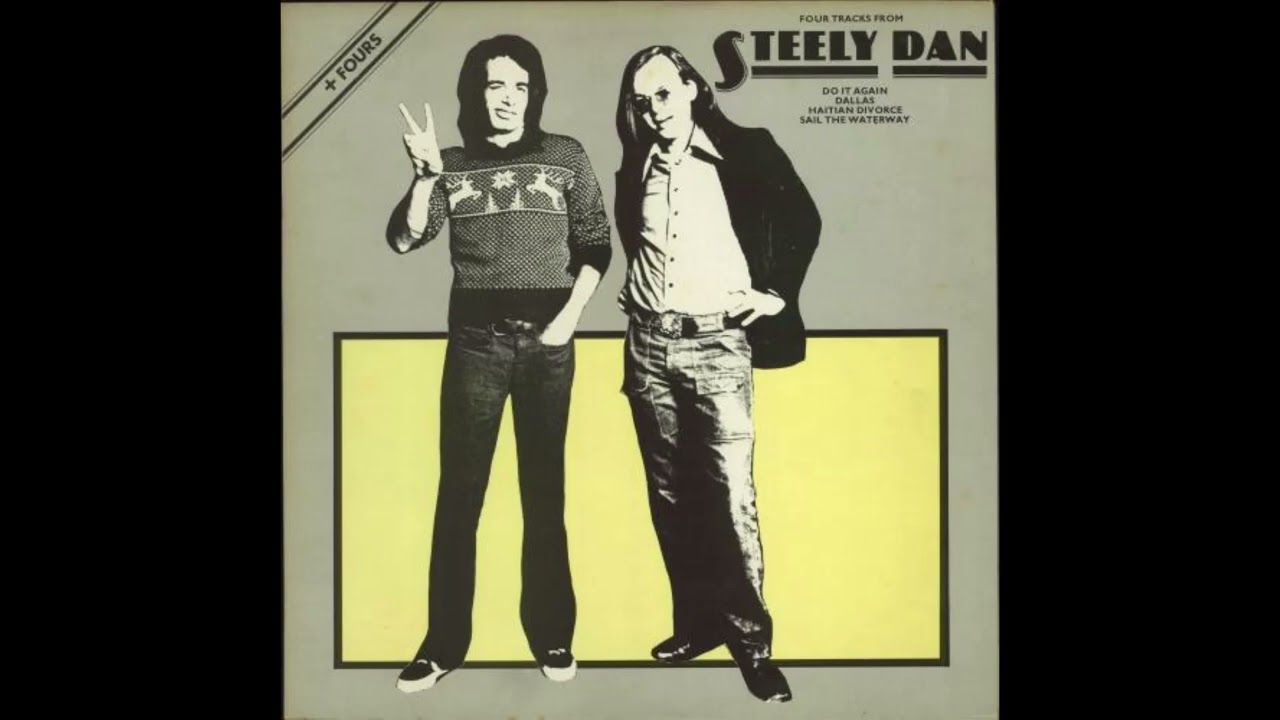
“It almost didn’t go that way, though. Our first single, which wasn’t on the album, was a song called ‘Dallas,’ and it was sung by our drummer, Jim Hodder. Great voice. The song had a lot of pedal steel and country guitar.
“I’m not sure if it was Becker or Fagen who kind of panicked and thought, ‘Wait a minute. The name is Steely Dan, and since nobody knows what Steely Dan is, we don’t want to be pigeonholed as a country band.’ It’s a really cool song, though, and I would have to say things worked out pretty well after that.”