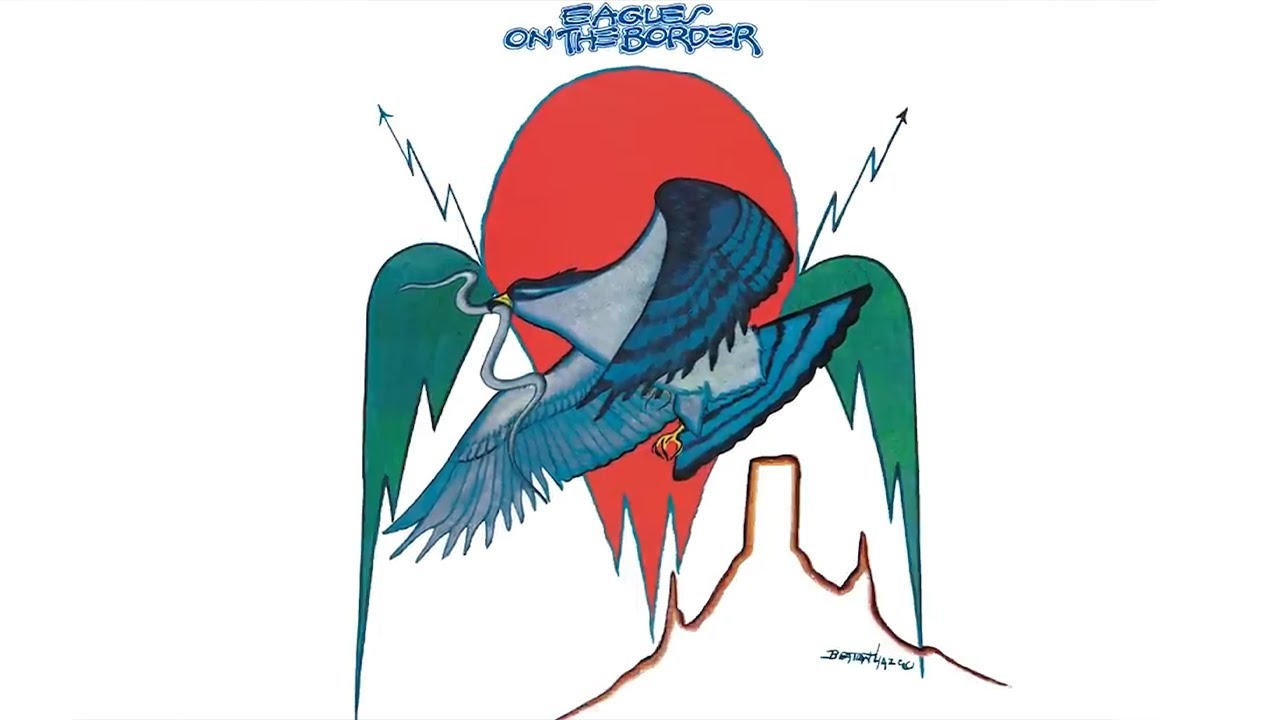
The success of Eagles’ Their Greatest Hits (1971–1975) album is no great mystery to Bernie Leadon.
The 10-track set, which celebrates its 50th anniversary on February 17, was the first album ever certified Platinum, for a million sales in the U.S., and spent five weeks at number one on the Billboard 200 chart when it was released. It has over the decades alternated with Michael Jackson’s Thriller as the top-selling album of all time, and during January it became the first-ever quadruple-Diamond album for sales of more than 40 million copies — which took a plaque nearly five feet high and four feet wide to commemorate.
Remarkably, the Eagles never wanted it to be released. Their label, Asylum, did it anyway and scored a hit beyond anyone’s imagination.
As much as it celebrated their hits, the compilation marked the end of Eagles’ first era. The band formed during 1971 in Los Angeles, with Glenn Frey and Don Henley from Linda Ronstadt’s band joining up with multi-instrumentalist Leadon, late of the Flying Burrito Brothers, and bass guitarist Randy Meisner from Ricky Nelson’s Stone Canyon Band.
“We were all extremely focused, individually, on A) making it and doing something significant and B) on the realization that you had to have excellence in every job slot that it takes to do music professional,” Leadon, 78, tells us via Zoom from his current home in Nashville. “We were pretty good beginning writers, and I think we were all skilled singing and playing. We just focused on excellence.”

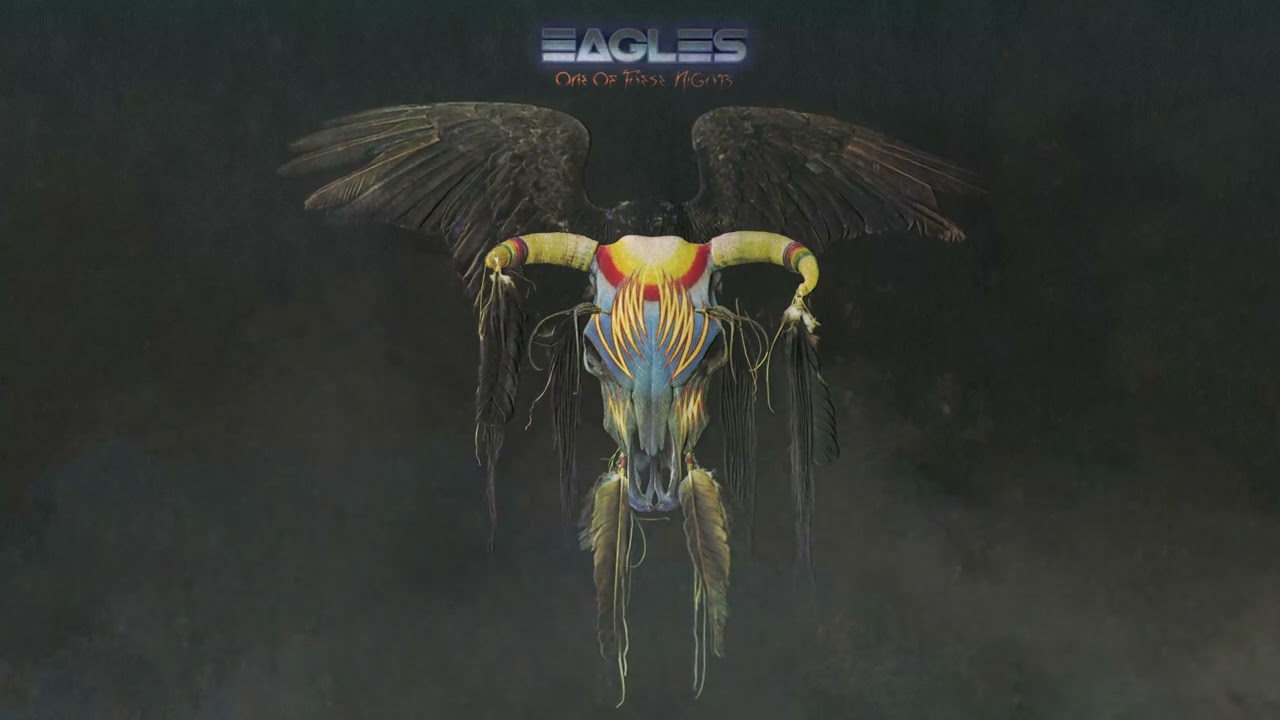
The Their Greatest Hits lineup of Eagles came out of the box strong with its self-titled 1972 debut and the Top 15 hits “Take It Easy” and “Witchy Woman,” then continued over three more albums and five additional Top 10 hits. One of These Nights album in 1975 was the first of six number one albums as well as the first with guitarist Don Felder as a full-fledged member. It was also Leadon’s last. After touring to support it, he left over creative and personal differences.
Those did not diminish his pride in the work, however, and he fully understands why Their Greatest Hits has reached such historic heights.
“Really good songs, really good lyrics, great melodies — and then people who could put it across. There’s no substitute for that,” explains Leadon, who rejoined the group for its History of the Eagles tour during 2013–’15 and last year released Too Late to Be Cool, his first solo album in 21 years.
As well, Leadon adds, “you have to have a great manager, great record producers, great agents, business manager, on and on. There’s a whole list of amazing people we worked with. Glyn Johns did a great job and, later, Bill Syzmczyk, in producing the records. We had J.D. Souther, Jackson Browne, Jack Tempchin all contributing songs throughout the first four years. Everything lined up for us.”
With all that in mind, we asked Leadon to take us down memory lane through each of the tracks on Their Greatest Hits.
“Take It Easy”
“Jackson Browne was somebody we hung around with all the time and saw constantly, socially. We’d already committed to one another as a band, and we already had ‘Witchy Woman’ and we were looking for songs. Glenn showed up one day — I remember for some reason we were on the street in the daytime on the Sunset Strip — and he said, ‘Jackson’s got this great song, man, and I wrote a verse.’ They played it for us, and instantly we went, ‘That’s great!’
“It was uptempo, major key, good vocal hooks. We started playing it in the key of G in rehearsal, and I started doing this finger-picking, flat-pick pattern. The intro I created, and the solo just fell out of my guitar onto the table. And, boom, it just kind of happened. The same happened with most of the songs on the first record.
We were just playing from the heart and off the cuff. It’s really simple, and simple’s good if you want to reach people and make it memorable.”
— Bernie Leadon
“We were just playing from the heart and off the cuff. It’s really simple, and simple’s good if you want to reach people and make it memorable. Glenn sang lead, and we fell into our specific ranges in the harmonies. We paid to go into Wally Heider’s studio in Hollywood before we had a commitment from [producer] Glyn Johns and did ‘Take It Easy’ and a couple other songs, maybe a song or two that didn’t make the album. The engineer got really excited; he was like, ‘Wow, what’re you guys doing?!’
“The banjo at the end was Glyn Johns’ idea. He said, ‘Play banjo on the end. It’s too slow. It doesn’t sound right.’ I started playing a regular-speed picking pattern over that tempo and he said, ‘Play double-time.’ I pulled it off, and it lifts it — running alongside, if you will. It gave it more emotional life and speed life, and it worked out great.”
“Witchy Woman”
“As I recall, that was the first song the band wrote for the band. I came up with all of that pattern lick [sings] when I was still in the Flying Burrito Brothers. I thought it was pretty good, and a couple other people, session players I knew, really liked it. Then the band started and I played it for Eagles immediately, and Henley wrote the lyrics pretty quick. It happened really fast.
“Essentially it’s a minor-key blues. It did start with that Native American thing. In music we just call it fourths, the intervals. If you have a melody and you play a fourth, the same interval to all the notes, you end up with that Native American–sounding thing. I didn’t consciously think ‘Native American,’ but of course it does sound that way.
That was the first song the band wrote for the band. I came up with all of that pattern lick when I was still in the Flying Burrito Brothers.”
— Bernie Leadon
“But as soon as it goes into other sections of the song it’s a minor blues, essentially. A lot of cool blues are minor key. So that’s the structure of it. The minor lick is also memorable in a hook [sings], and then the vocal comes in.
“It’s relatively simple, but that’s good because people receive it and remember it better if it’s not too complicated. Otherwise jazz and classical would be the hit records of the day.”
“Lyin’ Eyes”
“Glenn was having dinner with [photographer] Henry Diltz and, I think, Henley one night at Dan Tana’s restaurant, next to the Troubadour. Glenn was watching some of the younger ladies hanging out with older gentlemen — let’s just say working them, [laughs] looking for a sugar daddy or whatever. And Frey was like, ‘She has lyin’ eyes.’ So that’s where the song came from.
“It’s an extremely long song [6:21]; the verses continue to come along. So when we recorded it and for the basic track I probably played acoustic rhythm. Then it was time to put some [lead] guitars on, and I was like, ‘Wow, this is really a long song. What am I gonna do?’ So I came up with that minor descending line [sings] I played on electric, but you can’t play that on every verse. You have to lay out. So some of the verses don’t have guitar, just to leave some space.
“I was doubling electric and acoustic guitar, stacked together, playing in the same spots. And on one verse I did mandolin on the same line. It makes it stay fresh, you hope, through the whole song. And it did work, ’cause it was a hit.”
“Already Gone”
“That was a Jack Tempchin song [with Robb Strandlund] — uptempo, just pretty fun. That recording was one of the first songs that Don Felder played on, so he played the lead and I played the opening that Joe Walsh ridicules; he goes, ‘You’re crazy!’ It’s kind of a country guitar but a little bit faster, and it’s bending all over the place.
“Then Felder played the lead. It’s very uptempo and very Jack Tempchin — happy about leaving somebody. [laughs] Tempchin had a real skill for writing memorable and singable and fun songs. We were all happy to have that song.”
“Desperado”
“There was a book that circulated among the members of the band and J.D. Souther and Jackson [Browne], a biography of the Doolin-Dalton outlaw gang in the late 1800s, early 1900s. They all participated in writing a song called ‘Doolin-Dalton,’ which the band recorded and reprised a couple of times as well. It’s a beautiful song, and we were trying with the Desperado album to make a metaphor comparing rock groups to outlaw gangs. It only holds up a little bit, but we thought it made a lot of sense, even though we were not living quite as desperately.
“When you’re in a band doing different songs, you may or may not play a lot from one to the next. On ‘Desperado’ there’s piano, but hardly any guitar. It’s mostly just piano and strings, and then at the very end the band comes in with the drums and there’s a big fill at the end and Henley sings the last chorus and it ends. It’s really a piano/orchestra/Don Henley song.”
“One of These Nights”
“We recorded that with [producer] Bill Szymczyk after we moved down to Miami and recorded at Criteria Studios, which is where the Bee Gees were recording. By golly, it has a bit of disco feel here and there, and the harmonies sound a little bit like the Bee Gees. It was a bit of a different style for Eagles, moving more into R&B and cross-pollinating with some more stuff, but very strong songs, I think. This one has a strong solo by Don Felder and my part was [sings] ‘slide...tink!’ for pretty much the whole verse. Sometimes you just have to play a part that the song needs.”
“Tequila Sunrise”
“Before we ever made an album we went up to Aspen, Colorado, and woodshedded at a ski bar in the winter of ’71/’72. We went up a couple weeks each time and would play four sets a night to become a band and sweat a lot and play some Chuck Berry songs and all that. It was a lot of fun.
“And at the time the Tequila Sunrise bar drink was new. We were all drinking tequila, which goes along with the whole cowboy, Tex-Mex thing. I guess that’s where the title came from. Again, it’s a nice metaphor for stuff we were experiencing in our own lives.
I really love that song. It’s a simple country American song melody — major key, pretty harmony. It’s pleasant; it’s not offensive.”
— Bernie Leadon
“I really love that song. It’s a simple country American song melody — major key, pretty harmony. It’s pleasant; it’s not offensive. It’s not beating you over the head like some songs do. I played a solo and the intro to that song. I’m a banjo player, so I did a three-finger picking thing. Chet Atkins played that way. Mark Knopfler plays like that.
“I would do things where the guitar part would be playing a G bass note and a picking melody on the top that has both of those things in it, the melody but also the picking pattern as well, which really complemented the simplicity of the song.”
“Take It to the Limit”
“I love that song. It’s iconic. Randy sang that unbelievable high note at the end; he was able to do that onstage, too, and it would pin the audience back in their chairs. It was just astonishing, the power of it. It’s a band song, of course, but the orchestra got put on it and the band starts to recede into the distance and get buried when the orchestra’s on top of it.
“Glenn and I would play acoustic guitars at the same time and put ’em up on either side [of the mix], and that’s the foundation of the track. Beyond that it’s hard to remember what I played. It wasn’t one that called for a lot from the guitars.”
“Peaceful Easy Feeling”
“That was one of the first outside songs that was brought to the band by Glenn. He had met Jack Tempchin, and he had this song that Glenn thought would be perfect for the Eagles and I agreed. We just played acoustic guitar and then I started doing my melodic picking on electric guitar, and I started to sing, too, and the harmonies just fell in. It wasn’t a big, laborious process to arrange these songs.
“Glenn sang in the key that was comfortable for him, and we all fell into what our normal contributions would be. That’s the beauty of being in your comfort zone: You could just do that. We played it, went, ‘Oh, we love this!’ and that was it.”
“Best of My Love”
“We went to England to start a third album, having done two full ones with Glyn Johns. We had six weeks budgeted but had been on the road, and nobody had any songs. There were two completed songs: ‘Best of My Love’ and, I think, ‘You Never Cry Like a Lover.’ So we sat in the studio to write songs, and we were tired — and we didn’t write much.
“But we did record ‘Best of My Love’ with Glyn Johns. Then we changed to Bill Szymczyk, and Bill mixed the album and mixed Glyn’s recording of ‘Best of My Love,’ and it came out great.
“I remember we were back in the studio when they released ‘Best of My Love’ and it went number one — the band’s first number one — and we were in the studio working.
I was a little shocked that the band’s first number one would be a ballad. We all thought of ourselves as young, rockin’ kids, and being country-rock.”
— Bernie Leadon
“I was a little shocked that the band’s first number one would be a ballad. We all thought of ourselves as young, rockin’ kids, and being country-rock. We liked to rock — Chuck Berry and so forth, — but ‘Best of My Love,’ with that Don Henley voice, became the first No. 1.
“It’s in the key of C, and Glenn Frey tuned his low E string all the way down to C so there’s that low note, and the whole song was based around that acoustic guitar part. I played pedal steel on it, in the background. I had just gotten the steel and barely learned how to play it.
“I played some minimal parts, and Glyn said, ‘Why don’t you double that?’ He knew I was playing from my limited source of knowledge, so I doubled it and that became an iconic sound on the recording. It’s a great song. It was always fun to play onstage, and people love it.”