
Since the demise of the P.J. Harvey trio, it’s become increasingly rare to see Polly Jean behind a guitar onstage. On the tour for 1995’s To Bring You My Love — her third album and first proper solo release — she abandoned the instrument entirely for the first time, leaving the duty to two guitarists tasked with translating the album’s visceral textures: her longtime collaborator John Parish and session guitarist Joe Gore.
Gore recalled a recurring skepticism from fans when he joined the lineup: “‘Why? I love the way she plays!’”

“I knew what they meant,” Gore wrote in a feature for Guitar Player about his work with Harvey. “I too admired the instrumental ferocity that helped Polly attract a rabid global following and a blizzard of critical acclaim for her first three albums.”
As Harvey explained in that issue, the decision to abdicate her electric six-string responsibilities was a matter of physical economy and performance art.
“I only stopped playing live because of my singing,” she said. “My build isn't huge, so holding a guitar and singing is physically draining. I can't physically interpret the songs the way I want with a guitar.”

Ironically, Harvey was the primary architect of the album's guitar sound. While Parish was "doing more drumming than strumming," Gore noted his own role was "to splash texture and color around Polly's big riffs."
As she told us, following the 1993 dissolution of her trio, she found herself obsessed with the precision of her home recordings.
“I had no idea that I'd end up wanting to replicate my demos as much as I did,” she admitted. “I’d wanted to put a band together and let the songs develop different interpretations, but I found that I just couldn't live with that. I wanted things to be much more precise, and the only way was for me to do a lot of it myself.”
While it's true that no one plays like Polly, John probably comes closer than anyone else.”
— Joe Gore
Parish and Gore were uniquely qualified for the challenge of reinterpreting Harvey’s guitar work in the live arena. Parish had discovered her when she was 17 and recruited her for his band, Automatic Dlamini, essentially serving as her instrumental mentor.
“While it's true that no one plays like Polly,” Gore noted, “John probably comes closer than anyone else.”
As for Gore, he met Harvey a couple of years earlier when interviewing her for the magazine. She was a fan of his work with Tom Waits, though they didn't actually plug in together until rehearsals in London.

Harvey may not claim virtuoso status, but her playing is defined by a singular, dramatic intensity.
“She's no hyper-technician,” Gore wrote, “but the 90-pound native of Dorsetshire renders her tough and ingenious riffs with enough violent emotion to make Tarantino flinch.”
It’s so fat and revolting. I just love the way the bottom string is tuned so low it flops like a washing line.”
— P.J. Harvey
She is also an innovator, occasionally utilizing an all-A tuning inspired by a roadie's stories of the Gary Glitter Band.
“On my last tour, my guitar roadie was talking about Gary Glitter, who he'd worked with,” Harvey told us. “He said the Glitter Band tuning was all strings to A, so I tried it out.”
Harvey called the sound “so fat and revolting. I just love the way the bottom string is tuned so low it flops like a washing line.”
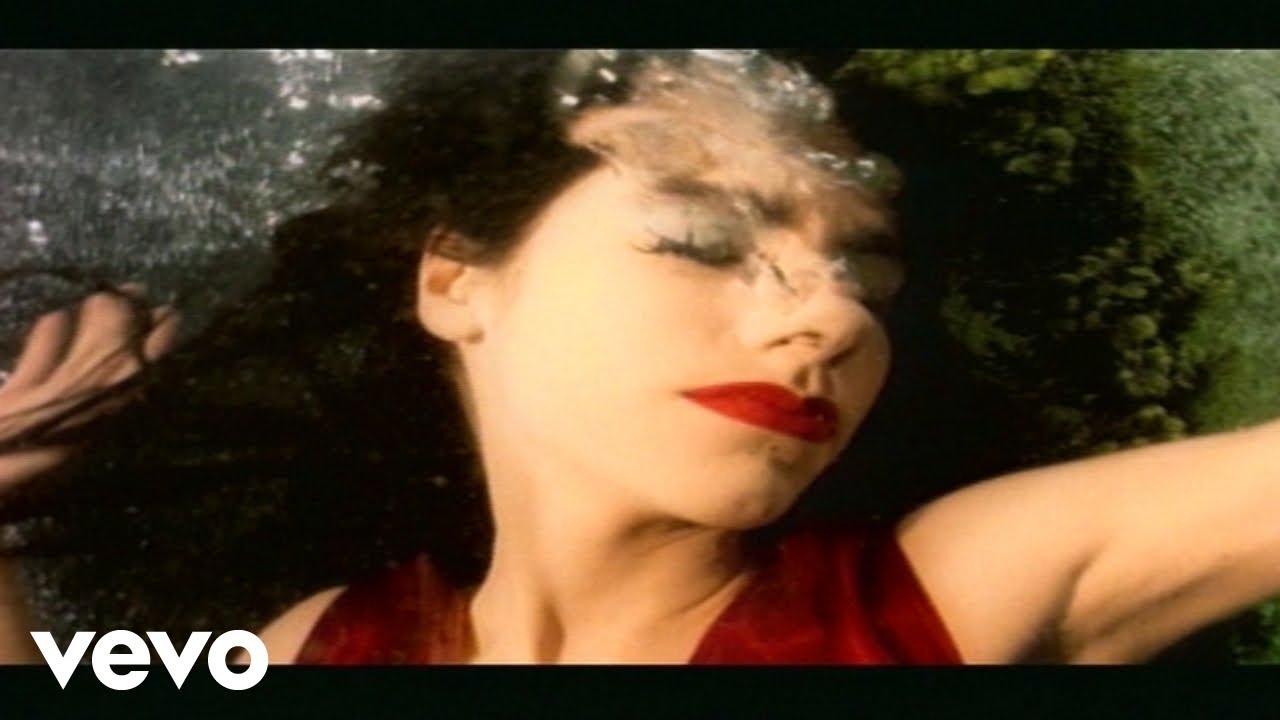
But as she explained, To Bring You My Love was especially notable for the shift in how she approached her songwriting.
“For the first time, I'd start out by thinking of the mood I wanted to create,” she said. “Ninety percent of these songs started from wanting to build an atmospheric base.”
I’m having a fab-o time. I’ve got the most handsome band in the world, especially the guitar players.”
— P.J. Harvey
The shift in focus — from the technicality of the riff to the atmosphere of the performance — yielded a masterpiece. The album sold a million copies and produced the unlikely hit “Down By the Water,” a song about infanticide that nonetheless dominated U.S. radio.
Unburdened by the weight of the guitar, Harvey was free to inhabit the songs as a pure frontwoman, confident that her hand-picked duo would execute her vision. Of course, she also cited a more primal motivation.
“I’m having a fab-o time,” she teased. “I’ve got the most handsome band in the world, especially the guitar players. The only reason I picked them is so I can look at their behinds.”
