
Pat Metheny’s most famous instrument wasn’t a pristine vintage collectible. It was a battered blonde 1958 Gibson ES-175 held together with tape, experimental electronics and — most famously — a toothbrush jammed into the tailpiece.
For much of the 1970s and ’80s, the guitar was inseparable from Metheny’s sound and image. It appeared onstage with him around the world and helped shape the tone heard on his early recordings, from his work with Gary Burton to albums like Bright Size Life.
And the toothbrush? That was simply a practical fix that never went away.

A $100 guitar that defined his sound
Metheny was 13 when he acquired the ES-175 in Missouri after another electric guitar — a Gibson ES-140T — was destroyed by an airline.
My dad and I found an ES-175 for sale. The guy wanted $120, and Dad talked him down to $100.”
— Pat Metheny
“I remember I was devastated from it. I checked it through baggage in a cardboard case, and it came out in about three pieces,” he told Guitar Player. “But the airlines bought me a guitar — that was back in the days when they actually took responsibility for it.
“So I got a Fender Mustang for about the next two months, and I remember playing that in the garage band scene. By that time I was into jazz pretty heavily.”
It was around then that the ES-175 entered the picture.
“My dad and I found an ES-175 for sale. The guy wanted $120, and Dad talked him down to $100,” Metheny told Vintage Guitar.
The purchase proved decisive. Metheny soon realized the instrument had the feel and voice he was searching for, and it quickly became his musical anchor.
“It became the thing for me and remains the standard by which all guitars are judged,” he said.

The toothbrush repair
The guitar’s most famous modification happened out of necessity.
“When I was about 16 the little thing to hold the strap on broke off while I was at a gig,” Metheny told Guitar Player in 1981. “I stuck a toothbrush in there so I could stand up, and it’s been there ever since.”
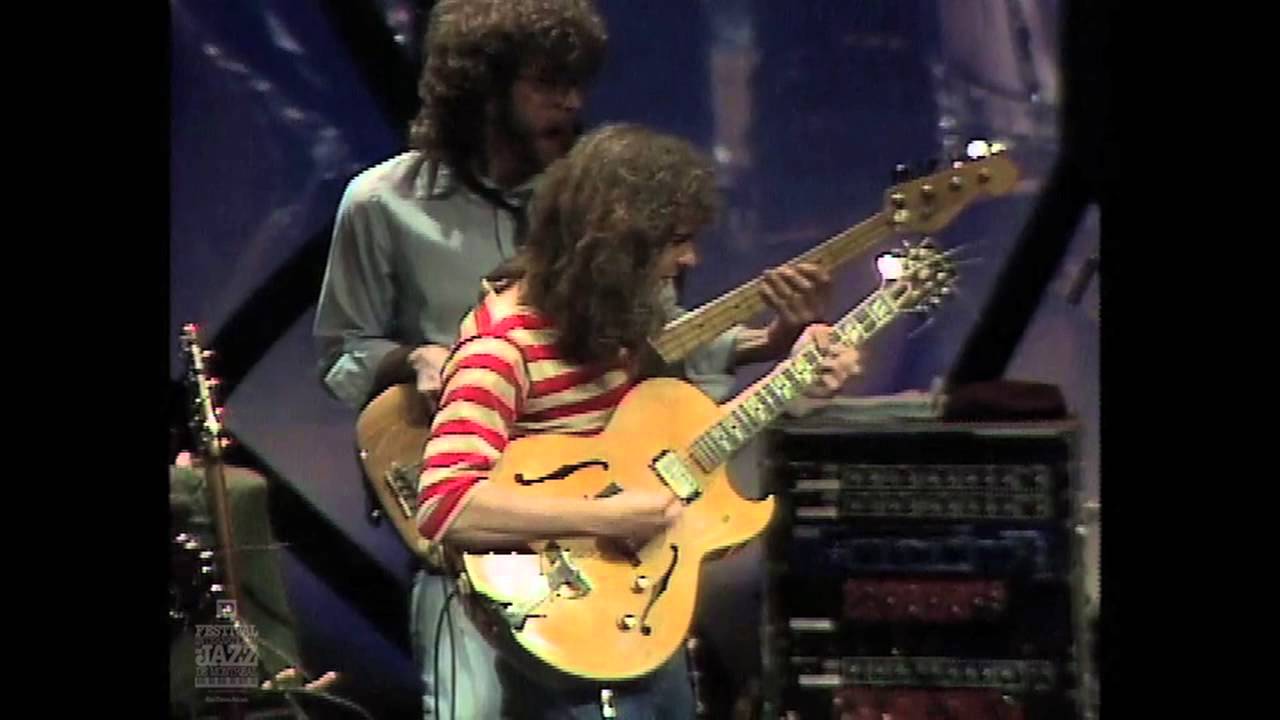
What started as an emergency fix became part of the instrument’s identity. Photographs from the 1970s and ’80s clearly show the toothbrush protruding from the tailpiece — a quirky detail that fans and guitarists instantly recognized.
When he began studying music at the University of Miami, Metheny experimented with other instruments in search of the right sound.
My 175 had been sitting under my bed while I flirted around with all these other instruments. All of a sudden it felt like that was the instrument I should be playing.”
— Pat Metheny
“I had a Gibson L-5; I played a Les Paul for a while. I was trying everything I could, and it was a little bit frustrating because I couldn’t seem to get the sound I wanted.”
Eventually, he rediscovered what he’d been looking for in his ES-175.
“My 175 had been sitting under my bed for about six months while I flirted around with all these other instruments, and then one day I got it out again. All of a sudden it felt right, like that was the instrument I should be playing.
“When I hear old tapes from around then, stylistically I can tell it’s me. This was about the beginning of 1973. It was still kind of raw, but the sort of quirks that have become my style were apparent then.”

A heavily modified instrument
The guitar itself was far from stock. As a young player experimenting with tone, Metheny modified it extensively.
The ES-175 originally came with a single pickup, but Metheny added another pickup and a second set of controls. Eventually he decided he didn’t like the result and removed the experiment.
“This was originally a one-pickup guitar, and I put another pickup and set of controls in there,” he recalled to Guitar Player. “After the experimental pickup started falling out one night, I took it out and covered up the holes.”
Years of constant touring also left the instrument physically fragile.
“There’s gaffer’s tape along the sides of the guitar because there are big cracks in there,” Metheny said in the same interview.
Decades on the road
Despite its increasingly battered condition, the ES-175 remained Metheny’s primary instrument through the formative years of his career. By that point the guitar had survived thousands of performances and recording sessions — and countless miles on the road.
“It was really getting beat up. It had never been in the shop and was held together with duct tape and stuff,” he told Reverb.
Even when he began using a Roland GR-300 guitar synthesizer in the early 1980s, Metheny continued to rely on the ES-175.
“I really rely on feeling the wood vibrating into my chest,” he told Guitar Player, “so that’s why I prefer the 175.”
Too fragile to tour
Eventually the wear became too much. Metheny retired the guitar from regular touring in the early 1990s and began working with custom instruments from Ibanez.
Still, he never lost affection for the battered ES-175 that defined his early sound.
“I miss the 175… it was getting too rickety in the past few years,” Metheny later wrote in a response on his official website forum.
Today the guitar remains one of the most distinctive instruments in jazz-guitar lore — not because it was pristine, but because it was so obviously lived-in.
With its worn finish, cracked sides, taped seams and a toothbrush sticking out of the tailpiece, the ES-175 is an unlikely star guitar in any player’s arsenal. But it’s also a reminder that one of the most influential jazz guitar voices of the modern era emerged from an instrument that looked like it might fall apart at any moment.
