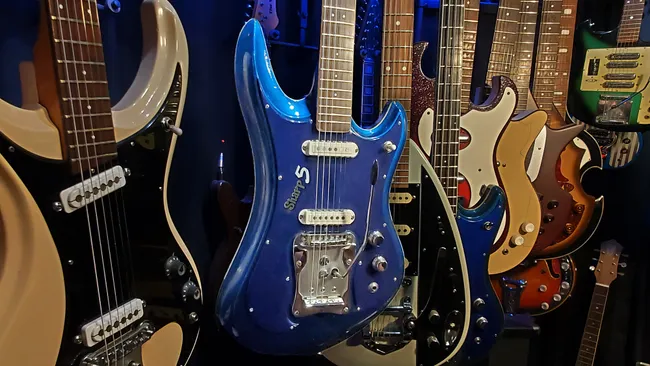


For most of his career, Jeff “Skunk” Baxter has been a studio guitarist. Though he’s best known for his time in Steely Dan and the Doobie Brothers, he’s been a prolific studio hound for longer than he was in either group. His specialty is guitar solos, and he’s laid down countless memorable moments on records, from Dan’s “Rikki, Don’t Lose That Number” to Donna Summer’s “Hot Stuff,” which he dexterously performed with a used Burns Bison electric guitar he bought for $20.
“I kind of look at guitar playing on two levels,” Baxter says. “There’s the professional studio sausage method, where you go in and grind it out, and that’s not necessarily bad. It’s good music and you’re having a good time. To get a chance to do it and be of that caliber is one of the most wonderful things that could ever happen to a guitarist. A lot of guys say it kills them. Well, it’s what you make of it.
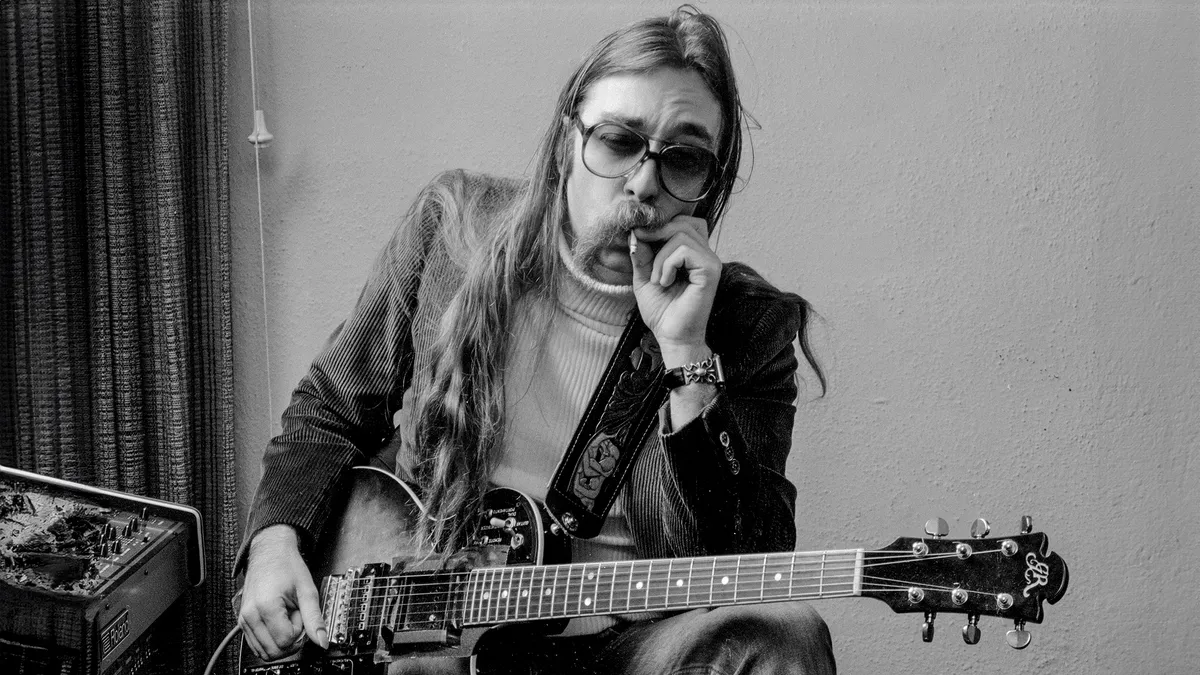
“The other level is when you really want to play and you’re with people who accept and like what you do. My specialty, if you could call it that, is guitar solos, obviously, even though I sit back and do the I-have-a-swimming-pool rhythm guitar sound that L.A., laid-back, it’s-all-paid-for studio musicians have. I do like to play solos, and the reason [Steely Dan’s] Walter [Becker] and Donald [Fagen] called me was they needed somebody to play solos.”
Of course, sometimes the sessions are something completely out of the ordinary. Baxter shared a few of his oddest jobs with us.
Steely Dan
“Walter and Donald had a certain concept of guitar playing, and they would attempt to get as close to that as possible vis-à-vis my abilities as a player. So the solos were sort of a combination of exorcism, displays of technique and all kinds of things.”
Everybody picked a piece of it, and I said, ‘I’ll take the trombone solo and learn it on steel guitar.’”
— Jeff “Skunk” Baxter
One of the most unusual sessions was for the group’s instrumental cover of Duke Ellington’s jazz tune “East St. Louis Toodle-Oo,” which appeared on Pretzel Logic. Covering a 1927 jazz tune with a modern rock band wasn’t the most obvious thing to do in 1974, but Baxter didn’t flinch. Far from it. He called it “the Steely Dan song I enjoyed recording the most.”
“Everybody picked a piece of it, and I said, ‘I’ll take the trombone solo and learn it on steel guitar,’” he told Guitar Player.
As he explained to Vulture, the steel guitar was a logical substitute, given it allowed him to slide between notes, like a trombonist would. “I had the idea to try it on pedal steel. Why the hell not? I worked on it for a good amount of time, and it was fun getting through that tunnel from one end to the other and playing that beautiful solo. I wanted the challenge, and I was really satisfied.”
The Doobie Brothers
Baxter admits he is sometimes surprised by what comes out of him when he just opens up and lets inspiration fly. Sometimes it seems as if a higher power is at work, such as when he cut tracks for Donna Summer’s backup band, Brooklyn Dreams, for their album Joy Ride. Once again, he had the Burns Bison in hand.
“My solo was in a style that was like I was mumbling in tongues or speaking in dreams, using languages that have been dead for thousands of years,” he says. “After I finished playing, Juergen Koppers, the engineer, looked at me and said, ‘Was ist das?’
My solo was in a style that was like I was mumbling in tongues or speaking in dreams, using languages that have been dead for thousands of years.”
— Jeff “Skunk” Baxter
“I said, ‘I don’t know. You better play it back.’”
Of course, sometimes you get there with the help of a little reefer.
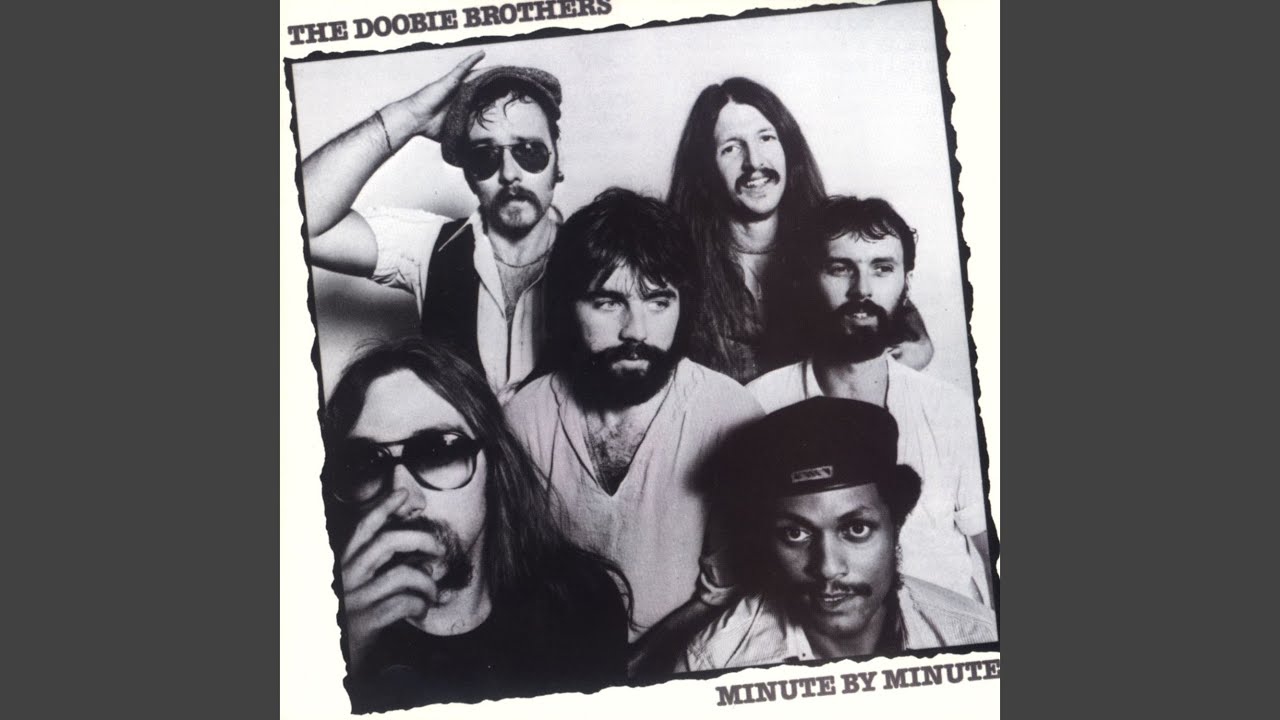
“The solo on ‘How Do the Fools Survive’ on the Doobie Brothers’ Minute by Minute surprised me because that was a one-take job, where I just smoked a joint and was alone by myself with an engineer working in another room,” Baxter explains. “It was one of those lean-back-and-play things.”
Dolly Parton
Sometimes you have to color outside the lines, especially when artists find creative ways to explain what they want.
“Sometimes you get requests like, ‘Can you make it more green?’ or, ‘I need it to ooomph more,’” Baxter reveals. “So you say, ‘Okay,’ and think about all the times you’ve ever done sessions and people have said to you, ‘Boy, that really ooomphs,’ or ‘That sounds really green,’ and you start from there.”
One of his strangest requests came from Dolly Parton for the song “Baby, I’m Burnin’,” a perennial favorite from her 1978 album Heartbreaker that also served as the theme song to her 1987–1988 television series Dolly. The singer was looking for some explosive effects to play behind her vocals.
Sometimes you get requests like, ‘Can you make it more green?’ or, ‘I need it to ooomph more.’”
— Jeff “Skunk” Baxter
“Dolly Parton asked me to make fireworks one time,” he said. “I was working with my Roland guitar synthesizer, and she said, ‘Can you just make it, like, reds and greens and sparkles?’
“So I thought about it for a second, and then with one hand I played as many notes as I could while the other hand was working the Roland’s [pitch] transposer, slapping it back up and down. She was going, ‘Yeah, yeah, that’s it. Whee!’
“There have been a couple of dates like that. I enjoy it. I get a lot of calls for steel guitar where they say, ‘Can you make it not sound like a steel guitar?’ That’s always a request. They want something different. They want a sound that has the fluidity of the steel guitar but doesn’t sound like ‘Six Days on the Road.’”

The Session That Never Happened
Baxter says that if you don’t know what to play, you shouldn’t.
“Sit back and wait because it’ll come.”
Or maybe it won’t. He recalls a session for Steely Dan producer Gary Katz that was like few others.
“He told me to bring all my stuff,” Baxter says. “I charged him triple scale because it was on a Saturday at a place way the hell out.”

He arrived with all his gear and set up. Then Katz played him an album’s worth of songs.
“He said, ‘Okay, I want you to listen to all these tunes and then tell me what you think we ought to do.’
He told me to bring all my stuff. I charged him triple scale because it was on a Saturday at a place way the hell out.”
— Jeff “Skunk” Baxter
“So I listened to 10 tunes, and each time one would finish I said I didn’t hear anything. When we finally finished, I said, ‘Gary, there’s really nothing you need. It sounds fine.’
“He said that was all he wanted to hear and paid me my money. Fair enough.
“You just don’t play sometimes. I found that one of the harder things to learn to say is, ‘There’s no need for it. You know, as much as I’d like to play on this track as a businessman, as a musician I know you don’t need it.’”
