
In an illustrious career spanning more than 50 years, session guitar ace Dean Parks has clocked up more than 3,000 song credits. But he cautions us, “I don’t think films, TV and commercials are covered in that number.”
Parks’ guitar playing career began in 1969 when he teamed up with the 1960s pop duo Sonny & Cher. “I’d taken a road gig with them,” he explains. ”They were in their second phase as artists, with an aim on becoming a Las Vegas act.
“Then they got this weekly TV show and Sonny insisted that everybody in the rhythm section get a tryout to be on the show — a kind of a wall-to-wall hour-of-music show. We had to do pre-recordings for all of that in just three hours, so we had to work quick, and there was no room for error.”
Among the musicians was another guitarist, Larry Carlton, with whom Parks developed an immediate rapport. Carlton would later become pivotal in Parks’ entry into the tight-knit L.A. studio session scene.
“I met Larry on the first show. They had called him in to be guitar one, and I was allocated to be guitar two,” Parks says. “What I didn’t know was that they were planning to make me guitar one.”
Carlton’s busy session schedule meant he wouldn’t be available all the time. ”He was really there to scout me and tell them whether I could carry the ball or not,” Parks explains.
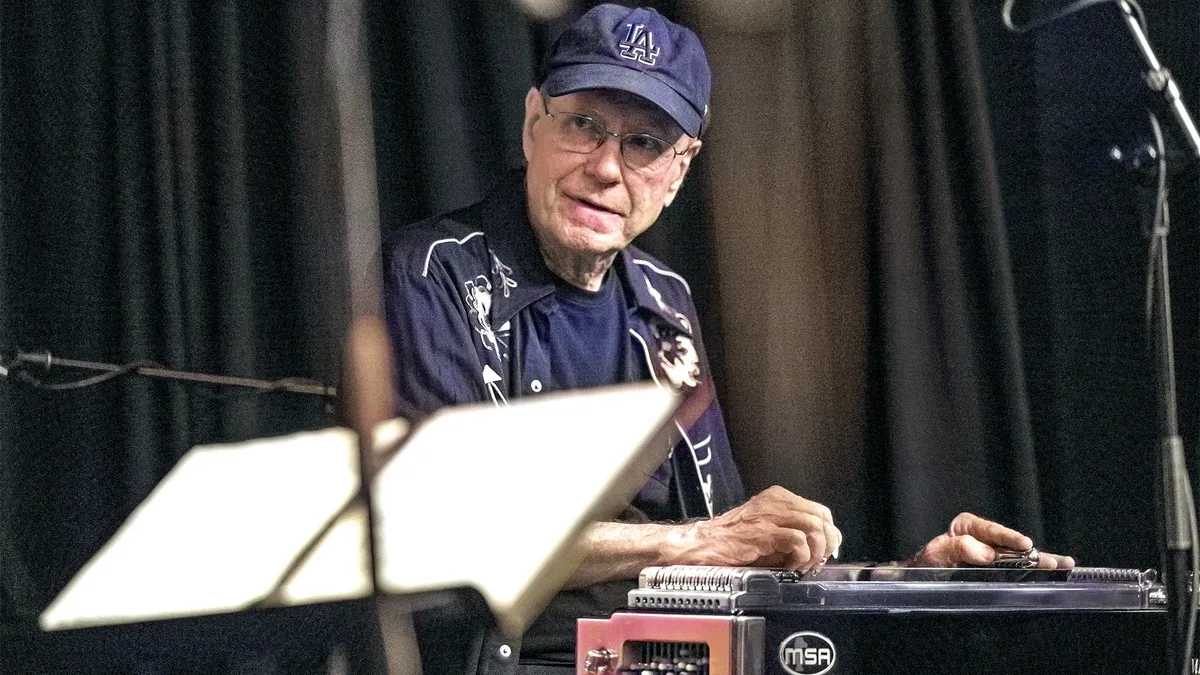
Parks soon showed he could handle the job on his own.
”Larry gave them the thumbs up for me,” he says. ”That was a good proving ground for my later session work, as it kind of had all the skill sets that you needed in a session gig, where you have to work quick, be in tune and in time, have good ideas and be able to read and cooperate.”
Carlton was so impressed with Parks that he began recommending him for the jobs he was too busy to take.
“Larry was so in demand at that point that he could no longer do song demos for people — he would just do master sessions. So he began throwing all of his song demo stuff my way. And anytime someone said, ‘Larry, we’d like you to play guitar but we want two guitars,’ he would recommend me to play second guitar to him.”
Parks eventually went on to become a mainstay on the Los Angeles studio circuit, cutting sessions for Steely Dan, Johnny Rivers, the Partridge Family, Dolly Parton and hundreds of other artists who would make use of his guitar services. Through his work, Parks bore witness to some of music’s greatest artists at work, including Stevie Wonder, Michael Jackson and Paul McCartney, and B.B. King. Here he shares stories behind some of those classic sessions.
Stevie Wonder
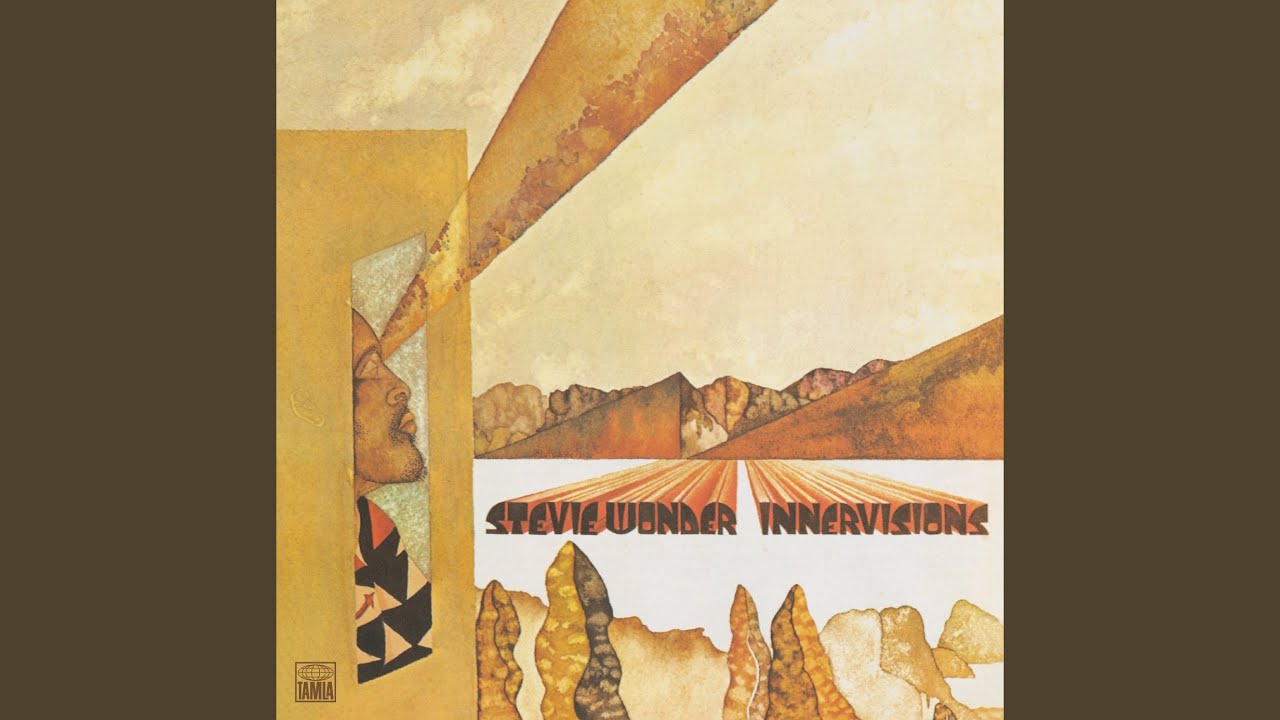
One of Parks‘ earliest important sessions was on Stevie Wonder’s landmark 1973 album, Innervisions. Wonder cut much of the album alone, working with assistance from Malcolm Cecil and Robert Margouleff, of the pioneering electronic music duo Tonto's Expanding Head Band. The two men — who worked with Wonder from 1972’s Music of My Mind through 1974’s Fulfillingness’ First Finale — assisted not only with production but also helped Wonder achieve his breakthrough sounds on synthesizers .
“The first time I worked with Stevie was when I was overdubbing an acoustic guitar on the song ‘Visions,’” Parks explains. “But when I got to the studio, he wasn’t ready for me to work; he actually made me wait until he was ready. I didn’t know how long that was going to be, so I just stayed in the control room. He had block-booked Studio A at the Record Plant, so all of his stuff was set up.
“He had a big synthesizer that was used for bass, a Fender Rhodes, drums, piano, a Clavinet… Everything was mic’d up and ready to go. The recording console had all the input modules on the left side ready to record, while the right side had our listening playback levels set.

“Stevie would call a tune, like ‘Living for the City,’ and Malcolm would go out and get Stevie situated on the instrument he was going to play and put the headphones on him. Meanwhile, Robert would be scurrying around and getting the tape ready to roll.
“Stevie would blow through the song once. Then he might say, ‘I want to do the Rhodes on “Higher Ground” now,’ so they’d scurry around again and get things ready to roll for that track.
“I watched Stevie do that for two hours and he only did one take on each piece. But it never felt like it was the first time he’d been through the piece on that particular instrument. I think he just kept recycling takes because it was fun to play and it was like jamming with himself. And he knew that as he put more instruments on, there was more to play to. I’m guessing he did that until he had good takes.”
When it finally came time for Parks to do his acoustic guitar overdub on “Visions,” he quickly dialed in a sound he was happy with, sat down with the chord chart and prepared for the tape to begin rolling.
“I hadn’t really heard the song, and he didn’t give me any direction at all,” he explains. “They just started playing it and I started playing along to it on the first run-through. At the end Stevie said, ‘That’s great. You hear anything else?’ And I said, ‘Well, I brought a nylon-string. Maybe you want to hear it on a nylon?’ And he said, ‘Sure!’
“And so they started again, and I expected they would mute the original guitar, the steel-string acoustic I had played, but they kept the steel-string acoustic in. So I played a nylon-string part that would kind of fit in with it.

“There was one little section where I had played a flurry of notes, so I did the same on the nylon-string and finished it all in one take. Stevie said, ‘Great! Thank you!’ I was curious to see whether they were going to use it, as it seemed like they weren’t taking what I had done seriously. But both takes are there on the record — one on the left and one on the right.”
Parks was also in attendance for tracks on Wonder’s 1976 magnum opus, Songs in the Key of Life.
“A similar thing happened on my acoustic overdub for Stevie’s tune ‘As’ from Songs in the Key of Life, where I just did it once, too. Stevie likes first takes. I’ve wondered if that’s part of the charm of the Innervisions album. His own performances on that album are like spontaneous first takes, although he had played through them all on other days.”
Michael Jackson and Paul McCartney
Parks recalls a late-night session in 1982 for Michael Jackson’s Thriller album, where he overdubbed guitar on “The Girl Is Mine.” The recording proved memorable, not only because of Jackson but also because of his partner on the song.
“I got the call to come in and do an overdub on a Michael Jackson record, but no other details were given to me,” he says. “When I arrived at the studio, it was revealed I would be playing on a track that Michael and Paul McCartney had written, and they would be singing as a duet.

“In the studio with me was just [producer] Quincy Jones and Michael, who was sitting in the corner, observing and available to contribute if he wanted to. The track was already done, with Steve Lukather’s little guitar rhythm part on it. I pulled out my Fender Princeton amp and plugged my ES-335 into it.
”Since I now knew who I was playing for, I thought, McCartney likes double guitar lines, like a George Harrison kind of thing. So I just came up with a little line at the end of the choruses and doubled it with a slightly cranked sound. And I was thinking compositionally too, which is sort of what I considered my job to be — an arranger with a guitar in my hand.”
B.B. King
In 1979, B.B. recruited Parks to contribute guitar to his album Take It Home. King’s rhythm section included members of the jazz-fusion group the Crusaders, whose ranks previously featured Parks’ friend Larry Carlton. The sessions gave Parks a rare glimpse into King’s captivating and economical approach to guitar solos.
“Working with B.B. was a great lesson in how to hold an audience during a solo,” Parks reveals. “He was set up in the booth with a guitar and a separate feed, and he was singing as we went along, playing all of his solos live. We got to hear him go through these tracks three or four times each, but what was remarkable was that he’d play a different solo each time, but kind of with the same three notes.
“You were on the edge of your seat waiting to hear the next thing he would play because it was such a solid idea. What he was playing was the statement. You’d wonder, How was he going to follow it up? And when is he going to follow it up? He didn’t blast you in the face and nail you to the wall. None of that stuff works very well. What does work is to think of it like fishing: you send out your bait and the audience will follow.

King called on Parks’ service two decades later for his star-studded 1997 album, Deuces Wild. B.B.’s no-frills style remained unchanged.
“B.B. always got a different sound every time I’ve ever heard him on a record,” Parks states. “On Deuces Wild, I had a Fender Tweed Deluxe combo, and I asked him if he would mind if he would try to play through that amp and let me get his sound, because I could kind of tell that he didn’t fool with amps and sounds. He’d just plug in and play, and whatever sound he was getting was the sound. I don’t think he thought about it.”

