
Once, while performing onstage, jazz virtuoso Joe Pass paused to take note of a new member who had appeared in the audience.
“Uh oh, Phil Upchurch just walked in,” Pass announced. “Now I'm nervous.”
A product of Chicago's vital R&B scene of the '50s and '60s, Upchurch began his career with groups such as the Spaniels and the Delis before establishing his talents as a soloist with his 1961 hit "You Can't Sit Down." In the '70s, his collaborations with George Benson helped produce the Grammy-winning albums Breezin' and Weekend In LA.
By the time Guitar Player caught up with him in for an interview in our February 1985 issue, Upchurch was a respected artist with 13 solo discs to his credit, along with live performances and sides he cut as a session guitarist with artists that include Michael Jackson, Leon Russell, Muddy Waters, and Booker T. & the M.G.s. Together, they demonstrated his flair for melding elements of blues, jazz, and funk into one of pop music's most soulful instrumental sounds.
Regardless of his résumé, Upchurch — whose death on November 23, 2025 was reported over the weekend — refused to let the illustrious company he kept go to his head.
“I don't like to go around saying that I've recorded with this person and that, because in most cases the artist doesn't call the musician, the producer does,” he explained. “It's better when things happen, like how I came to play on Michael Jackson's Off the Wall. I just stopped by the studio to say hello to Quincy Jones — who was the producer ‚ and he said, ‘Hey, let's have you play on this one. Then he stuck a guitar in my hands.”
Upchurch, who was proficient on both electric guitar and bass, was practical about his talents, preferring to make his reputation not as an all-rounder but for his unique style and musical contributions, which included arranging.
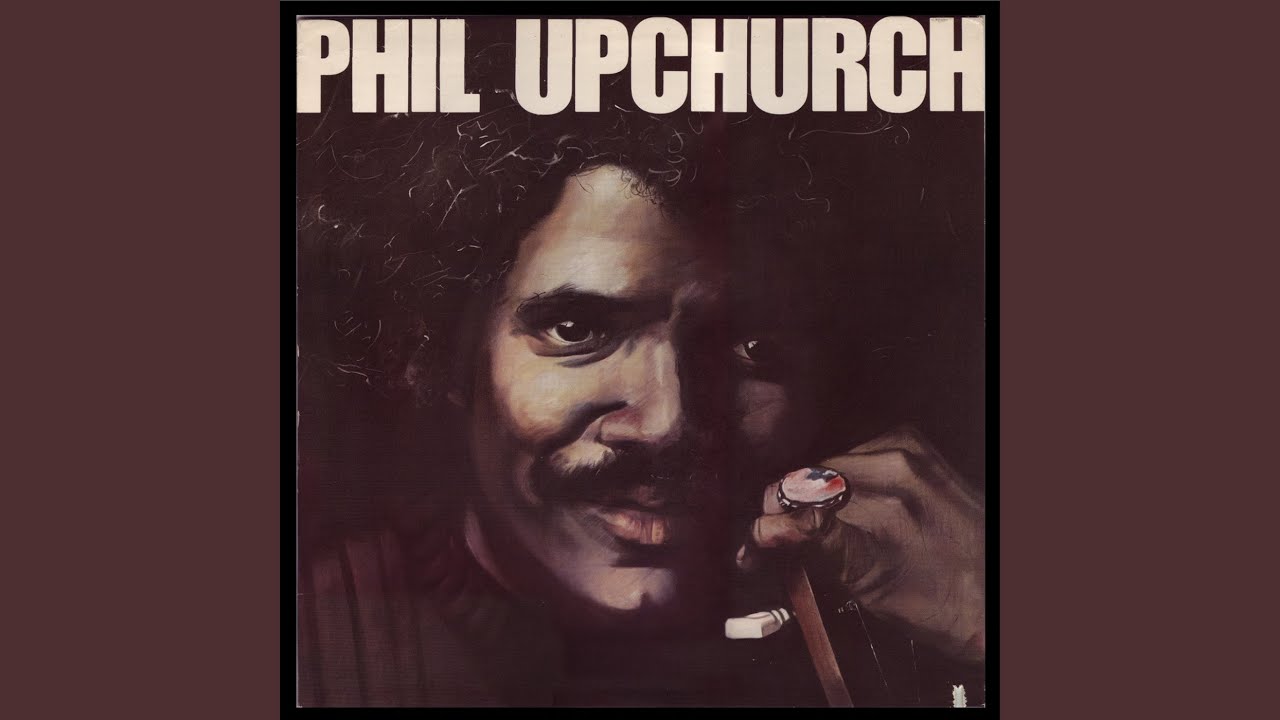
"I really like the money that session work pays, but I want people to call me for what I do,” he said. “If they want something else, they should get one of the hot young guys who's into sounding like whatever you want.
“It can be a drag if you're asked to play like some other guitarist they couldn't get. And it's a drag to go to a date that isn't happening musically; you walk away with the check, but you know they're not going to call you back.
“Last year, I did some work on a track for George Benson, and he was so happy that he said, ‘Man, it sounds so good now that I feel like jumping on top of this console and dancing!’ That really make me feel good because Dr. Upchurch saved him again.”

Born in Chicago on July 19, 1941, Upchurch was encouraged to play the ukulele at age 11 by his father, a pianist. Two years later, the youngster moved on to the guitar. Being exposed to music at an early age helped Upchurch develop gifted ears, which enabled him to progress quickly on the instrument.
Word of his prowess soon got out around town, and he received a call to play bass with bluesman Otis Rush.
“I said, 'Sure, no problem," Upchurch recalled. "But I didn't have a bass, so I had to run out and buy one. That night at the gig, Otis loved my playing. It was a gas."
While still in high school, Upchurch started playing with popular neighborhood groups such as the Cool Gents, who were fronted by male vocalist Dee Clark, and the Dells. Playing with Clark led to numerous job offers, and Upchurch began to gig steadily and appear on records, including Jerry Butler's "He Will Break Your Heart."
In 1961, Upchurch released the smash instrumental "You Can't Sit Down," spotlighting his rhythmic, blues-based style. Afterward, he says, “Agents began to call, but I turned down all of their offers because I was only 19 and didn't have enough confidence to put a band together and go out on the road."
He spent from 1965 to 1968 in the Army Special Services, which enabled him to continue playing music full time. After he was discharged, he signed on as a staff guitarist for Chicago's Chess Records, where he backed up bluesmen such as Howlin' Wolf and Muddy Waters. (Upchurch played the fuzzed guitar solos on Waters' Electric Mud.)
During that time, he also recorded several solo albums and played with many top-flight musicians, including Dizzy Gillespie, Cannonball Adderley, Grover Washington and Ramsey Lewis. In the early 70s, he cut his impressive album Darkness Darkness, and worked with composer Richard Evans and Quincy Jones (including a tour of Japan), among others.
In 1974, Upchurch began of a long musical association with George Benson when they teamed up for the album Bad Benson. Friends since the early '60s, they first met when Benson was playing with organist Brother Jack McDuff.
"The first time I heard George, I got depressed because he was playing the way I wanted to play," Upchurch said. "It made me practice all that much more. After we met, we'd hang out together whenever he came to Chicago.
“Just before George was to start working on [Bad Benson], he came by the house looking for material and ideas. He ended up using two of my tunes on the album. I also suggested he use the [Dave Brubeck standard] ‘Take Five,’ which he didn't want to do until he heard my arrangement. It really made me feel proud to have one of my favorite guitarists playing my version of a tune he initially didn't want to do. That album turned out to be his biggest seller up to that point."
In 1976, they recorded George's Grammy-winning Breezin' album, with Upchurch on rhythm guitar for the entire album and bass on two cuts.
"We figured the album would sell what he usually was doing back then, about 300,000 copies,” he explained. "As it happened, the vocal 'This Masquerade’ turned his whole career around. Right before that, he was talking about retiring and devoting himself to religion completely. He's a devout Jehovah's Witness, and he has been studying to be a minister for quite some time."

Many jazz guitarists, including Benson, Wes Montgomery and Earl Klugh, were criticized by purists for turning to more commercially oriented material. But Upchurch had a different view of the situation.
“Critics didn't like when Wes Montgomery started doing popular tunes with string arrangements, but I think it was a milestone,” he said. “Purists should be generous enough to listen to the playing first and not just the music. Musicians have to make a living just like everybody else, and jazz does not appeal to enough people for many of us to make it."
At the time of his chat with Guitar Player, Upchurch's top career priority was to expand his reputation as a solo artist. But to be creatively fulfilled, he needed to be involved in a number of projects. That included working for Polytone Musical Instruments as their west coast sales manager and national public relations man.
“In the past couple of years, I've acted in commercials for Coors beer and Pacific Telephone,” he said. “I’d like to do more of that. I want to achieve the kind of success in my solo career that Earl Klugh and George Benson have enjoyed in theirs, but that's not all I want to do.
“I'll always want to do sessions and be a sideman for other artists. And I'd like to get into producing. Staying involved in a lot of different things definitely keeps the mind quick."
