

Next to Larry Carlton, no guitarist played on more Steely Dan tracks than Dean Parks. It was both Parks’ versatility as well as his boundless creativity that led Dan collaborators Walter Becker and Donald Fagen to rely so heavily on him.
Parks’ guitar stylings found a home on five albums released under the Dan moniker: Pretzel Logic (1974), Katy Lied (1975), The Royal Scam (1976), Aja (1977) and Two Against Nature (2000). He performed as well on Fagen’s 1982 solo effort, The Nightfly, and Becker’s two solo albums: 1994’s 11 Tracks of Whack and 2008’s Circus Money.
“Working with Walter Becker and Donald Fagen was like doing a rehearsal,” Parks explains. “There was a lot of going through the music and stopping and changing things. While Donald would be in a little booth singing along, he and Walter would also be making suggestions about who should play, and what part sounded good.
“But because we all knew it was going to be good, everybody had patience about it. No one was impatient, as we were glad to be doing it.”
And despite the lengthy sessions, everyone kept their cool.
“I don't really recall there being much drama involved working with those guys,” Parks says. “We all took our work seriously at that point. And they always wanted to do interesting arrangements.
“All the studio players would study their records in headphones so that they knew what to expect before they ever got to do a recording session. I think we all had a reverence, too, for the listener, the one that zooms in on the music and is really listening to every little thing in there. We assumed those were the listeners we were working for.”

Even so, Parks says his inaugural recording session was fraught with technical issues related to his guitar’s instability with staying in tune. The track? Pretzel Logic’s “Rikki Don’t Lose That Number,” a song that would go on to become a hit for the Dan.
“Doing overdubs on that song was one of the toughest sessions for me because of a problem I was having with my guitar,” Parks says. “I was overdubbing the electric guitar part that happens in the choruses and I just couldn't keep my guitar in tune.
“I was using a ‘69 black Les Paul with electronics modded by Jeff Baxter a couple of years before, when he was a guitar repairman.” Baxter, a founding member of Steely Dan, had clocked time on New York City’s famed West 48th Street Music Row, where his customers included a pre-fame Jimi Hendrix. “And I had to do a number of punch-ins just because I had to keep retuning the guitar for each little section!”
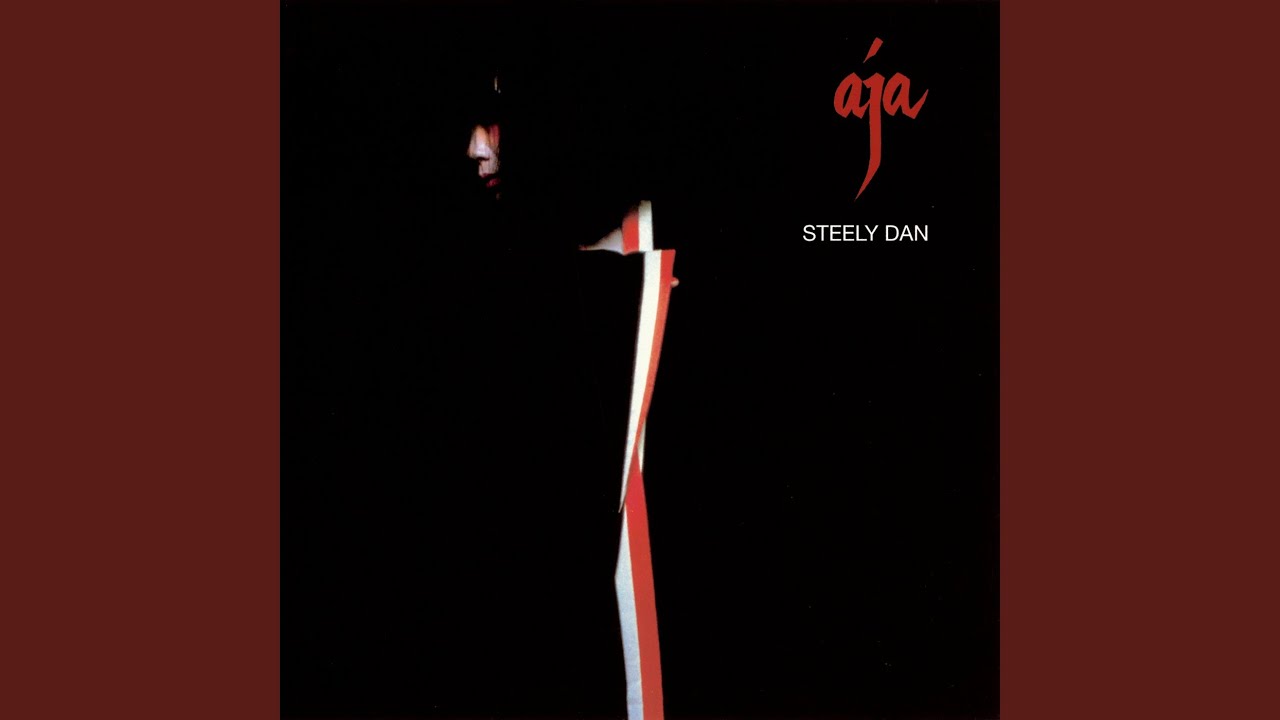
To illustrate the type of atmosphere he and the other session players experienced working with the Dan in the studio, Parks details one of the sessions he was on for “Josie,” from the album Aja.
I just couldn't keep my guitar in tune. I was using a ‘69 black Les Paul with electronics modded by Jeff Baxter a couple of years before, when he was a guitar repairman.”
— Dean Parks
“The tracking we did for ‘Josie’ was done in two sessions,” he explains. “It's what’s called a double session, where you do one from 10 a.m. to 1 p.m., then another from 2 p.m. to 5 p.m. And on the 10 a.m. session it seemed like we weren’t going to get anything on this tune.
“So we went to lunch and when we came back, it suddenly all gelled. Becker and Fagen always gave you so many changes, so many ideas, that you had to remember it all. It seemed like we were getting nowhere because there was so much to remember. You could make notes on your charts, but still every song of theirs had little left turns that you'd never seen before.
“But, amazingly, it came together once we got away from it all. It was a good lesson on teaching you that when you're frustrated with something, sometimes it’s best to go away, then come back to it later, because then it will come together.”
Parks says that most of the time neither he nor the other session musicians knew if their contributions would make it to the final cut. Neither did Becker and Fagen, for that matter. On “Josie,” for instance, both Parks and Carlton took turns at the guitar track but had to wait for the record to come out before they could learn whose part was retained.
“They would never tell you whether what you played would be kept or not,” Parks says. “Larry Carlton once told me that he had originally played the intro to ‘Josie,’ but when the record came out, he believed it had been replaced by my playing, because I had actually played the intro part too.
In fact, Parks’ part was recorded first, at the same session when he recorded the rhythm guitar.
“I told him, ‘Well, no, that's not the way it happened.’ I was on the tracking date and I did the rhythm charts for ‘Josie,’ along with three other tunes. And my intro was done when we originally tracked it.”
In the end, they probably had two to choose from, his or mine, and they ended up staying with their original idea. So it's not as though anybody replaced anybody.”
— Dean Parks
Carlton did the overdubs in the song’s middle section, Parks says. “So I’m surmising that they wanted to try Larry’s guitar sound on the intro too, since that's a lead part,” Parks says.
“In the end, they probably had two to choose from, his or mine, and they ended up staying with their original idea. So it's not as though anybody replaced anybody. They were just trying things out — trying to make it better. Walter and Donald were always open to learning and building on what they decided upon as the recording progressed.”
As Parks points out, regardless of the Dan’s modus operandi in the studio, at the heart of it all was their experimental spirit, with one objective in mind: to achieve the sounds they heard in their heads. A good example is the Royal Scam track “Haitian Divorce,” on which Parks’ lead guitar is treated with a talk box effect.
“Walter had told me before we started the session that whatever I did, he wanted it to be going through a voice box to give it a type of wah-wah sound,” Parks says. “He said, ‘Either you can do it while you play it, or I can add it later.’ And so I opted to just play the guitar and let Walter do the effect.”

Becker’s flexibility is indicative of how the duo worked, creating an environment that brought out the best in their session artists and allowed them to work with minimal directions.
“They either liked what you were doing,” Parks says, “or they would have a specific change, or get you to play it tighter or try something in the upper register if it was a little too busy. That was the only directive they gave you, which was very common during their sessions.”
Surprisingly, neither Parks nor any of the other musicians ever saw Becker play guitar during their sessions. He always overdubbed his guitar parts afterward. It wasn’t until years later that Parks finally got the chance to play guitar with him in an intimate setting.
“I never actually played with him until the early ‘90s, as I just knew him as a songwriter and producer,” he says. There was a period between Gaucho and Two Against Nature where Donald and Walter didn't really speak, so Walter started producing records and he called me to be on some of those records.
“Then he wanted to do a solo record, and I kind of helped him get started on that thing. And that's the first time I ever played with him. We would just sit in his studio in Maui, Hawaii, and just sort of jam on jazz standards across from each other. One would play rhythm, and the other would play a solo, and we'd just trade back and forth.”
The Dan’s meticulous focus on detail and their obsessive pursuit for perfection led to lengthy recording sessions. That, in turn, caused the costs to soar beyond their budgets, leading the record company to put pressure on them. Although Parks was never privy to that side of their business, he surmises they didn’t worry about the cost.
“Donald and Walter did not want to be bothered about that,” he says. “They just needed it to be great.”

