
Nick Lowe’s long, durable career has been built on decades of indelible pop songs — “Cruel to Be Kind,” “So It Goes” and “I Love the Sound of Breaking Glass” among them.
But the bass-playing Brit-pop original freely admits he misjudged two of the songs that would become his most enduring calling cards. He wasn’t convinced “Cruel to Be Kind” had the goods, only to watch it become his best-known hit in both the U.S. and the U.K.
He had similarly modest expectations for a tune he wrote in the early 1970s for his pub-rock group, Brinsley Schwarz: “(What’s So Funny ’Bout) Peace, Love and Understanding.”
“I remember quite clearly, I woke up one morning and had this idea for a song called ‘(What's So Funny 'Bout) Peace, Love & Understanding,’” he told Guitar Player in 2024. “I thought, That's a real mouthful. It doesn't exactly trip off the tongue, but it is actually an original idea. I couldn't believe that I'd actually made up something that no one else had done before.”

Brinsley Schwarz recorded it for their final studio album, 1974’s The New Favourites of…. Their version was decidedly folk rock, sung earnestly, if somewhat languidly, by Lowe. Released as a single, it failed to chart.
As far as Lowe was concerned, it had its chance — and blew it.
“When the Brinsleys split up, that should've been the end of it,” he told Stereogum in 2021. “That's what happens to bands' songs when they split up, the songs go in the dustbin of history. The song was never a hit, it never caused much of a stir at all when we did it originally."
The track, however, had one very devoted admirer: Elvis Costello. By 1977, Costello was a rising star in Britain’s punk and new wave scene, and Lowe was producing his records. While working on Costello’s third album, 1979’s Armed Forces, the singer suggested to Lowe that he and the Attractions cut a version of it.
In his 2015 memoir, Unfaithful Music & Disappearing Ink, Costello wrote that Lowe’s original “seemed almost tongue-in-cheek, a take on that brief period after flower power when Tin Pan Alley staff songwriters seemed to say ‘Hey, let's get in on some of this crazy ‘peace’ and ‘love’ stuff that the kids are digging today.’ ”
It was Lowe who proposed reframing the song as something far more forceful — a full-throated rebuke of war, belligerence and bigotry.
The result was a powerhouse track, arguably the closest thing to an anthem in Costello’s deep catalog. Over the Attractions’ taut groove, his heavily reverberated voice carries a mix of urgency, anger and sincerity rarely heard before or since in rock and roll. In his reworking, the song’s title shifts from a question to a challenge — and by the final refrain, a demand.

Despite its obvious punch, the track made its debut months before the release of Armed Forces, and in unlikely fashion: as the B-side of the 1978 Lowe single “American Squirm,” where it was credited to Nick Lowe and His Sound. The snarling vocal and stampeding rhythm section were unmistakably Costello and the Attractions. The only visual clue was the sleeve photo, which showed Lowe wearing Costello’s horn-rim prescription sunglasses and holding the singer’s Fender Jazzmaster electric with his name emblazoned on its fretboard.

It might have languished there were it not for Costello’s American label, Columbia. Fearing U.S. listeners wouldn’t connect with the strictly British themes of the Armed Forces track “Sunday’s Best,” the label replaced it with “(What’s So Funny ‘Bout) Peace, Love & Understanding.”
It was an uncharacteristically astute move. The song quickly became a fan favorite, and Costello’s rendition emerged as the definitive version.
“It was he who really popularized that song,” Lowe told journalist Shawn Conner in 2017. “It's been covered by loads of people, and it would've disappeared if it wasn't for him.”

Even so, the song’s most consequential windfall arrived years later — courtesy of the 1992 romantic thriller The Bodyguard, starring Kevin Costner and Whitney Houston. Its soundtrack became a commercial juggernaut, selling 10 million copies in its first year, fueled by Houston’s towering rendition of the Dolly Parton song “I Will Always Love You.”
Tucked among the album’s tracks was “(What’s So Funny ’Bout) Peace, Love and Understanding,” covered in an uptempo Northern Soul vein by vocalist Curtis Stigers.
What can I say? It was just the most enormous stroke of luck.”
— Nick Lowe
Lowe had no idea the song was in the film, let alone on its soundtrack.
Then the checks started arriving.
He remembers the first one vividly. He assumed it was a mistake.
“A million dollars. I won’t be coy. A million fucking bucks,” he told Mojo in 1994. “What can I say? It was just the most enormous stroke of luck.”
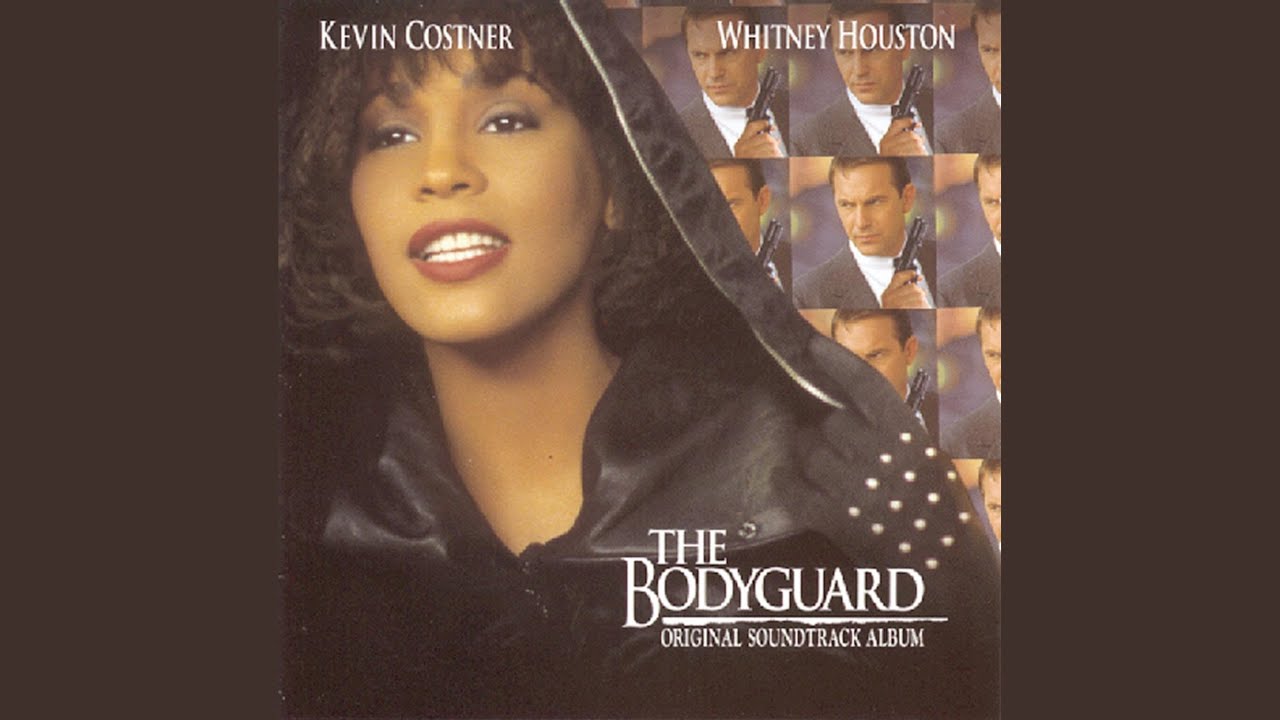
The windfall changed the practical realities of his career.
The check “paid for a couple of tours, a decent bus and some good hotels — ones where we wouldn’t get our stuff stolen and we could have separate rooms,” he told Music and Musicians. “Also, I could pay the band. And I could start making another record. Without the check, I don’t think it would’ve happened at all.”
Ironically, the song’s appearance in the film is almost imperceptible. While interviewing Lowe, Fresh Air host Terry Gross asked where it was used.
Even my mother has sat and watched it, and she said she couldn’t hear it anywhere.”
— Nick Lowe
“I haven’t got a clue,” he replied. “I haven’t even seen it. I know lots of people who have seen it, and they all tell me that my song isn’t in it at all.
“Even my mother, who has ears like a Mum, has sat and watched it, and she said she couldn’t hear it anywhere. But I presume that it’s on a car radio or something playing in the background.”
Keen listeners spotted its brief appearance around the film’s 33-minute mark. Roughly 10 seconds of Stigers’ recording surfaces as Houston’s character opens a letter containing a death threat.
Lowe’s mum may have missed it, but those few seconds delivered the biggest payday of her son’s life.
