

GuitarPlayer Verdict
Gibson has created a slick, stylish guitar app that lives up to the brand’s premium reputation. The gamified fretboard, play-along tab, and competitive leaderboard provide a modern, motivating environment for beginners looking to hone their chops. The song library covers rock, blues, and pop particularly well, while the built-in digital amplifier is a clever addition that lets players explore tones closer to the songs they’re learning. Although the ‘Guides’ section will appeal to more advanced players, there’s not quite enough depth to keep seasoned guitarists fully engaged.
Reasons to buy
- +
Incredibly slick user interface.
- +
Playalong tablature and interactive fretboard.
- +
Covers rock and blues genres well.
- +
Real artists teaching their own songs
- +
Intuitive pathway.
- +
Competitive leaderboard offers encouragement.
Reasons to avoid
- -
Intermediate and advanced players may find it lacking.
- -
The microphone tracking is sometimes laggy.
- -
Not the best song library.
You can trust Guitar Player. Our expert reviewers spend hours testing and comparing guitar products so you can choose the best for you. Find out more about how we test.
What is it?


Price: Monthly from $19.99/£16.99
Yearly from $119.99/£99.99
Download for iOS
Download for Android
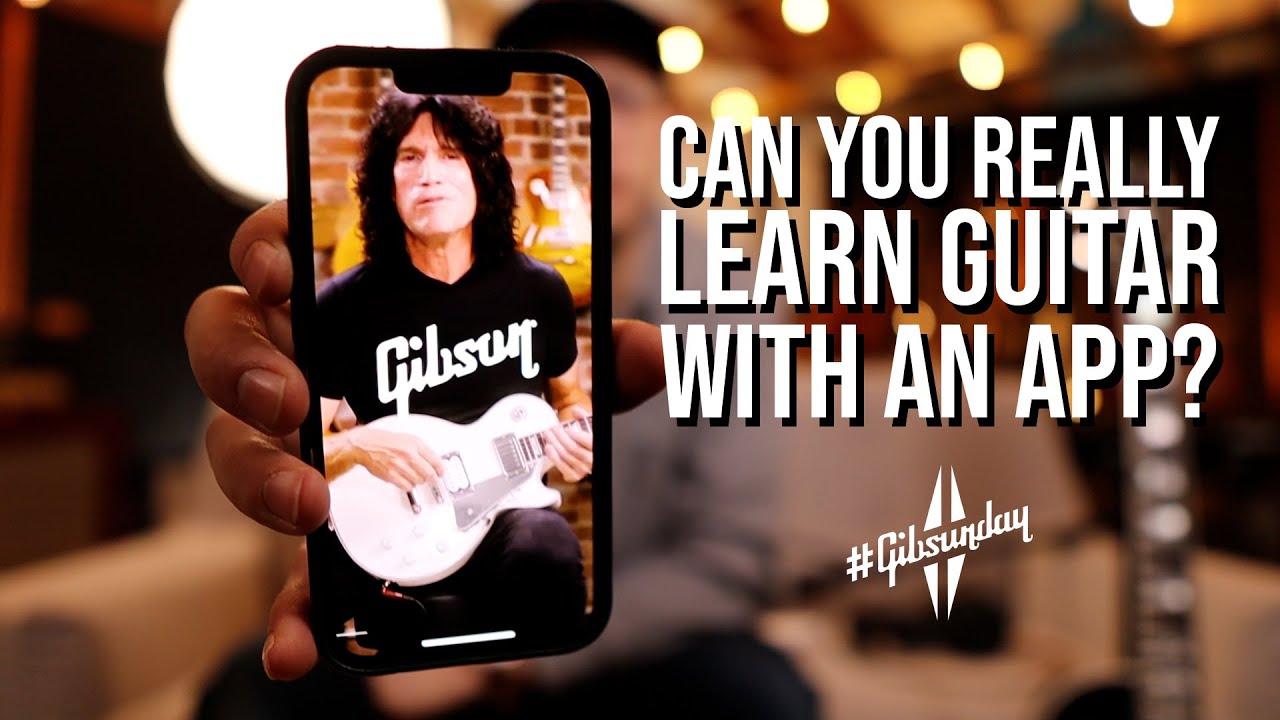
The Gibson: Learn to Play Guitar app is the brand’s move into the crowded world of digital guitar tuition, taking on heavy hitters like Fender Play, Yousician, and Simply Guitar. Launched in 2021, Gibson’s online guitar lesson app isn’t necessarily a newbie, and over the years, it has aimed to merge its heritage as a guitar icon with the accessibility of modern app-based learning.
Like Simply Guitar and Yousician, Gibson has gone for a ‘gamified’ learning experience, taking much inspiration from the video game Guitar Hero, offering an interactive fretboard that tracks your playing in real time.
It’s designed to take players from day one through to advanced techniques, with a clear, structured ‘pathway’ layout that builds confidence step by step. Lessons are split into intuitive modules covering rhythm, melody, and genre-based playing, supported by an ever-expanding song library featuring well-known tracks across rock, blues, and pop.
A ‘Guides’ section offers deeper dives into specific techniques and styles, while handy built-in tools like a tuner, metronome, and a surprisingly capable digital amplifier round out the package.

Available on both iOS and Android, the app feels right at home on a smartphone or tablet. For this review, I used an iPhone 16 Pro Max and relied on the internal microphone to test its lesson tracking, real-time feedback, and overall usability from a beginner’s perspective. Having taught guitar myself, I was particularly interested to see how Gibson handled the fundamentals without the ability to answer direct questions, all while keeping learners on track and motivated.
Can Gibson’s Learn to Play Guitar really stand up to the competition and carve out its space in an already packed field? Let’s take a look.
Who is it for?

Being a tool primarily designed for newbies, the Gibson app is aimed at beginners and early intermediates; however, there are features that will still appeal to more seasoned players.
If you’re just starting your guitar journey, its structured pathway system provides clear, easy-to-follow steps that will help deliver real progress. Those returning to guitar after a long break will also find it a handy refresher, as will self-taught players looking to refine their technique or fill in gaps in their guitar knowledge.
The song library leans heavily toward rock, pop and blues, with a few forays into folk and classic metal. Players with a jazz or modern metal preference may find it a little limited for now, but Gibson has stated that new material is added regularly. There are also lessons taught by artists themselves, including Judas Priest’s Richie Faulkner and Jared James Nichols, which adds an inspiring, behind-the-scenes feel.

Unexpectedly, there are also a few classical pieces in the library, tailored for nylon-string guitars. While they’re a nice inclusion, they do feel somewhat like an afterthought compared to the main focus on electric and acoustic material.
If you’re looking to build strong fundamentals, basic fretboard awareness in an engaging, video-game style-structured environment, this app is a perfect starting point. For more experienced players, the ‘Guides’ section is where the real value lies. These deep dives explore more nuanced topics, from practical scale application to stylistic breakdowns that offer tips on achieving tones and phrasing inspired by icons like Brian May and Jimi Hendrix.
Usability

The app feels premium from the moment you open it. Navigation is clean and intuitive, and Gibson’s design team clearly took cues from its heritage, as everything feels considered, uncluttered, and unmistakably ‘Gibson’. The slickness reflects Gibson’s recent website update, and the coherence across its digital landscape is pleasing.
Setting up is straightforward: you’re asked to calibrate your device’s microphone and choose your playing level before diving into lessons. Once you’ve made your selection, the onboarding lesson and introductory video are tailored to your level, and certain sections of the app are highlighted accordingly. For example, advanced players are shown the deeper ‘Guides’ section exploring different styles, scales, and exercises, while beginners are directed to tools like the built-in tuner.

From there, you’re let loose on the pathway curriculum. This isn’t necessarily a ‘tailored’ experience beyond onboarding, but you can only progress by completing each lesson step by step. Gibson is currently developing a more adaptive experience that evolves with the user, so it’s one to watch for future updates. However, for now, progression is largely self-directed.
During testing through lessons, the note tracking proved mostly reliable and accurate, with the app doing a commendable job of recognising single notes and simple chords. On more note-heavy playalongs, like the tremolo section in the introduction to Black Sabbath’s War Pigs, the tracking sometimes struggled when using an unplugged electric guitar.
In general, I think the Learn & Play app performs best with an acoustic guitar or an electric guitar connected via a smartphone interface such as an iRig, as the built-in microphone can sometimes miss softer notes or faster sections of heavy chord usage.

For now, progression is largely self-directed
The animated fretboard system works well, offering a gamified learning experience without ever feeling childish. It certainly takes cues from Guitar Hero and it largely works in a similar fashion; a note will appear on the fretboard, and when you play the note in time, it will rate your playing.
Progressing through lessons earns you points that are automatically added to an online leaderboard, allowing you to compete against other players. It won’t appeal to everyone, but it’s a fun, motivating way to keep practice engaging.
The built-in tools – the tuner, metronome, and Amp & Jam feature – are genuinely useful, particularly the digital amp simulation. The amp can be activated while playing along with songs or lessons and does a fantastic job of adding realism to your tone. It only works with wired headphones, as Bluetooth introduces latency, but if you can access it, you’ll unlock a range of clean, crunch, heavy, and lead amp tones, plus a solid suite of effects, including phaser, flanger, and reverb.
Verdict

The Gibson Learn to Play Guitar app delivers a polished, thoughtfully designed experience that feels unmistakably Gibson. It’s one of the most visually cohesive and intuitive guitar learning platforms available right now, and its step-by-step pathway makes it especially accessible for beginners. Everything from the navigation to the built-in tools has been crafted with care, and it’s clear Gibson has taken its time to ensure the learning process feels guided rather than overwhelming.
The integration of real artists teaching their own material adds an extra layer of inspiration that few competitors can match. Hearing lessons directly from players like Richie Faulkner or Jared James Nichols bridges the gap between student and stage in a genuinely engaging way.
Real artists teaching their own material adds an extra layer of inspiration that few competitors can match
That said, intermediate and advanced players may find themselves running out of material fairly quickly. The core curriculum focuses on fundamentals, and while the ‘Guides’ section offers more advanced insights, it’s not enough to sustain long-term progression for experienced players. Also, while the song library covers classic rock and blues brilliantly, it lacks diversity across genres, and the microphone tracking can occasionally be inconsistent during faster passages.
Still, for its intended audience, fresh-faced guitarists, the Gibson Learn and Play App gets far more right than wrong. It makes learning feel structured, inspiring, and enjoyable, with enough polish to rival or even surpass the likes of Fender Play or Simply Guitar in presentation.
Guitar Player verdict: A slick, modern, and well-executed learning platform that feels every bit as premium as the Gibson brand upholds. It’s ideal for beginners looking for a guided start and intermediate players brushing up on fundamentals, but advanced players may want to look elsewhere for something more engaging and challenging.
Also try


Hands-on videos