
In 1973, Alice Cooper was no longer just a rock star; he was the ringmaster of a high-decibel circus that thrived on shock and spectacle. But as he and his band prepared to record the masterpiece that would become Billion Dollar Babies, they lacked the perfect “curtain raiser” — a song that could encapsulate the thrill of a performance in a sold-out arena.
The solution arrived from the most unlikely of places: a folk-pop tune originally made famous by Judy Collins. What followed was a radical sonic transformation of the song, turning it into a menacing but triumphant call to arms that united fans for Alice’s grand entrance.
Billion Dollar Babies marked the start of a new era in Cooper‘s career, and he was adapting his persona to fit. The success of his 1972 hit “School’s Out” brought Cooper fame among teens and infamy among their outraged parents who feared the song would encourage rebellion and school absenteeism.
In response, he began his metamorphosis from underground shock rocker to headline-grabbing provocateur. His Billion Dollar Babies song “Elected” was part of the new image, a satire that cast Alice as a presidential candidate for the rock and roll generation.
Bob Ezrin, Cooper’s producer, had the talents for helping Alice through this evolution. His keen sense for novelty, combined with his theatrical approach to music, elevated his productions, whether by having kids sing along on the chorus of “School’s Out” or by adding a brass section on "Elected."
For Cooper’s new emergence on the world stage, Ezrin discovered a song he thought made the perfect opening track: “Hello, Hooray.”
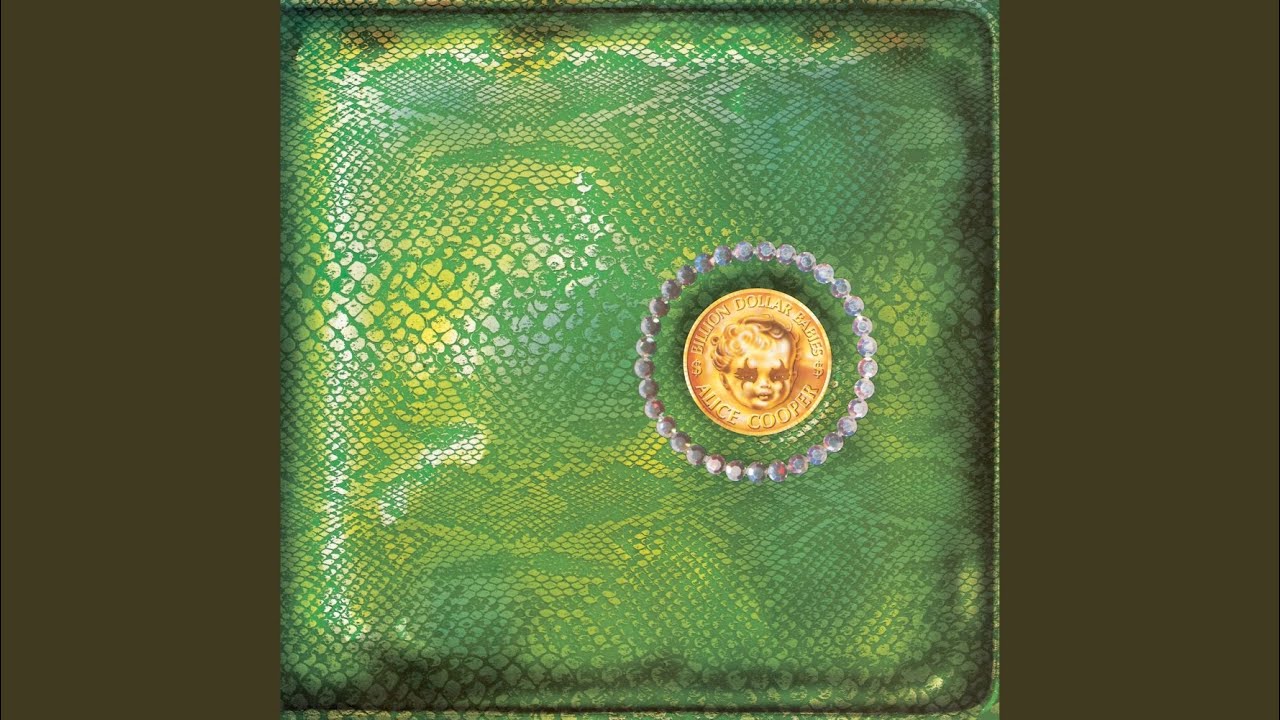
Written by Canadian singer-songwriter Rolf Kempf, the tune had been famously covered by Collins on her 1968 album, Who Knows Where the Time Goes. At its core, the lyrics are about a performer preparing to step into the spotlight, a theme that seemed well suited to Cooper’s new persona.
But the singer needed convincing.
“I heard it and I said, ‘Bob, this is a folk song,’” he recalled on The Alice Cooper Show Radio Special. “He said, ‘No, listen to the lyrics. It’s about a guy who is about to go onstage. And he’s terrified — but he’s ready.’
“It was the perfect opening for Billion Dollar Babies.”
“I said, ‘Bob, this is a folk song.’ He said, ‘No, listen to the lyrics. It’s about a guy who is about to go onstage. And he’s terrified — but he’s ready.’”
— Alice Cooper
Together with Ezrin, Cooper reconstructed Kempf’s folk-pop tune into a bombastic declaration of Cooper’s newfound power. In addition to giving the tune new lyrics that addressed the audience, they pumped it up with an orchestral arrangement and a fusillade of cannon blasts that echo over the song’s extended outro.
But the song wouldn’t be complete without some heavy guitar licks. For that, Ezrin enlisted studio guitarist Steve Hunter, and suggested he apply some harmonized slide guitar work to the intro and solo.
Hunter’s big career moments were still largely ahead of him — handling electric guitar on Aerosmith’s “Train Kept A’ Rollin’,” tackling a tricky acoustic part on Peter Gabriel’s “Solsbury Hill” and helping Lou Reed capture his first Gold record with Rock ’N’ Roll Animal — but he had great instincts for what a song needed.
Even so, he was initially skeptical of Ezrin’s approach.

“It had a great arrangement, and it had terrific parts played very well by the Alice Cooper boys,” he tells Guitar Player. “But I was taken aback when producer Bob Ezrin suggested a slide part for the song’s solo section. I had tried my hand at slide playing a few times, and I quickly discovered it was much harder than it appeared. I decided to leave the slide stuff to Johnny Winter or George Harrison.
“Luckily for me, however, I had spent five years of my youth learning how to play lap-steel — thanks to my father — and I experimented with making my lap-steel technique sound like slide guitar.”
For the session, however, Hunter showed up toting not a lap steel but a beat-up, mid-to-late-1950s Gibson electric six-string pedal steel. It was a basic model with just four pedals, but one of those was badly damaged, leaving just three pedals to work with.
“Whatever Bob had in mind when he envisioned a ‘slide part,’ it was a pedal-steel performance.”
— Steve Hunter
“I tuned the guitar to an open E, the first pedal to an open A, and the third pedal to an A minor chord, so I would have at least one minor,” he says. “Plus, I could use the relative major/minor chord relationship to get another minor. That was just about the extent of my music theory in those days.”
“With all of its problems, when you plugged the pedal steel into a Marshall half-stack, it sounded amazing,” Hunter continues, “likely due to the fact that its pickup was probably a PAF. Whatever Bob had in mind when he envisioned a ‘slide part,’ it was a pedal-steel performance.”
Although Hunter usually approached soloing through improvisation, he and Ezrin agreed a constructed solo was what the song required.

“I worked out the solo,” he says, “then doubled the first half and played harmony to the second half. Over the chords immediately following the solo, I pushed a couple of the Gibson’s ‘chord pedals’ — which is what I called them — to follow the progression.
“The tone was pretty organic. No effect pedals. We did use outboard studio gear, such as compressors and EQ, but my guitar tones were primarily from the volume and tone controls on the amp, and the volume and tone controls on the guitar. I still love the tone of that old pedal steel on ‘Hello Hooray.’”
Unfortunately, he no longer owns the Gibson pedal steel.
“It died a sad death,” he says. “If I had known then what I know now, I would have at least kept that PAF pickup.”
As for Ezrin, his instincts were spot on. “Hello Hooray” (minus the original‘s comma) became a hit for Cooper — it reached number 35 on the Billboard Hot 100 — and made for a grand spectacle as the opening tune on the Billion Dollar Babies tour.
“That song was the quintessential Alice opening,” Cooper says. “It was the call to arms. It told the audience, ‘The show is starting, and you’re part of it now.’”
