
Guitar makers have long recognized the benefit of having an artist’s name attached to their wares. Les Paul, Chet Atkins and Nick Lucas — likely the first guitarist to have a signature model — all had their names emblazoned on guitars.
As the electric guitar boom got underway in the 1960s, a few gear makers continued to release artist models. Gibson had the Trini Lopez semi-hollow, while Mosrite teamed up with the Ventures to create the Ventures model line.
Over in Japan, a surf band called the Sharp Five received a signature model from Guyatone, the LG 350-T Sharp 5 (the company chose the numeral over the word). The band featured star guitarist Nobuhiro Mine, who helped design the Sharp 5 at age 20. He’s since been involved in creating many iconic guitar models and remains an active performer.
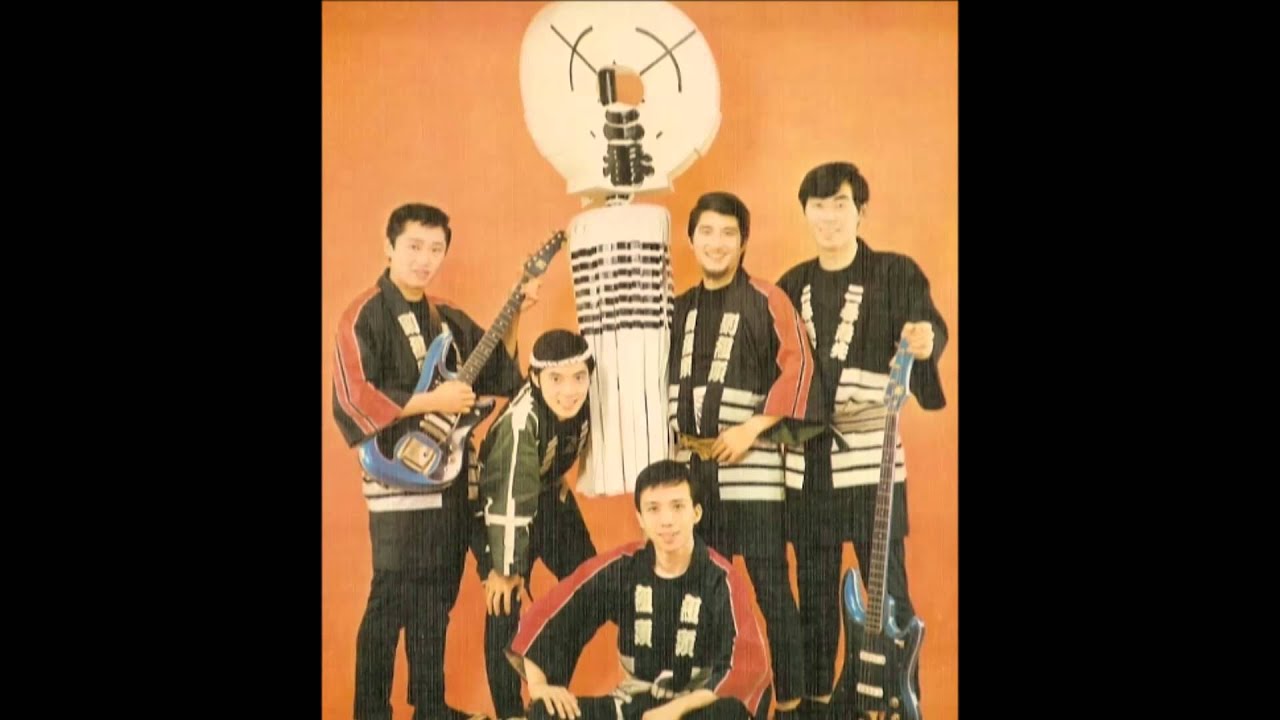
With the Sharp 5, Mine became a trailblazer in the world of Japanese surf rock. Unfortunately, neither his band nor the guitar that bears their name made a splash in the U.S., which is a shame. Both were quite good and novel in their own ways.
Made in Guyatone’s Kawai plant, the 1968 LG 350-T shown here is a fine example. The exaggerated offset cutaways and whack-as-hell headstock are the most noticeable weirdo features, but they are balanced by the beautiful blue pickguard atop a deep-blue sparkle body with a sculpted, almost German-style carve top. A carve top was an unusual feature not found on other guitars of the day aside from some Rickenbacker models and a few Mosrites.
Looks aside, this is an excellent and well-made guitar that could have been a contender in the late-’60s and remains a clear winner on today’s vintage market. It sports a super skinny neck, similar to what you’d find on a Mosrite, with 22 low-profile frets set into a rosewood fingerboard with cream binding. Like a Mosrite, it has a metal nut and a zero-fret, but no pesky volute. It adds up to a guitar that’s easy to play, and fast as well.

The two single-coil pickups have a decidedly Fender Jaguar look and sound, although they’re a bit louder and bassier. Electronics include global tone and volume controls with a three-way pickup selector. This guitar is super cutting for funk strumming and/or surf lead lines. The middle setting is out-of-phase, and sounds excellent.
This guitar also slams with distortion added. It has a lot of harmonic “chick” sounds but doesn’t get too microphonic — although I understand that some later model years had noisier pickups than others. Early examples, like this one, are quiet. The tremolo works beautifully as well, along the lines of a Bigsby, so no dive bombing.

At 24 inches from nut to saddle, the Sharp 5 is on the long end for a three-quarter-scale guitar. The frets are slightly closer to each other, but not all that noticeably. My only complaint about the guitar is the neck angle. The headstock travels straight off the neck, with no downward pull. Three dual string trees compensate for the lack of string tension, but it’s still a bit banjo-like to play. That complaint aside, it’s a killer guitar.
In 1968, the LG 350-T sold for roughly $95. Today, a Sharp 5 in good condition could fetch between $1,000 and $2,000. I paid $1,300 for mine in 2025, which was a great deal considering its age and overall condition, and especially since it has the Sharp 5 decal that the later models didn’t have. If you’re looking for a unique vintage electric that looks and sounds great, is light and easy to play, and is comparably affordable, I can recommend it.


