
Of all the guitars Robert Fripp has played, one stands out: the now-iconic 1959 Gibson Les Paul Custom he played across King Crimson’s classic works and his collaborations with artists that include David Bowie.
In 1967, a young Robert Fripp responded to a newspaper advertisement from Bournemouth-based brothers Michael and Peter Giles. They were looking for a singing keyboardist for a new project. Fripp could neither play keyboards nor sing, but he applied anyway and got the gig. The resulting band, Giles, Giles and Fripp, established an iconic songwriting partnership that laid the groundwork for prog-rock progenitors King Crimson.
A year after that advert went to print, the trio released their only album, The Cheerful Insanity of Giles, Giles and Fripp. Its hazy blend of jangling psychedelic pop, jazz, and classical music failed to find an audience, but it made a fan of a businessman by the name of Angus Hunking, whose generosity would make it possible for Fripp to buy the ’59 Custom.

“I bought it when Giles, Giles and Fripp were just about to become King Crimson,” Fripp tells Guitar World of the Les Paul’s origin story. “King Crimson were lent £7,000 by a businessman called Angus Hunking. He took an interest in us, and I believe £2,000 came in cash in a briefcase.”
Soon after, Fripp and Michael Giles, with whom he would form King Crimson, were shopping for a guitar in London’s West End.
“We went to a music shop on Shaftesbury Avenue,” Fripp says. “In the window was this Les Paul for £400.
“I asked for a cash discount. The shop assistant, a young man I disliked because of his attitude, said, ‘I could phone up Eric Clapton, and he’d come and buy it.’ And I thought, Then why haven’t you phoned him already?”

Fripp called the clerk’s bluff from a mile away.
“This young man was lying to me, and I didn’t like him,” he quips, before haggling a deal for £380.
According to the Bank of England’s inflation calculator, £380 in 1968, the year King Crimson formed, is equivalent to around £5,900 (approx. $8,000) in today’s economy. It wasn't an insignificant amount of money, even if it only made a small dent in their briefcase. Realistically, though, it would sell for far more than that were he to pop it on eBay.
“I went online today, and I found a pristine model the same as mine, advertised at $139,000,” Fripp gasps. “And that was an instrument without provenance.”
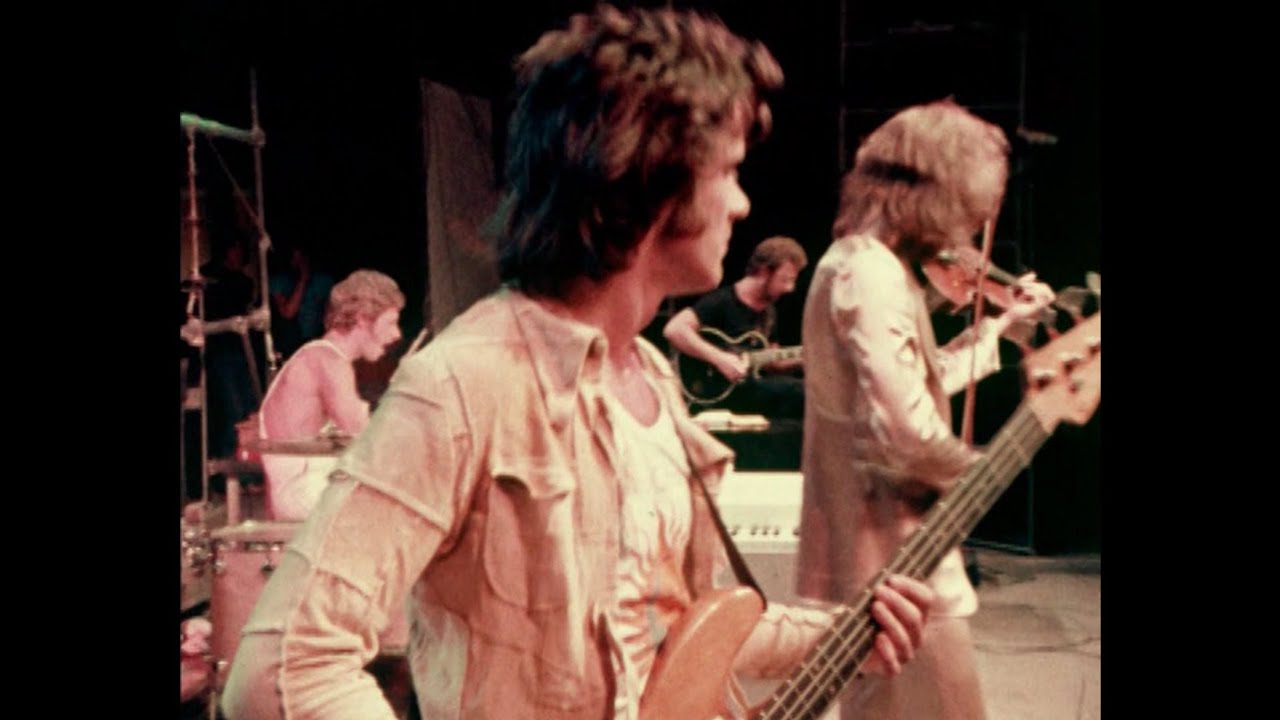
As he explains to GW, the guitar proved to be a workhorse. It featured on the band’s first seven records, breaking sonic ground again and again between 1969’s In the Court of the Crimson King and Red five years later. It would also be used to record his “celestial” guitar parts on David Bowie’s “Heroes,” which has sold 2.3 million copies worldwide.
The album’s title track has gotten a new lease of life in recent months thanks to its inclusion in the smash TV series Stranger Things.

Beyond that, the guitar would also be used during his collaborations with synth wizard Brian Eno.
After decades of toil, his staple guitar caught a break when a second ‘59 LP, bought in New York in 1978, took its place. Had he not stood his ground against that snarky guitar shop clerk, Robert Fripp’s story might read rather differently.
In related news, Fripp has laughed off rumors that King Crimson were back in the studio, while his interesting comments on Jimi Hendrix’s guitar playing have piqued the interest of many.

