
David Bowie had an uncanny talent for picking guitarists. He worked with numerous greats over the course of his long career, including Mick Ronson, Carlos Alomar, Earl Slick, Adrian Belew, Stevie Ray Vaughan and Reeves Gabrels.
But he never got the one player he always wanted: Jeff Beck. Reportedly, the guitarist was at the top of Bowie’s list in 1969 when he was selecting members for a band in the wake of his success with the single “Space Oddity.”
As Beck told Guitarist magazine, “Bowie originally wanted me to be in the band, but he got Mick Ronson, who he always said was his own Jeff Beck.”
Bowie considered a few players, including Tim Renwick, before deciding on Ronson. The two connected through John Cambridge, who played drums on “Space Oddity” and performed with Ronson in the Rats, a rock group from Hull, fronted by the singer Benny Marshall.
“He was the bloke who went back to Hull in January 1970 with the brief to find Ronson and bring him to London,” Marshall recalled of Cambridge. “He found Mick marking out the lines on the municipal football pitch.”

Bowie and Ronson met the next month at London’s Marquee club, where Bowie was playing, February 3, 1970. As it happened, both men were fans of Beck’s 1968 album, Truth.
“[Mick] knew all the licks,” Marshall said, “except ‘Beck’s Boogie,’ which he dissected but couldn’t master. It infuriated him.
“In 1968, the Rats had supported Beck at the Cat Ballou in Grantham, and afterward Ronno asked him to show him the fast run at the beginning. So Beck plays it, and Mick says, ‘No, play it slower.’ Beck said, ‘If I play it any slower, I’ll stop!’ But he was patient, and Mick learned that riff.”
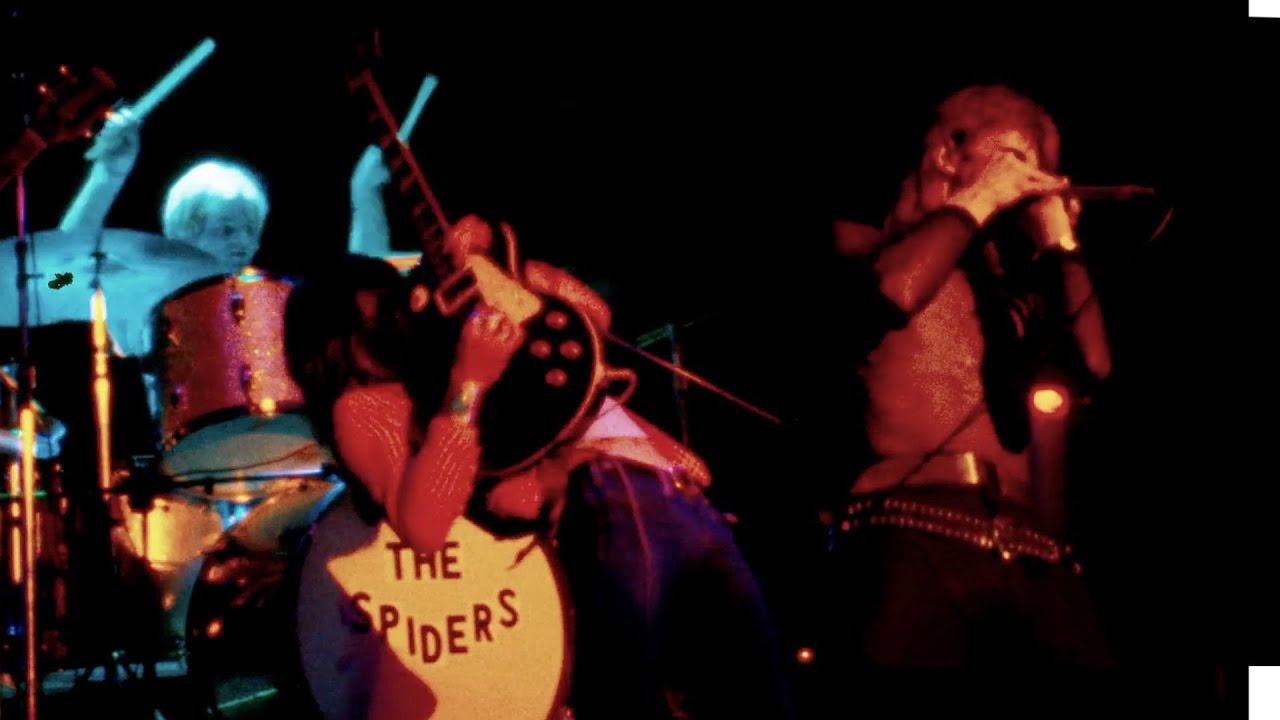
Although Bowie wasn’t able to get Beck as his guitarist, he did secure him for one very important gig at London’s Hammersmith Odeon on July 3, 1973: the last night of the tour for his breakout album, The Rise and Fall of Ziggy Stardust and the Spiders From Mars.
“Mick says, ‘No, play it slower.’ Beck said, ‘If I play it any slower, I’ll stop!’ But he was patient, and Mick learned that riff.”
— Benny Marshall
It was Bowie’s first major tour, taking place from January 1972 to July 1973. Initially intended to promote Ziggy Stardust as well as its predecessor, Hunky Dory, the tour eventually included songs from Ziggy Stardust’s follow-up, Aladdin Sane.
Beck came out for the encore at the Hammersmith show, playing his Oxblood 1954 Gibson Les Paul, and adding his own electric guitar stylings to those of Ronson, who was playing his modified 1968 Les Paul Custom. The group performed “The Jean Genie,” the debut hit single from Aladdin Sane before segueing into a snippet of the Beatles’ classic “Love Me Do” and concluding with Chuck Berry’s “Around and Around.”
The concert was filmed by director D.A. Pennebaker for the documentary Ziggy Stardust and the Spiders From Mars.

“I remember they were filming, and the cameras panned in on my wah-wah pedal during The Jean Genie and I was wearing these dirty white platform shoes. I went ballistic when they said they were using me in the film, so I refused to sign the release.
“Bowie goes, ‘Oh, you might as well agree, they’re already showing a bootleg version at the XXX theaters on 42nd Street, and you didn’t look any dafter than me.’ In the end I agreed.”
“Bowie goes, ‘Oh, you might as well agree, they’re already showing a bootleg version at the Triple XXX theaters on 42nd Street.‘”
— Jeff Beck
Except he didn’t. When Pennebaker’s film was finally released in 1979, there was no sign of Beck or the songs on which he performed.
As the guitarist recalled, the Ziggy Stardust show was his first time playing before such a large audience.
“The pitch of teenage screaming at that gig was unbelievable. I’d never experienced that,” he said. “I recall it was someone’s birthday in the group, and I thought I was like a little mascot pressie [present]. But actually Bowie is a big fan, so…”
Beck’s performances were finally reinstated for the 4K remaster of the film released in 2023.
Bowie wasn’t the only artist who Beck rejected. He also passed up opportunities to work with John Mayall, Pink Floyd and the Rolling Stones when they were seeking a replacement for Mick Taylor following his 1974 departure.
As Beck told Guitarist, “I’m not a ‘joiner,’ really. Pink Floyd wanted me but they didn’t have the nerve to pop the question.
“And then there’s the Rolling Stones. I told them I don’t do auditions. And I wouldn’t have fitted in. I never had any regrets.”
