
So, you're looking to buy a new guitar and have around $1,000 to play with. Well, fear not, as I have scoured the market and selected the best electric guitars under $1,000 you can buy right now. Whether you're playing blues, rock, country, jazz, or anything else, these guitars will serve you well on the road, in the studio, or just at home.
Having played guitar for 25 years, I’ve been fortunate enough to spend plenty of time with instruments in this price bracket. My years working in a guitar store also gave me the opportunity to compare many of these models side by side, and that experience, combined with Guitar Player's decades of expertise, has helped us select the very best options. These days $1,000 can get you a lot of guitar, as this guide proves.
If you want my top pick at this price point, I've gone for the PRS SE Custom 24 – an excellent choice no matter what genre of music you love to play. It's versatile, comfortable to play, and works just as well on-stage as it does in the confines of your home. Whereas if you’re looking for the best value below the $1k mark, the Squier Classic Vibe ’60s Strat is handsome, delivers amazing Strat tones and offers excellent value for money.
With so many excellent guitars at this price point, undoubtedly many didn't make my list, but I've chosen a good cross-section of what's available right now, with labels to help you navigate to your ideal match. If you have a burning question needing answered, scroll to the FAQ section at the bottom. I’ve also included a glossary of key terms and a how to choose guide to help you upgrade your guitar knowledge.
Best overall
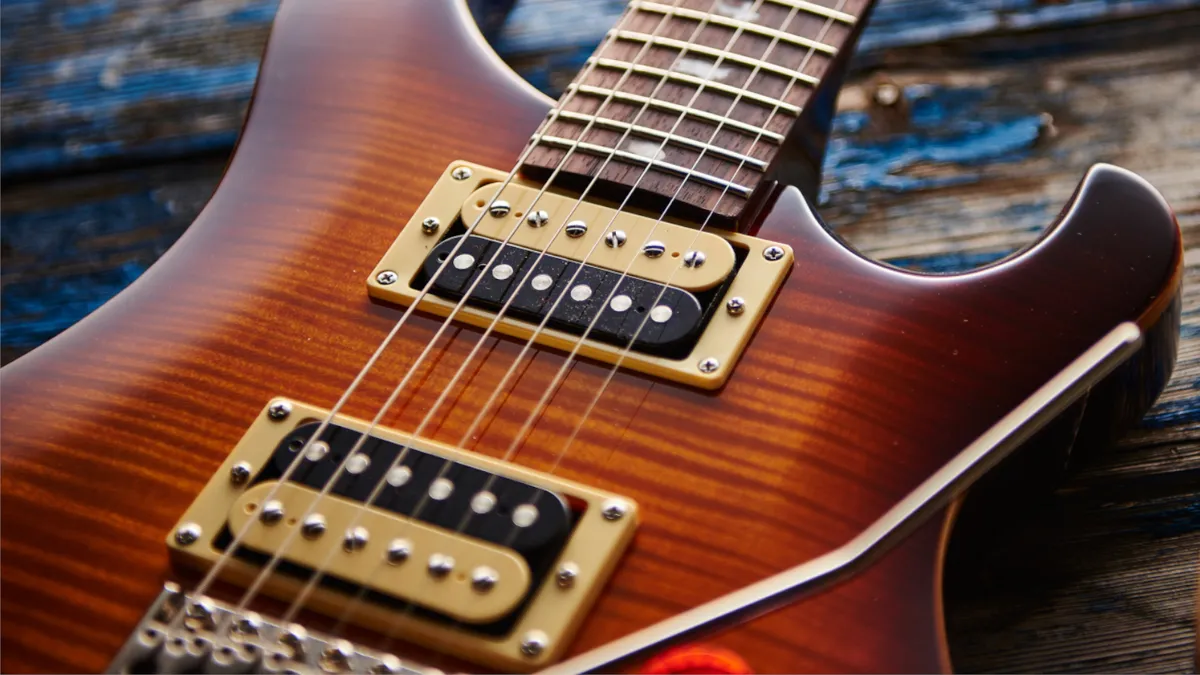
🫵 The PRS SE Custom 24 is for the player looking for a solid, reliable workhorse that’ll always deliver.
✅ Buy if you want a rock-solid guitar that covers all bases: This in an ideal option whether you're on the road or playing in the living room.
❌ Avoid if you want a more traditional design: Playing wise, it's hard to find fault here, although the bird inlays might not be to your taste.
Build quality rating: ★★★★★
Playability rating: ★★★★★
Sounds rating: ★★★★★
Overall: ★★★★★
Overview
The classics are classic for a reason. The Custom 24 has established itself as a major player in the world of guitars, alongside the likes of the Fender Strat and the Gibson Les Paul. Whether you’re a gigging musician, bedroom guitarist or producer who needs a reliable ‘do-it-all’ guitar, this has you covered. Absolutely one of the best electric guitars you can buy for less than $1,000.
Build quality
I've become so used to PRS guitars' great craftsmanship, and the SE Custom 24 is no exception. The materials have been chosen with intention, with a familiar layout: a mahogany body, flamed maple veneer, and maple neck. The rosewood fretboard is a nice touch, adding an aesthetic depth that looks the part. Although this is technically in PRS’ more affordable price bracket, the build quality certainly doesn’t display that.
Playability
The SE Custom 24 offers the superb playability that PRS has become known for. It’s a joy to play, regardless of what style of player you are. Playing the ‘wide thin’ neck profile is like putting on a comfortable pair of shoes, instantly familiar and hassle-free. It’s also the smaller details, like the sculpted lower horn, that give your left hand enough room to breathe when soloing high up the neck.
Sounds
This latest PRS SE Custom 24 features a pair of 85/15 ‘S’ humbuckers, based on their US-made counterparts. These are ideal for rock, blues, jazz, and loads more. However, if you need more tones at your disposal, the tone knob also acts as a coil-split function so you can get more single-coil-like tones, making this a really versatile instrument.

"Offering both humbuckers and piezo pickups, as well as separate outputs for each, the PRS SE Custom Semi-Hollow Piezo offers a huge range of electric and acoustic flavors and the ability to meld them for the broadest range possible. Like all the offshore-produced SE models, it looks stunning and plays like a dream, and leaves little daylight between the company's SE and domestic Core lines."
Read more: PRS SE Custom 24 review
Best value

🫵 This is for the guitarist who is after a vintage aesthetic without bursting their bank account.
✅ Buy if you want an excellent guitar for a brilliant price: The Squier Classic Vibe ’60s Strat looks great, plays great and sounds great - and the price is very hard to beat.
❌ Avoid if you have a little more money to splash: Amazing value? Sure, but if you have a bit extra cash to splurge, there are better options out there.
Build quality rating: ★★★★☆
Playability rating: ★★★★☆
Sounds rating: ★★★★☆
Overall: ★★★★☆
Overview
The entire Classic Vibe range from Squier offers excellent value for money, but I’ve picked out the ’60s Strat as one of the best guitars under $1,000 for its playability, looks, and sound. Vintage pre-CBS Strats are serious money, and Custom Shops and American Originals sit well above our $1,000 limit. This model could fit into our best electric guitars under $500 guide, less than half our budget here, and it’s a whole lot of fun to play.
Build quality
The Classic Vibes are built to a good standard; these will act as reliable instruments on the road or just at home. There are a few cost-cutting materials in play, like a nyatoh body and Indian laurel fingerboard. However, this doesn’t affect the guitar’s durability; if anything, a laurel fingerboard instead of rosewood typically comes down to aesthetics. I have actually played a few gigs with a ’60s Classic Vibe Strat when my main option went down, and I had absolutely no issues with its durability.
Playability
Like any Strat worth its salt, the ’60s Classic Vibe plays very sweetly. The C-shaped profile is a ‘Goldilocks’ shape, and most players will find it incredibly easy to get along with. There is a vintage-tint gloss finish; it does give the right aesthetic; however, some players may prefer a satin smooth finish as it can get a little sticky in some situations. This is a take on a classic Strat, and all of the body contours are in the right place, meaning it is very comfortable playing on your lap.
Sounds
When it comes down to tone, you don’t quite get the same note definition and frequency range as you would with some more expensive models, but this guitar delivers all the classic Strat tones for not a lot of money. The traditional SSS pickup configuration comprises three Fender-designed alnico single coils, and the bell chime, spank, and warmth in the neck position are all present and correct.
Best for modding

🫵 This is for someone looking for an incredibly robust baseline for adding modifications at a later stage. It isn’t as expensive as American Series Telecasters, meaning you’ll have more modding freedom.
✅ Buy if you want a versatile guitar with a nice choice of finishes: A great guitar is made even better with 11 different finishes.
❌ Avoid if you want to maximise high-gain styles: If you're after a harder edge to your playing, better options can be found elsewhere.
Build quality rating: ★★★★½
Playability rating: ★★★★½
Sounds rating: ★★★★½
Overall: ★★★★½
Overview
The Player II series is the latest evolution of Fender’s best-selling Mexican-made guitars, and a few thoughtful upgrades have made me smile. It also offers an incredible base for anyone looking to add their own modifications. After all, the Telecaster has been heavily modded by the likes of Keith Richards, Albert Lee, and Andy Summers, to name but a few.
Build quality
Compared to the initial Player series, the return of rosewood fingerboards, the addition of rolled fingerboard edges, and a set of jack-of-all-trades Alnico 5 single-coils make the Player II series even more appealing. There is also a plethora of new finishes to choose from, and unlike the original Player series, you are no longer limited to alder; chambered mahogany and ash options are now on the table, adding even more tonal variety and lighter weights that those with a bad back will appreciate.
Playability
When set up correctly, the Player II series is one of the most playable ranges on the market. It can quite easily compete with guitars much more expensive, and details like a satin-smooth neck, a familiar C-shaped neck profile, and rolled fingerboard edges add up to an instrument that really is more than you will ever need, perhaps not what you want, but what you need.
Sounds
Telecaster pickups remain one of the most versatile configurations out there; this thing will cover punk to pop and most genres in between. There’s a reason the Telecaster hasn’t changed much since the ’50s, and its ability to adapt to just about any style is one of its greatest strengths. Sure, it is still not built for extreme high-gain styles, and there are better chugging options out there, but for everything else, this one is hard to beat.
Best modern

🫵 Players who want a modern, genre-flexible signature guitar that can handle high-gain rock while still covering cleaner and more experimental tones.
✅ Buy if you want a mean-looking guitar with the sounds to match. This is not for the faint of heart, as both its quirky offset looks and face-melting capabilities won’t fade into the background.
❌ Avoid if you’re after something more traditional. Fans of traditional Telecasters may not appreciate this guitar’s uniqueness.
Build quality rating: ★★★★½
Playability rating: ★★★★★
Sounds rating: ★★★★½
Overall: ★★★★½
Overview
The Jackson Pro Series Lee Malia LM-87 is a real curveball in the best possible way. Inspired by Lee Malia’s vision of a modern, genre-crossing signature guitar, it blends offset styling with serious performance. While it carries a distinct metal-leaning, it is far from a one-dimensional instrument with plenty of surprising versatility to step well beyond heavier genres.
Build quality
Together, Jackson and Lee decided to build this around an okoume body with a set-neck construction. The LM-87 feels solid and thoughtfully put together, while the satin finish and cream binding give it a slightly vintage-inspired look and the contoured heel improves upper-fret access. Hardware is equally well considered, with a Tune-o-matic-style bridge and tailpiece featuring fine tuners for precise adjustments, a feature you don’t typically see often.
Playability
A satin finished C-shaped neck and 22 jumbo frets make for a fast yet still comfortable playing experience, with the compound 12-inch to 16-inch radius helping smooth out both chord playing and lead runs up and down the neck. The upper-fret access is excellent thanks to the sculpted joint, and overall it feels built for modern playing.
Sounds
The LM-87 is loaded with a high-output Jackson LM-87 humbucker in the bridge with an LM-87 P90 in the neck, giving you plenty of tone options. The bridge delivers tight and aggressive tones suited to rock and heavier styles, while the neck offers clarity and warmth for cleaner playing. Coil-splitting expands the range of tones even further, and when the ‘bucker is split, the output retains surprising oomph, making this a genuinely flexible modern guitar.
"Jackson’s Pro Series Lee Malia LM-87 is offbeat in all the right ways and a wolf in sheep’s clothing with its Surfcaster, alt-rock vibe and potent pickups. It’s a sweet-playing guitar courtesy of the satiny C-shape neck and 22 jumbo frets, and it caters to those who care about being in tune by virtue of the easily tweakable tailpiece tuners."
Read more: Jackson Pro Series Lee Malia LM-87 review
Best traditional

🫵 Players who want a traditional hollow-body guitar for blues, jazz, rockabilly, or vintage-style rock tones.
✅ Buy if you want a guitar full of character that delivers awesome sound: This is a visually striking guitar that produces chunky, warm tones.
❌ Avoid if you want to avoid feedback issues: Higher gain can result in unwanted feedback - just be aware.
Build quality rating: ★★★★★
Playability rating: ★★★★½
Sounds rating: ★★★★½
Overall: ★★★★½
Overview
Gretsch makes some of the best-looking guitars in the business, but they also sound killer. This style of guitar has been around for decades now; the single-cut hollow-body construction was pioneered by Gibson all the way back in the 1930s, and many other brands followed suit. Gretsch was fast on Gibson’s heels and today is one of the best in the business at producing hollow bodies.
Build quality
There is no denying that this guitar is visually striking. It comes in some incredible finishes, the body is nice and big, and the Bigsby tailpiece and arm add a nice little touch of class. My personal favorite is the Walnut Stain finish; it is classy and pops with the white binding. The arched laminated maple top is a snapshot of yesteryear’s electric guitar design style, and the G5420T wears it well.
Playability
Once you get over the large body, the G5420T plays incredibly well. We have a ‘Classic C’ neck profile accompanied by a 12-inch fingerboard radius; both are a comfortable middle ground between more extreme radius options and profiles. Although the body is large, being a hollow body makes the guitar quite light, so if you’re sick and tired of solid-body monsters, this may be a good choice.
Sounds
The fully hollow body also makes the tone really resonant and helps deliver a warm, full-bodied sound, and the BlackTop Filter’Tron pickups add some chime and sparkle to the top end. Whether you’re playing blues, jazz, rockabilly, or rock, the Gretsch G5420T really is one of the best electrics under $1,000.
Best workhorse

🫵 Not just for Mayer fans, this guitar is ideal for working musicians looking for a familiar design with a few unique twists.
✅ Buy if you want beautiful tone at a decent price: The tone and playability here belies the Silver Sky's price.
❌ Avoid if you want a less beefy delivery: With the pickups wound to around 7 k-ohm, the sound leans more towards an in-your-face performance.
Build quality rating: ★★★★½
Playability rating: ★★★★★
Sounds rating: ★★★★½
Overall: ★★★★½
Overview
The Strat that isn’t a Strat received the SE treatment from PRS back in 2022, making it more affordable for a wider audience. PRS managed to do this without greatly reducing the overall quality or performance of the instrument. While the sound and look of the SE Silver Sky is hardly groundbreaking, there is something different about it.
Build quality
While the guitar is made in Indonesia, unlike the more expensive US models, it still features the classic Paul Reed Smith workmanship that we’ve all come to know and love. The SE version features a solid poplar body, maple neck, and either a rosewood or maple fingerboard, depending on your preference. There are plenty of finish options to choose from, and the newly released Laurel Green is a personal favorite.
Playability
Right out of the box (well, gigbag), this thing plays great, and we know it will continue to do so, year on year. With a 25.5-inch scale length, it is very Fender-like; however, the smaller 8.5-inch radius does make the SE Silver Sky feel like a different beast. It feels much rounder than a 9.25-inch radius and follows the curvature of your hand more naturally.
Sounds
The SE model sports three 635JM “S” pickups, the SE variant of the standard 635JM found in Mayer’s American model. All five pickup positions are nicely balanced and very usable; there is nothing harsh about the bridge position, and the neck pickup is lovely, deep, and rich. It sounds, and indeed feels, like a more expensive guitar.
While the PRS Silver Sky is still a relatively recent model compared to the decades-old Stratocaster, it has quickly carved out its own identity. Is it one of the best electric guitars under $1,000? John Mayer and his band certainly think so!

"That achievement firmly plants it at the center of bolt-neck SSS model’s traditionally broad range of capabilities, which in itself means the SE Silver Sky can really do just about anything you set your mind, heart and fingers to. At this price, and given its versatility, overall build quality and the execution of the “alternative-S-type” concept in general, the PRS SE Silver Sky easily earns an Editors’ Pick Award."
Read more: PRS SE Silver Sky review
Best for shred

🫵 Simply put, this guitar is for those who want to play fast. Charvel’s Speed Neck is one of the slickest in the business, and it’s a shredder’s dream.
✅ Buy if you want a rock/metal guitar but would like some flexibility: On the surface, you might think this would only suit shredders, but single-coil sounds help give it an added dimension.
❌ Avoid if a Floyd Rose isn't quite your thing: The double-locking tremolo system might not be for everyone, especially if you want a more gentle delivery.
Build quality rating: ★★★★☆
Playability rating: ★★★★☆
Sounds rating: ★★★★☆
Overall: ★★★★☆
Overview
There are some great choices when it comes to super Strats at the moment, but none outperform the Charvel Pro-Mod So-Cal at under $1,000. Shredders and rock guitarists will love this, but it’s by no means a one-trick pony; it’s actually super versatile.
Build quality
The Pro-Mod So-Cal Style 1 looks great, and it is made well, plus that slim neck profile is incredibly comfortable for rhythm and lead work. For a guitar built for speed, Charvel has thrown the kitchen sink. The 12-inch to 16-inch radius gets flatter the further you climb the neck, while the graphite-reinforced neck has been added for ultimate stability when shredding. On this model, Charvel has implemented a Series 1000 Floyd Rose so you can dive-bomb to your heart’s content.
Playability
Perhaps the most unique aspect of this So-Cal is Charvel’s proprietary Speed Neck. Although this guitar wears its Strat influences on its sleeve, the Speed Neck is actually more akin to something from Ibanez. It’s incredibly thin and wide, not dissimilar to a flat D profile. Pair that with the rolled fingerboard edges, and you have a neck designed for one thing only: speed.
Sounds
A pair of fairly high-output Seymour Duncan humbuckers offers a tight bass response, along with a sweet top end. Dial back on the volume knob, though, and they will clean up, though that’s probably not what you’re getting this guitar for. The volume knob also works as a push/pull switch, activating a coil split, giving you single-coil sounds; this really isn’t just a shredder’s guitar.
Also consider
How to choose

Choosing your next guitar under $1,000 may take you a bit of time. After all, there are quite a few considerations. Having helped people select guitars at this price point during my day job in a guitar store, as well as writing for Guitar Player, I believe I have a solid formula for finding the right option. Whether you’re after a workhorse to gig with or a reliable studio guitar that’ll deliver on important sessions, here are the key points to consider.
1. Body shape
You can trust Guitar Player. Our expert reviewers spend hours testing and comparing guitar products so you can choose the best for you. Find out more about how we test.
Firstly, and perhaps most obviously, is settling on a body shape. Are you looking for the comfort and accessibility of a Strat-style guitar, or something a bit more edgy like an offset? If you’re into classic rock, a single-cut Les Paul-style guitar may suit your tastes better.
Either way, narrowing your choice down to a preferred body shape will immediately reduce the overwhelming number of options. If this is your first guitar, go for whatever feels most comfortable. If you’re adding to your collection, you might want to choose a body shape you don’t already own.
2. Neck profile
Next, what neck profile do you prefer? The neck profile refers to the cross-sectional shape of the back of a guitar neck. Since your fretting hand is in contact with the neck throughout most of your playing, finding a shape that feels natural is very important.
When you’re just starting out, this can feel a bit confusing, especially since it’s a preference you’ll develop over time. A standard C-shaped neck profile is always a safe bet. It’s neither too thick nor too thin and is an ideal starting point. On the other hand, if you’ve played guitar before or already own another instrument, consider what neck profile it has and whether you’ve gotten along with it. If so, it’s usually worth sticking with something similar, if not the exact same profile.
3. Pickups
Lastly, and my favorite decision to make, is choosing what pickups to go for. Do you want spanky single-coil pickups that are bright and articulate, or are you a metal player looking for tight, high-gain humbuckers that can really push an amp? Pickups make up a huge part of your overall electric guitar tone when plugged in.
Whether you’re looking for versatility in an HSS configuration or the midrange bite of a P-90, it’s worth taking your time with this decision. After all, we play guitar to make music, and the amplified tone is a big part of why we choose electric guitar in the first place.
FAQs
Is a $1,000 guitar really twice as good as a $500 guitar?
The short answer is no. A $1,000 guitar is not going to be twice as good as a $500 guitar. Unfortunately, calculations like that don't really work in the world of guitars. While the more expensive option will likely feature higher-quality materials, better hardware, and perhaps more hand-finishing in certain areas, that doesn't necessarily mean you'll get twice the guitar.
It's also almost impossible to define what ‘twice as good’ means, as every player has different preferences. For example, if you're a blues guitarist, you may prefer a $500 Epiphone ES-335 over a $1,000 Ibanez RG with active pickups. Even within the same brand, the differences can be more subtle than dramatic. Take Fender, for example. A Player II Stratocaster costs significantly less than a Vintera II Stratocaster, but I wouldn't say the Vintera II is twice the guitar. You'll typically see improvements in materials, hardware, appointments, and overall fit and finish, but when it comes down to brass tacks, the jump in price rarely translates to a guitar that's twice as good.
Is it better to spend on a new guitar or buy used at the $1,000 price point?
If you are a relatively experienced guitarist or have enough knowledge to spot the pitfalls and common issues that can arise with guitars, then spending $1,000 on a used guitar will likely get you more guitar for your money. Nowadays, sellers tend to know what they have and price their equipment accordingly, but you are still usually going to save a buck or two by buying used.
Of course, you won't have the same security as buying from a legitimate retailer, such as a manufacturer's warranty or return period, but if you know what to look out for, going used might allow you to buy a guitar a few rungs higher up the ladder than what your budget would stretch to when buying new.
Which countries of origin offer the best quality control at the moment?
There are plenty of guitar brands utilizing different countries of origin, and each comes with its own strengths. For me, anything made in Japan typically comes with incredible attention to detail, and the quality control on Made in Japan instruments is usually of a very high standard.
Mexico and Korea also occupy a sweet spot between value and quality. When you consider that Fender's Mexican factory is only a few miles away from its California facility, it quickly becomes apparent that borders don't necessarily dictate quality. Both countries produce consistently excellent instruments across a wide range of price points.
For mass-produced models from brands such as Epiphone and Squier, Indonesia has become a major manufacturing hub. I've played plenty of excellent Indonesian-made guitars over the years, although with any high-volume production environment, the occasional issue can slip through quality control. That said, this is by no means unique to Indonesia, and ultimately, the standards set by the brand are far more important than the country where the guitar is built.
Does the neck feel matter more than the brand?
Ultimately, yes. Whenever you are looking for a new guitar, I believe that how it feels, plays, and sounds is far more important than the name on the headstock. Sure, some players will gravitate toward certain brands because they prefer their design philosophies, and that's totally fine. However, if you're looking to purchase a new guitar, make sure the one you're considering feels comfortable in your hands, especially the neck.
After all, the connection between your fretting hand and the guitar's neck is one of the most important relationships you'll have with the instrument. If the neck doesn't feel right, you're far less likely to enjoy playing it, regardless of the logo on the headstock.
Is it worth getting a roasted maple neck?
These days, roasted maple necks are very popular, and for a few reasons. Firstly, they feel absolutely fantastic. There is something to be said for the incredibly smooth, satin-like feel of a roasted neck that helps your fretting hand glide up and down the fingerboard.
Other than that, they are incredibly sturdy. In my experience, I have had very few issues with roasted necks moving or shifting due to temperature changes. This is because much of the excess moisture is removed during the roasting process, creating a more stable piece of wood that is less susceptible to changes in temperature and humidity. Lastly, roasted maple necks just look fantastic. Pair one with the right finish – for me that's Shell Pink – and you'll have a very attractive guitar that feels great and offers excellent stability.
Will a sub-$1,000 guitar retain its resale value?
Whether a sub-$1,000 guitar retains its resale value is less about its price tag and more about market value, demand, and exclusivity. Guitars in this price range sit in the more affordable bracket, so they are typically produced in higher volumes than more expensive, limited-run models.
At this level, instruments are also less likely to use rare or premium materials, so resale value usually isn’t driven by that factor. However, if a guitar becomes particularly sought after or gains popularity, for example if a well-known musician starts using it, or it catches the cultural moment through social media, then it may hold its value better than expected.
Key terms
- Action: Refers to the height of your guitar strings in relation to the fingerboard.
- Alnico: An acronym of aluminum, nickel, and cobalt, and a type of magnet used in guitar pickups.
- Bridge: The piece of hardware on an electric guitar that anchors the strings to the body. It can either be a floating tremolo system or fixed so it does not move.
- Ceramic: A type of magnet used in guitar pickups made from ceramic material, known for higher output and a brighter, more aggressive tone.
- Coil split (coil tap): An electronic function that shuts off one coil of a humbucker to produce lower-output, single-coil-style tones. (Note: “coil tap” is technically different, but is often used interchangeably in guitar marketing.)
- Compound radius: A fingerboard radius that changes along the neck, typically starting rounder near the nut and flattening out toward the higher frets.
- Fret sprout: Occurs when fret ends protrude past the edges of the fingerboard, usually due to wood shrinkage in dry conditions, creating a sharp feel along the neck edges.
- Hardtail: A fixed bridge system with no tremolo movement, anchoring strings directly to the body for tuning stability and simplicity.
- Import: A guitar manufactured in one country and sold in another, typically used to describe more affordable production-line instruments.
- Intonation: The adjustment that ensures a guitar plays in tune across the entire neck. Poor intonation means notes may be in tune open but sharp or flat when fretted.
- Locking tuners: Machine heads that clamp the string in place at the post, reducing slippage and making string changes faster and more stable.
- Mod platform: A guitar that is particularly well-suited to aftermarket modifications.
- Nut: A small strip at the top of the fingerboard that guides string spacing and height as they leave the headstock and enter the playing area.
- Potentiometer (pot): A variable resistor used in guitar electronics, typically controlling volume and tone.
- Radius: The curvature of the fingerboard. A smaller radius feels rounder, while a larger radius feels flatter.
- Roasted maple: Maple wood that has been heat-treated to remove moisture and resins, increasing stability and giving a darker, ‘baked’ appearance and smoother feel.
- Rolled edges: Fingerboard edges that have been gently smoothed to remove sharpness, making the neck feel more broken-in and comfortable.
- Scale length: The distance between the nut and the bridge saddle.
- Setup: The process of adjusting a guitar’s action, intonation, neck relief, and hardware to improve playability.
- Stainless steel frets: Frets made from stainless steel instead of traditional nickel silver, offering increased durability and smoother bending.
How we test
We are very aware that so much of an electric guitar comes down to personal preference, but that said, there are still a few key criteria that a guitar must meet for us to consider recommending it to our readers.
As you'd expect, the first and probably the most important is build quality. When putting a new six-string through its paces, we'll thoroughly check every element of the build, from head to tail-piece, to ensure it feels robust. We are checking to ensure the neck is fitted correctly, that the hardware feels solid, and of course, that there are no electronics issues. Once we are satisfied, we will move to the guitar's overall finishing, looking for any anomalies in the paintwork.
Next up is playability. A guitar must be playable straight out of the box. Yes, we will accept that slight adjustments may need to be made to the action to meet our personal tastes, but the guitar should be in a playable state when we first try it.
We will check how comfortable the neck is, as well as how well the frets have been fitted - no matter the price point, we will not accept shoddy fret ends.
Lastly, we'll look at tone. Again, this is very subjective, but we are looking to see if the guitar lives up to the manufacturer's claims and is fit for purpose.
Read more on how we test gear and services at Guitar Player.
Meet the experts

After spending a decade in music retail, Richard is now a freelance writer for MusicRadar, Guitar Player, Guitar World and Reverb, specialising in electric and acoustic guitars, bass, and almost anything else you can make a tune with. When his head’s not buried in the best of modern and vintage gear, Richard runs a small company helping musicians with songwriting, production and performance, and plays bass in an alt-rock band. Otherwise, you'll probably find him out walking the dog!

Daryl is a Senior Deals Writer at MusicRadar, and is responsible for writing and maintaining buyer's guides on the site as well as testing out products for reviews. Before writing for MusicRadar, Daryl worked for many years in music retail, helping musicians of all ages find the best gear for them.
Daryl also has a passion for live sound, having worked professionally as a sound engineer in a number of venues around Scotland and holds a first-class Bachelor's degree in Creative Sound Production from the University of Abertay. He's worked for various bands, as well as his fair share of pantomimes, dance shows, opera and has operated the sound for some of the country's top comedians, including Alan Carr, Ed Byrne and James Acaster, among others.

Ross has been a music lover and guitar player since the age of 8. He has spent the five years since graduating from university working in music retail, selling guitars, amps and more. Ross is particularly interested in electric guitars, pedals and amplifiers and his current rig includes a trusty 2009 American Standard Stratocaster and Vox AC30S1 with a few Walrus Audio and Way Huge pedals in between.

Matt is a Junior Deals Writer here at Guitar Player. He regularly tests and reviews music gear with a focus on guitars, amps, pedals, modelers, and pretty much anything else guitar-related. Responsible for over 60 buying guides, a large part of his role is helping guitarists find the best deals on gear. Matt worked in music retail for 5 years at Dawsons Music and Northwest Guitars and has written for many music sites including MusicRadar, Guitar World, Guitar.com, Ultimate Guitar, and Thomann’s t.blog.
A regularly gigging guitarist with over 20 years of experience playing live and writing and recording in bands, he's performed everything from jazz to djent, gigging all over the UK in more dingy venues than you can shake a drop-tuned guitar at. When he's not holed up in his practice space jamming new songs or ogling yet another guitar, you’ll find him making a racket with Northern noise punks Never Better.
Latest updates
06/07/26: The guide has has a complete overhaul, with all new labels, a complete product audit, and an additional product entry. A how to choose section has been added, more in-depth FAQs, and a glossary of key terms. 16/04/25: The guide has been updated to include two new products: Fender Player II Telecaster and the Gretsch Electromatic G5420T. A quick links section now appears towards the top of the guide and all guitars featured now have added "At a glance" sections alongside star-ratings for quick reference. Review verdicts have been included where applicable and the specifications on a number of entries has been updated to reflect new finishes and materials. A "Meet the experts" section has also now been included.

