
He was a link in a chain of New Orleans pianists that includes Professor Longhair, Huey “Piano” Smith, Allen Toussaint and James Booker.
But the late Mac “Dr. John” Rebennack started out as a guitar player in the early 1950s, intent on playing country blues until he was dissuaded from the idea. In his autobiography, Under a Hoodoo Moon: The Life of Dr. John the Night Tripper, Mac described how his first teacher, Fats Domino guitarist Walter “Papoose” Nelson, steered him away from trying to become a Lightnin’ Hopkins clone.
“Papoose listened to my chops and said, ‘Man, you can’t play that outta-meter, foot-beater jive and get a job.’ He insisted I learn to read music and got me listening to guys like Billy Butler and Mickey Baker.”
Mac became a session player at J&M Studios in New Orleans, backing artists such as Earl King, James Booker and Lee Dorsey, as well as Little Richard and Professor Longhair, with whom he also performed.
Beyond session work on electric and acoustic guitar, Rebennack played in his own band, Mac Rebennack and the Skyliners, and performed with his high school friend Ronnie Barron throughout New Orleans.

Guitar would likely have remained his main instrument if it hadn’t been for an incident on Christmas Eve in ’61.
“We was at a motel in Jacksonville, Florida, getting ready to go to a gig, when our singer Ronnie Barron disappeared,” Rebennack recalled. “I found him being pistol-whipped by the motel owner, who’d caught Ronnie with his old lady.
“As I tried to wrestle the gun away from the guy, it went off. I looked down and saw the second finger of my left hand dangling by a thread.”
I found him being pistol-whipped by the motel owner, who’d caught Ronnie with his old lady.”
— Mac Rebennack
Doctors managed to reattach the finger, and a short spell playing primarily bass guitar, Mac eventually regained most of its use and returned to playing guitar. “I just developed a way to play around it, like Django.”
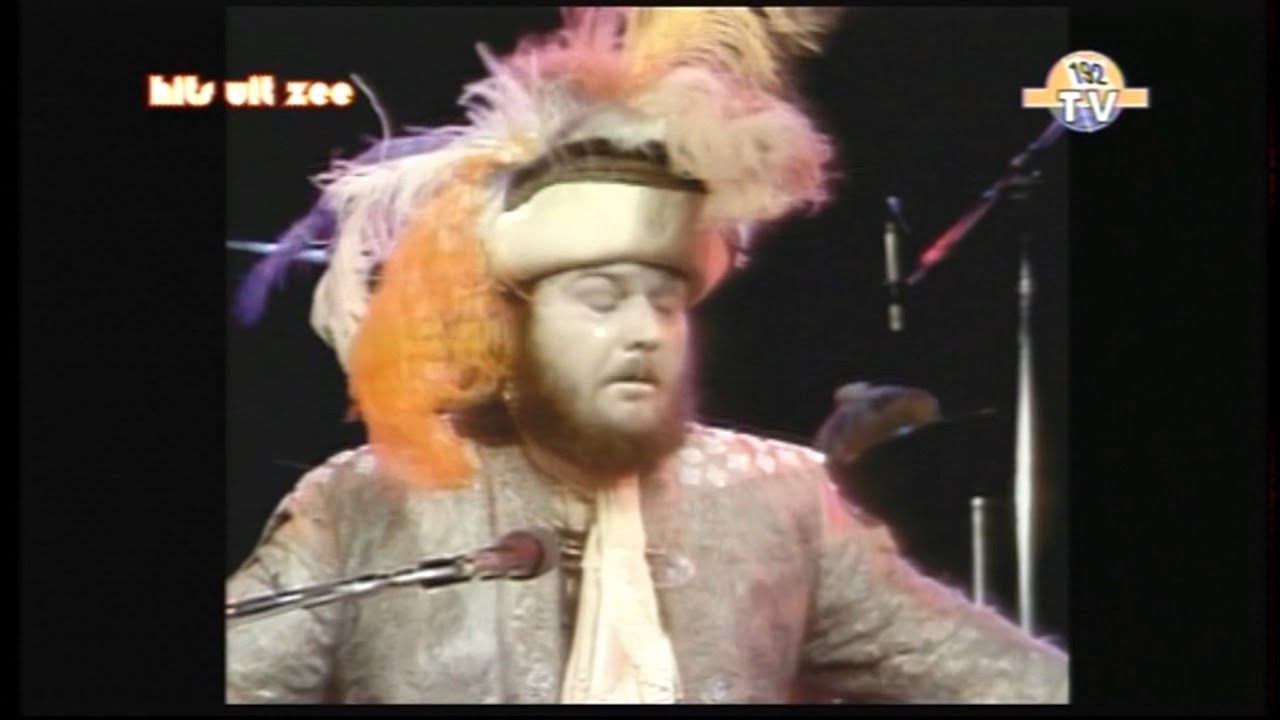
At the same time, Rebennack went on to develop his talents as a premier New Orleans–style pianist, blending funk, boogie-woogie, blues and jazz into a unique, syncopated, “double-fisted” approach. In the mid 1960s, he created his Dr. John the Night Tripper persona and, in 1973, scored a top-10 hit with “Right Place, Wrong Time.”
Rebennack continued to play guitar on records and stages and, according to his friend, guitarist Shane Theriot — who has no shortage of great Dr. John stories — owned a Gibson ES-335 semihollow purchased from James Burton. Mac told Guitar Player in 1994 that many of the tunes on his then-new album, Television, were worked up on his original choice of instrument.
“I find that some grooves lay almost directly out of the guitar, just from the nature of the instrument being something that you stroke,” he said. “The whole concept of the New Orleans rhythm style is to support the rhythm section. If you play a solo, you’ve gotta keep enough of a comp going so the groove don’t get lost.”
Had he not been injured, there’s every reason to believe Mac would have continued as a first-call regional guitarist. Instead, the injury redirected him toward piano — and, ultimately, immortality as Dr. John the Night Tripper.
