
Revered jazz guitarist Larry Carlton made his name as a hardworking studio musician across the 1970s and ‘80s, through sessions with Steely Dan, Joni Mitchell, Linda Ronstadt and Quincy Jones, among many others. Throughout his career, his sunburst 1969 Gibson ES-335 has been his choice of electric guitar, for most of those sessions.
He says finding the semi-hollow model was a stroke of luck that allowed feel and play “more like me” on the countless hits he made it.
“I was starting to get busy in the studio scene in 1970, and so back then the guys would carry a Tele, a jazz box, or a Strat if they had one,” he tells Vertex Effects. “So I had a Tele, and I had a Les Paul, but coming from more of a jazz influence, I wanted something that felt more like a jazz box.”

In his teens, ES-335s were common sights in the hands of the jazz maestros he grew up admiring, so the guitar's natural appeal was evident. Little did he know how perfect a match he and the guitar would be. He picked the guitar from a trio of ES-335s hanging on the wall of Southern California music store.
“They had three 335s hanging on the wall, so I tried each one of them,” he recalls. “I didn't plug them in, I tried them acoustically, and this is the one that caught me.”
The 1969 model was brand new when he bought it for $850. Signs of the original Bigsby bridge it came with are evident on the top. The guitar underwent other modifications as Carlton finessed the instrument to his desires.
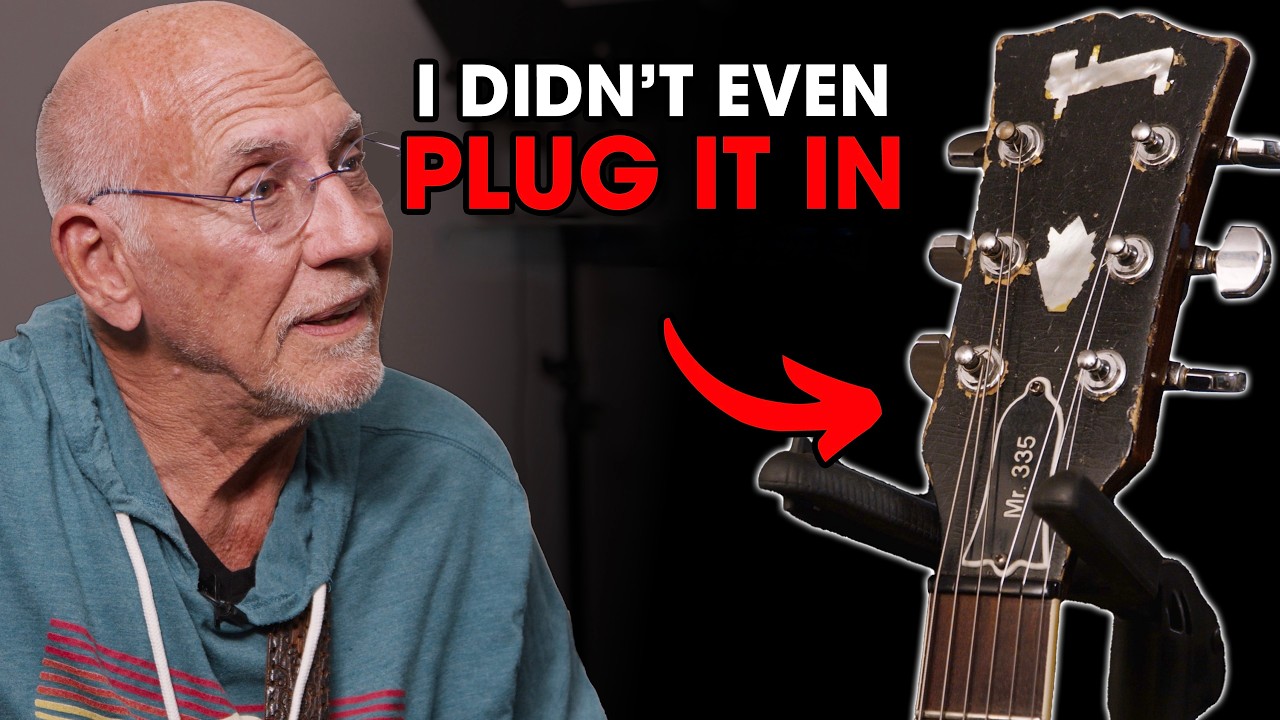
A graphite nut and Schaller tuners have been installed. But vitally, the original twin humbuckers, now looking glamorously aged from countless hours spent working away in the studio, remain in place.
As Carlton explains, getting the right instrument in his hands for those sessions was crucial in his role as a gun for hire.
“It’s the crown jewel,” he once told GP of the guitar. “I bought it out of the blue, and it’s been real good to me.”
It was paired with a Fender Princeton combo amp for Joni Mitchell's 1974 hit “Help Me”, and it can also be heard on Steely Dan's “Kid Charlemagne” after it beat a Strat in a shootout.
However, though his reputation grew to warrant a Gibson signature guitar, his relationship with the brand soured over time.

“I liked being with Gibson,” Carlton admits, “but as they started doing their production for retail, the quality wasn't like my 335, which was the whole idea. They got the color right – that's the easy part – but the guitar wasn't like mine.
“But we did it,” he adds. “And they didn’t promote it very well. Guys, especially in Europe, would bring their guitars to my concerts and ask me to sign them. I'd say, ‘Sure,’ and I'd take them out of the case, and the neck was not anything like mine.”
Sire Guitars convinced Carlton to jump ship and make its own attempt at reproducing his majestic 335. His signature model, he says, “sings beautifully.”
Even with this guitar in his hands, not all of Carlton's sessions were a dream. The guitarist famously quit working with John Lennon after one day. Steve Lukather, meanwhile, has recalled the lesson he learned from a Larry Carlton string break.

