
Some guitarists are quick to dismiss their instruments as mere tools of the trade. For others, however, a guitar can carry deep sentimental value. For Zakk Wylde, his famed “Grail” Les Paul represents exactly that: the instrument tied to the most pivotal turning point of his life. When he believed he had lost it forever, a small identifying detail on the guitar ultimately helped bring it back to him.
Wylde’s life changed dramatically in the late 1980s when he went from being a Randy Rhoads–obsessed guitar teacher to becoming his successor. At just 20 years old, Wylde landed the role of lead guitarist for Ozzy Osbourne, becoming the singer’s third full-time guitarist after Jake E. Lee concluded his two-album run with the band.
Wylde reportedly beat out several high-profile contenders for the job, including Dutch virtuoso Adrian Vandenberg—who would later join David Coverdale’s Whitesnake—as well as shred guitarist Chris Impellitteri. Wylde himself has suggested there may have been a reason the unknown newcomer ultimately got the nod.
Shortly after he joined Osbourne’s band, Gibson quickly offered him an endorsement deal. Around the same time, Wylde struck a deal with a friend, Scott Quinn, to acquire his dream instrument: a cream-colored 1981 Les Paul Custom.
Wylde used the guitar to write his first song with Osbourne, “Miracle Man,” paying homage to both Hendrix and Rhoads in the process. Soon afterward, however, he decided to move away from the direct visual association with Rhoads, who frequently played a cream Les Paul Custom during his time with Osbourne.
That decision led to the electric guitar’s now-famous bullseye paint scheme. Ironically, the finished result was not exactly what Wylde had originally envisioned. Yet years later, when the guitar was lost under dramatic circumstances, that imperfect paint job helped identify it and ultimately led to its return.
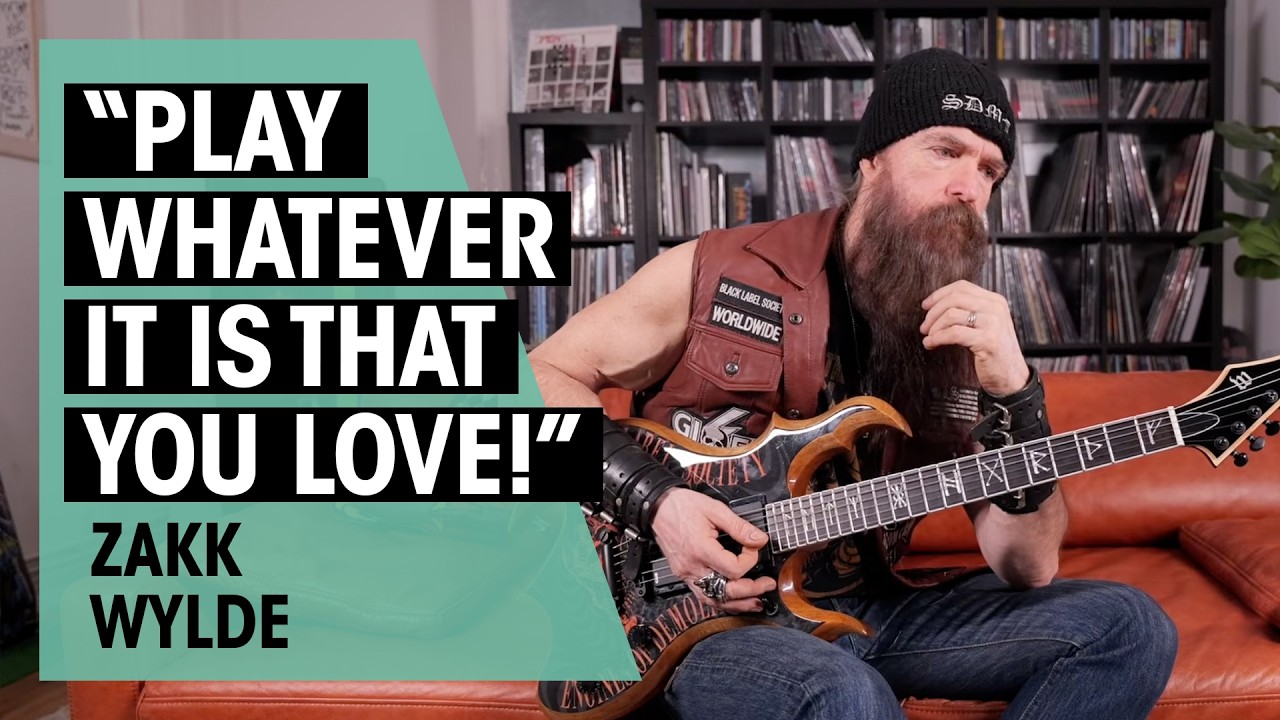
“Don’t ever sell your first guitar,” Wylde said in a recent interview with Thomann. “You’ve got too many memories attached to it. Never get rid of them, because it’s got the mojo.”

The story of how he lost the Grail is almost as remarkable as how he got it back.
Wylde and his band were traveling overnight from Dallas to Oklahoma after stopping to watch Dimebag Darrell perform with Pantera. While the band slept, a critical oversight occurred.
“I remember when we woke up in the morning,” Wylde recalled. “The guys didn’t lock the back of the U-Haul trailer on the back of the bus, so the door went up and gear was falling out onto the highway. The Grail fell out of the back of the trailer onto the side of the road.”
Fortunately, the guitar was protected inside a durable Gibson “Chainsaw” hard case, which allowed it to survive the fall. It was later recovered by an unknown passerby.
“I just figured it was gone forever,” Wylde said. “But somebody saw the thing on the side of the road, picked it up and brought it to a pawn shop.”
The person who found it quickly sold the instrument and moved on. But the pawn shop owner happened to notice something distinctive.
“The guy who had it in the pawn shop took off the pickup ring, and it had ‘Z.W.’ on the back of it underneath the pickup,” Wylde explained. “And he said, ‘This is Zakk’s guitar.’”

By that point—around the year 2000—Wylde and his signature bullseye design were widely recognized. That small identifying mark, combined with the guitar’s unmistakable look, allowed the shop owner to track down its rightful owner.
Wylde ultimately traded one of his signature Gibson models in exchange for the instrument.
“I swapped him one of my signature Zakk Wylde Gibsons—the Bullseye—for it,” he said. “Not a bad deal.”
Elsewhere in the interview, Wylde also reflected on some of his favorite memories with Osbourne — though he admitted at least one of those moments was far less enjoyable for the Prince of Darkness. He has also suggested that Osbourne had been considering a return to the sound of No More Tears for a future album before his passing.

