
Peter Frampton keeps himself surrounded by guitars in his Bigsby Park home studio outside Nashville. In fact, they’re just about everywhere you look, save for the computer console in front of him and the faithful service dog the room is named after, who’s lounging on a white couch nearby (“his spot,” as Frampton tells us via Zoom).
He’s flanked by a pair of Gibson SGs — “‘Cause you have to have two, and I actually have three,” he says — including a 1962 model he played with Humble Pie on one side and a ’61 on the other. Over the course of the conversation, meanwhile, the barefoot Frampton pads around the room — sans the cane his degenerative Inclusion Body Myositis (IBM) usually requires him to use — pointing out an Eventide Riptide Drive & Vibe pedal, a Dupont guitar similar to the one used by Django Reinhardt and other pieces of gear.
Reinhardt has long been one of Frampton’s heroes, and even more so now as the IBM — fortunately slow-moving enough to have allowed him to continue playing years beyond his 2019 Finale Farewell Tour — continues to rob the dexterity from his left hand.

“It’s obviously getting more and more difficult to play,” Frampton, 76, acknowledges, “but I’m still enjoying working out what I can do that’s different because of my lessened ability.
“It’s the pressure that goes, and obviously the speed of getting from one note to the other: ‘Well, that finger’s not gonna make it, so I’ll use that finger.’ I’m using thinner strings now. All the string gauges are coming down, which really helps me.
“I’m very strong with myself about that: ‘Get over yourself and play the guitar! Django had only two fingers, Pete. He only had two! Get on with it!’
“That’s me. I’ve always been like that. And I try to play as if I’ve got no problem at all.”
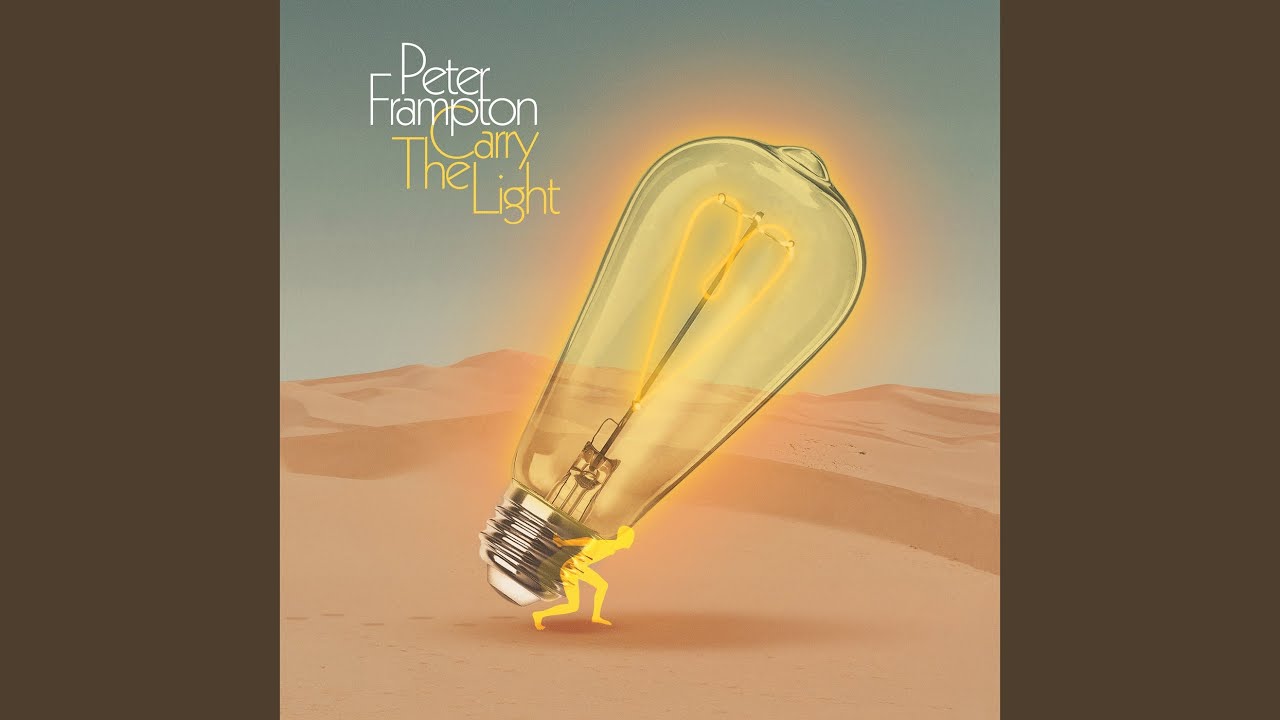
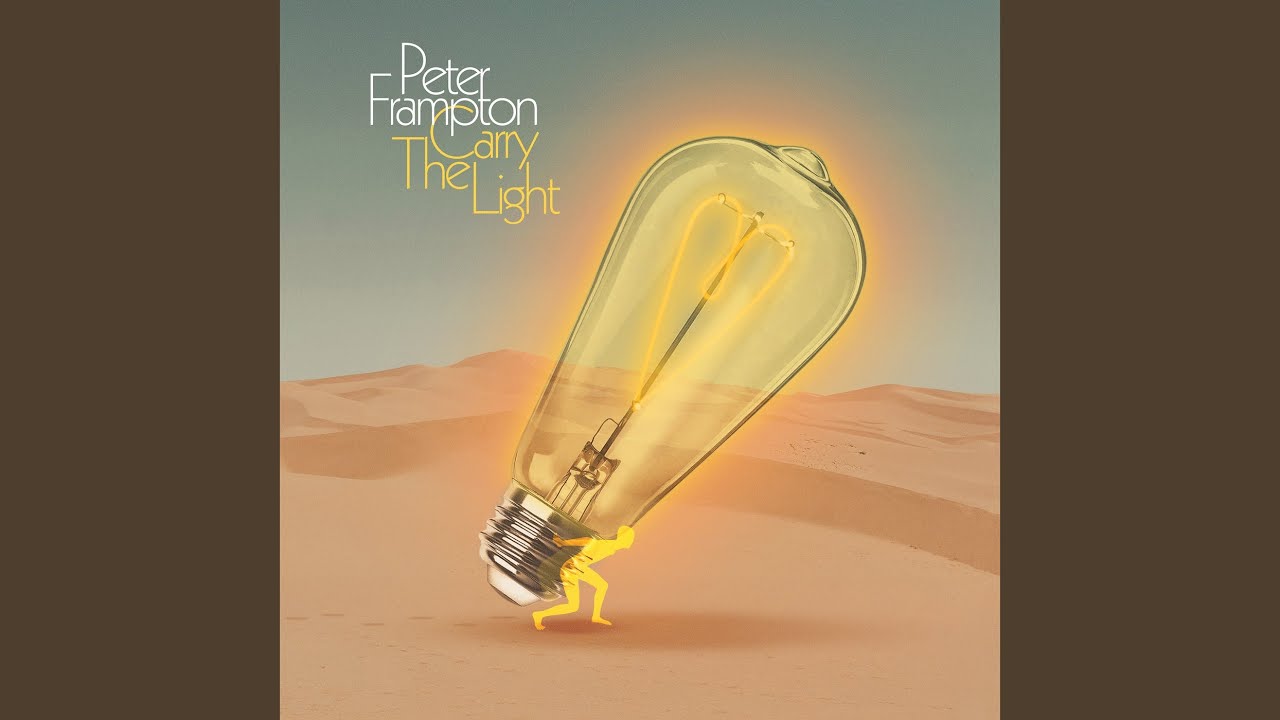
The resilience has certainly been on display since Frampton revealed his diagnosis. There have been four albums — including the brand-new Carry the Light, a guest-filled set that’s his first collection of all-original songs in 16 years — along with several tours (performed sitting down), a best-selling memoir and inductions into both the Grammy Hall of Fame and the Rock & Roll Hall of Fame. Frampton, a documentary directed by his keyboardist and musical director Rob Arthur, premieres June 4 at the Tribeca Film Festival.
He always says the big things don’t really matter — he handles them. It’s the little things that bother him; the crumpling of a potato chip bag will set him off.”
— Julian Frampton
IBM may be affecting Frampton’s hands, but clearly not the middle finger he’s giving the disorder as he continues the musical journey he began more than 60 years ago in his native England.
“I really do admire him for that,” says his son Julian Frampton, who co-produced Carry the Light. “He always says the big things don’t really matter — he handles them. It’s the little things that bother him; the crumpling of a potato chip bag will set him off. But when he got the diagnosis of having IBM, he was like, ‘Okay, what do we do next? How do we get through this?’
“That’s been his motto his whole life: When the big things happen you can’t change them, so you ride the wave, stand tall and work your way through it.”

Frampton is well aware of the gap in new material since Thank You Mr. Churchill in 2010, though he did release pieces he composed for the Cincinnati Ballet in 2013. Since then he’s issued Acoustic Classics in 2016 and two covers albums — All Blues in 2019 and the instrumental Frampton Forgets the Words in 2021.
“As soon as we announced the Finale tour, that’s when we went into the studio,” he explains. “And I said, ‘I’ve got to play as much as possible,’ for obvious reasons. ‘I want to play as much as I can until it’s not easy for me.’
“Now it almost feels like I’m starting from scratch again, like I felt I was on Wind of Change [his 1972 solo debut], because it’s been so long and I’ve had so many new ideas — either brand new or from the last six years.”
The hard-hitting “Lions at the Gate,” in particular, dates back several years. Frampton was recording “Peggy Sue” for a Buddy Holly tribute project and used the extra studio time to jam with bass guitarist Dave LaBruyere and drummer Chad Cromwell. The Framptons later recruited Tom Morello to play on the finished, politically charged track.

“If there was ever a song he should play on — the rage man himself — it’s ‘Lions at the Gate,’” Frampton says. “He took it, wow, and played in the places I left him. Then I said, ‘If you feel like harmonizing or playing with me…’ So there are some beautiful harmonies he does with me at the end that are just great.”
It’s always about the guitar — the sound and the inspiration. I play during the day and work out stuff that I came up with the night before, before I go to bed.”
— Peter Frampton
There are, not surprisingly, plenty of six-string heroics throughout Carry the Light’s 10 tracks. There’s compositional integrity and songwriting craft, but at the end of the day, as Julian notes, “the guitar is the star of the show.”
“That’s always the priority,” he says. “Always at the top of his list. That’s always going to shine.”
“It’s always about the guitar — the sound and the inspiration,” Frampton adds. “I play during the day and work out stuff that I came up with the night before, before I go to bed. If my girlfriend’s not here when I sleep, the acoustic guitar or an electric is on the other pillow, and Bigsby’s at the foot of the bed.
“I pick up my phone and hit ‘record’ before I pick up the guitar, because so many times the first thing you play, you’re not thinking at all. Then all of a sudden it’s, ‘What was that?!’ and it’s good that I got it recorded. You can try to play it later and it’s still me, but it’s not the same — ’cause now you’re thinking about it.
“So it’s best for me to always put the iPhone in record so I get it. That’s how they all started.”

Frampton’s famed Phenix — the 1954 Gibson Les Paul “Black Beauty” Custom recovered in 2011 after a 1980 plane crash in South America — was his primary instrument on Carry the Light. But Julian notes that “we used whatever sounded best.” That included a Dupont on the jazz-inflected “Islamorada,” featuring H.E.R., which grew out of a voice memo Julian recorded of some jazz chords.
That was our motto: We have to try everything. We have to try each other’s ideas — otherwise, what’s the point?”
— Peter Frampton
“He’s such a jazzy guy I thought he’d like it,” Julian says. “We started writing to that a little bit and he really wanted to sing on it. But I had a vision. I said, ‘I want you to sing — but I want you to sing with your guitar.’
“He fought me on it a little bit and then eventually gave in. I was playing acoustically and he brought out his electric, and when we started playing over the chorus melody we both looked at each other and he said, ‘OK, this is an instrumental song. You won me over.’”
That kind of input, Frampton says, helped elevate his Los Angeles–based son’s role from occasional lyrical collaborator to full co-producer, spending weeks at a time in Nashville. The two had previously worked together on “Road to the Sun” from Thank You Mr. Churchill.
“I have to credit Julian with coming up with some incredible ideas that made this album so much better,” Frampton says. “Maybe if I was working with another producer, the control freak in me would’ve said, ‘I don’t think so.’ But because it was my son, we said we’re not gonna settle on any level for this album.
“That was our motto: We have to try everything. We have to try each other’s ideas — otherwise, what’s the point?”

Frampton also made a rare and previously unrecorded foray with a Fender Telecaster on “Buried Treasure,” a high-octane tribute to the late Tom Petty inspired by Frampton’s love of Petty’s Buried Treasure program on SiriusXM.
“That’s the guitar sound of Mike Campbell and Tom. That’s a Tele,” Julian explains, singing the track’s ringing riff.
It’s a nod to Django, even though I could never play like him. But I hinted at what I can do.”
— Peter Frampton
“And then, for the whole album, he’s got such incredible pedals to dig in and try different effects — his Mutron, his Eventide choruses. It was so fun to play with him, with his sound, which I’d never experienced before.
“And most of the album was cut with this little SIR amp that he just loves. It’s got an incredible sound.”
Recorded primarily at Frampton’s Studio Phenix in Nashville, with overdubs at Bigsby Park and elsewhere, Carry the Light includes a number of other experiments as well. The title track incorporates a Shawnee stomp dance and chants recorded by Frampton’s guitar tech Nick Gibson with his tribal elders in Oklahoma, while Frampton pulls out the Dupont for “I’m Sorry Elle” (with Graham Nash), an ode to his granddaughter, who was born during the height of COVID — and whom he couldn’t visit for several months.
“It’s a nod to Django,” Frampton says, “even though I could never play like him. But I hinted at what I can do.”
Two tracks with jazz saxophonist Bill Evans — “Can You Take Me There” and “Tinderbox” — explore vibey terrain and deep grooves. The former evokes Marvin Gaye circa What’s Going On, while the latter features fiery instrumental exchanges between Frampton and Evans.
“‘Tinderbox’ is so varied,” Frampton says. “It’s a journey. All of a sudden you’re in a jazz bar.”
Every song on the album — which also features Sheryl Crow on “Breaking the Mold” — houses a noteworthy solo, often the first element Frampton says he came up with.
“I don’t like thinking about what I’m gonna play at all, even while I’m playing it,” he says. “I like the fresh ones, where there are new ideas and places I haven’t been before.
I try to play as if I have no problem. Sometimes I’ll think, ‘Okay, this is just a thruway. I’ll just throw this one away.’ That’s usually the one that ends up being the best.”
— Peter Frampton
“I’ll do three or four takes, take a break, save those and then stop thinking. I’ll come back and do three or four more takes. Usually the first take of each batch is the best — because you don’t care.”
“I try to play as if I have no problem,” he adds. “Sometimes I’ll think, ‘Okay, this is just a thruway. I’ll just throw this one away.’ That’s usually the one that ends up being the best — because you’re not thinking.”
Frampton currently has no touring plans but will make appearances to promote both the album and the documentary. He’s already looking ahead to the next record; he and Julian recorded six additional tracks during the Carry the Light sessions, and Frampton says he already has “four embryonic ideas ready for me and Julian to sit down and do the same thing.”
“That’s what makes me feel so good,” he says. “I come from an album perspective, where you’ve got 19 to 21 minutes at most on either side. Just because you’ve got the time on a cassette or CD doesn’t mean you should put it all out.
“I’ve never been a fan of that. It’s quality versus quantity — and we’ve got more quality coming your way.”

