
Brian Eno may have described himself as a “non-musician,” but his experiments with electronic processing helped shape the early sound of 1970s glam art-rockers Roxy Music — and the evolving guitar style of the band’s six-string architect, Phil Manzanera.
Though Eno’s tenure in the group lasted just two albums, the sonic partnership between the two musicians pushed the electric guitar into new territory and would eventually spill over into the short-lived experimental live project 801.
“I loved Brian's treatments on my electric guitar because in those days there was only a fuzz box and a wah-wah pedal available,” Manzanera tells Guitar Player. “There was nothing else to give you any kind of tonal variation. And no one had ever done that before — using the guitar as a sound source for inputting into a VCS3 synthesizer and then filtering it.”

At the center of those experiments was the EMS VCS3, a compact British synth that Eno used to process Manzanera’s guitar signal.
Brian and I had built up a little system between us, so we could bung things backwards and forwards to each other.”
— Phil Manzanera
Before long, the pair had built a collaborative technique using a pair of Revox tape recorders, using Sel-Sync multitracking and varispeed controls to manipulate sound in real time.
“Brian and I had built up a little system between us where we both had Revox tape recorders… so we could bung things backwards and forwards to each other,” Manzanera explains. “I would react to it, and he would improvise with what he was doing to my guitar. I would then hear it and play in a certain way that would go back in slightly differently. It was totally innovative.”
The result was more than altered guitar tone. What the two created was essentially a feedback loop between performance and processing, where each pass reshaped the next.
“It was what Hendrix and the Velvet Underground were doing, but one step further,” he says. “I was creating the feedback and using the whammy bar and everything, and Brian was capturing it all. And then you’d hear both things at the same time — it was like it was superimposed.”
With Sel-Sync and varispeed, the pair effectively turned the studio itself into an instrument, manipulating pitch, timing and texture as the music unfolded.
“There was no one else doing it with a guitar,” Manzanera adds. “And I’ve never heard anyone else do it since.”

Eno’s description of himself as a “non-musician” became central to his public persona, though Manzanera suggests the reality was more complicated.
“Though Brian may have called himself a non-musician, he was obviously applying musician-type criteria to everything he did,” he says. “By 1973, when we started doing his first solo album, Here Come the Warm Jets, you can hear the musician in him because he’s singing melodies and writing lyrics. There’s a certain expansion of the whole concept of being a non-musician.”
After Eno left Roxy Music in 1973 to pursue his solo career, Manzanera continued developing the sonic system they had built together.
“I had the guy who built the original VCS3 make me a guitar version of it,” he says. “And that’s what you hear on the track ‘Amazona.’ It’s me using that EMS VCS3 guitar synth, with the Revox and the speeding up and slowing down. If you listen to it, it sounds at times like an underwater guitar.”

Even after Eno’s departure, the two continued collaborating. On John Cale’s track “Gun,” Eno once again processed Manzanera’s guitar solo.
We went into this cottage in Gloucestershire and spent a week just hanging out and talking about ideas for projects.”
— Phil Manzanera
By 1976, after Roxy Music went on hiatus, Manzanera and Eno reunited to form the experimental live group 801 alongside bass guitarist/vocalist Bill MacCormick, drummer Simon Phillips and classically trained keyboardist Francis Monkman.
The band’s name came from a lyric in Eno’s song “The True Wheel,” from his 1974 solo album, Taking Tiger Mountain (By Strategy). The idea was to translate their studio-based experiments into a live environment.
“On reflection, it sounds like some sort of weird Eno art project,” Manzanera says. “We went into this cottage in Gloucestershire and spent a week just hanging out and talking about ideas for projects. And that’s what we came up with.”
The group’s experimental spirit, however, sometimes collided with musical practicality.
“Trying to get Eno to understand what a 13/8 time signature was — particularly on the track called ‘East of Asteroid’ — proved rather challenging,” Manzanera says with a laugh.
Trying to get Eno to understand what a 13/8 time signature was proved rather challenging.”
— Phil Manzanera
“You’ve got a non-musician saying, ‘Where do I come in to play anything at all? What could I possibly play?’ It was a devilish little experiment.”
Even when tackling more familiar material, such as the Beatles’ “Tomorrow Never Knows” — among the most experimental tracks in the Fab Four canon — the band approached it with studio-style thinking.
“Brian was playing single notes, but then he made up a sort of sound tape cassette, which started at the beginning of the track and ran throughout the whole track live,” Manzanera explains. “He was chopping up bits of radio interviews and all sorts of stuff, à la the Beatles in some ways.”
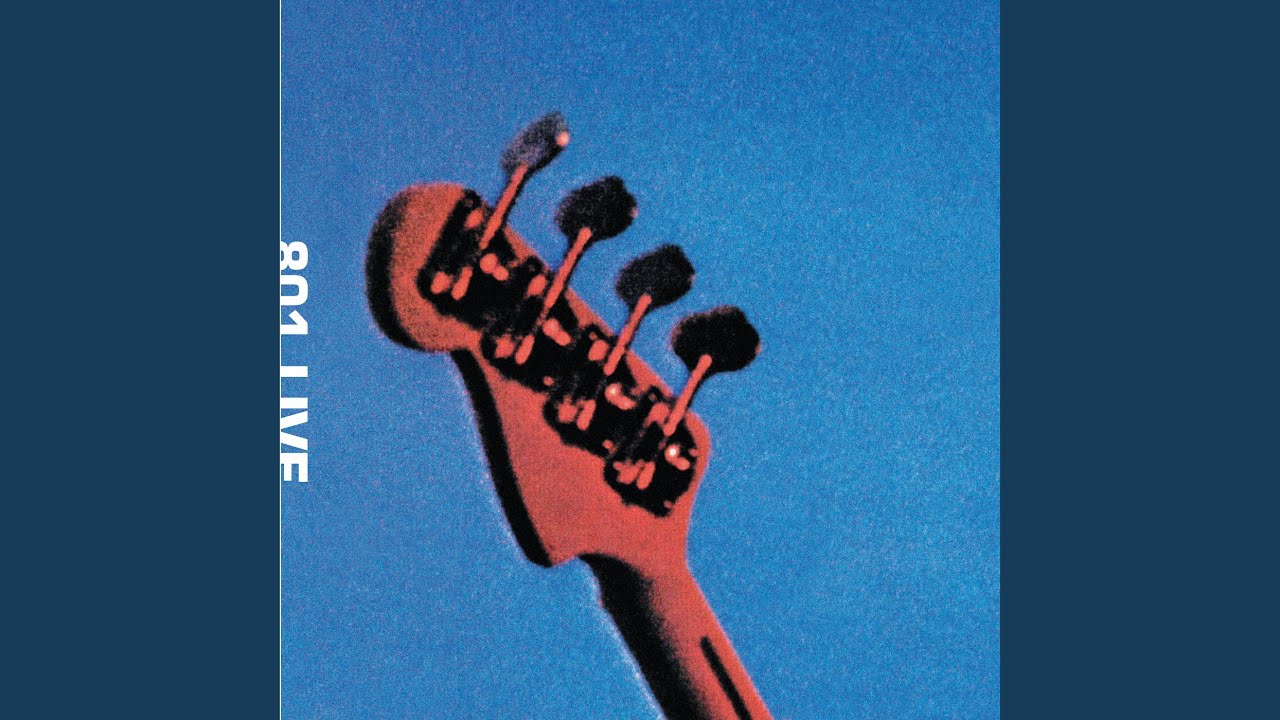
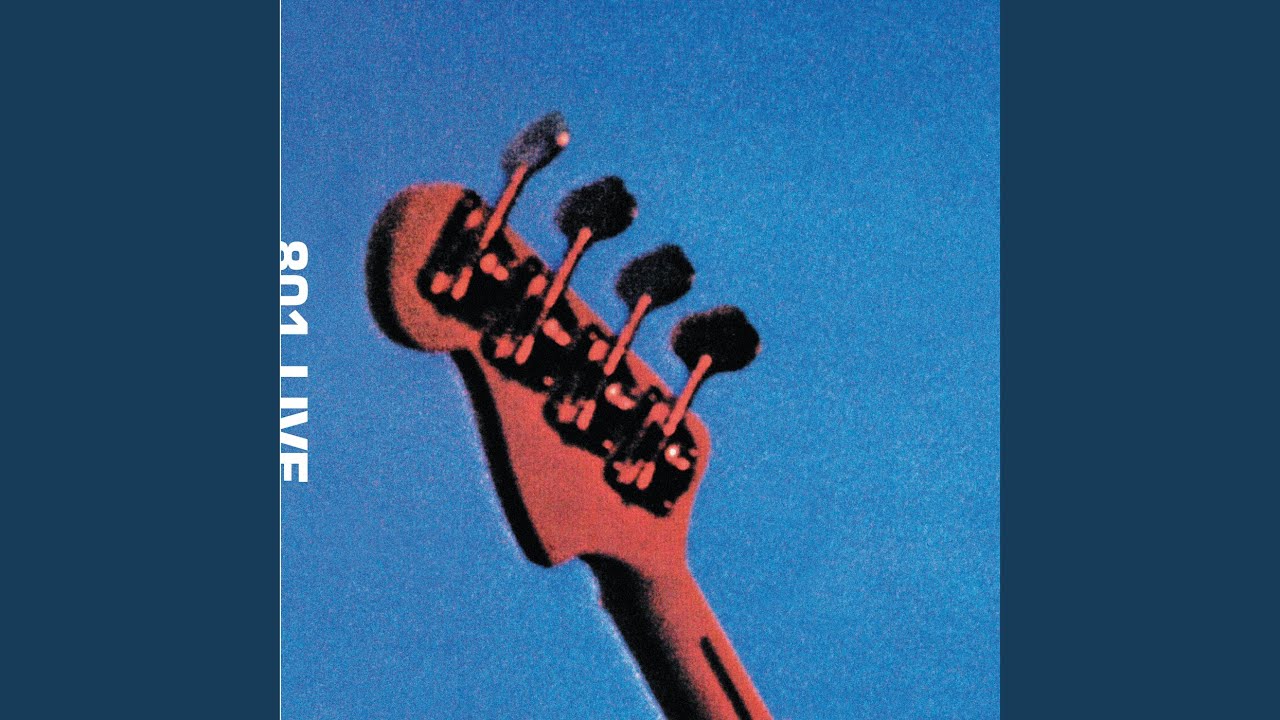
801 performed only three concerts. Their final show — on September 3, 1976, at London’s Queen Elizabeth Hall — was recorded and released later that year as 801 Live, the group’s only album.
It was a devilish little experiment. And then Brian left and went to work with Bowie in Berlin.”
— Phil Manzanera
“It was one of those things that could only last a short amount of time before people started rebelling against Eno,” Manzanera says. “Especially Francis Monkman, who was not used to having a non-musician throw abstract sounds at him. It was a devilish little experiment.
“And then Brian left and went to work with Bowie in Berlin. And that seemed like forever, and so I hardly ever saw him again.”
Despite the band’s brief lifespan, 801 Live has developed a lasting cult following — helped in part by the clarity of its recording.
“It was one of the first albums where we didn’t bother with the room mics,” Manzanera explains. “We just close-miked everything, and because of that you can really hear the musicianship in incredible detail.”

For Manzanera, the project remains a rare moment when experimentation, musicianship and timing all aligned.
“We rehearsed for six weeks and only did three gigs, so we seemingly appeared out of nowhere, were incredibly good quite frankly, and then we quickly left the building,” he says. “It was short and sweet, and all captured on that one album.
“And all over the world, whenever people hear 801 mentioned, they’ll write in swearing allegiance to it. That’s incredible. There’s obviously a whole bunch of devoted people who absolutely love it.”

