
Working with George Harrison led Peter Frampton to fall in love with an effect he would go on to popularize so completely that he ultimately eclipsed one of its earliest champions.
From an early age, a life in music seemed inevitable for the English-born guitarist. By 12, Frampton was already playing in a band — the Little Ravens — alongside a three-years-older David Bowie. Two years later, he joined the Preachers (later Moon Train), a group managed by Bill Wyman, then bass guitarist for the Rolling Stones.
By 18, Frampton was fronting Humble Pie with Steve Marriott, co-writing a run of hits before leaving the band in 1970. That departure marked a shift away from traditional band life and toward session work — a move that soon placed him at the center of one of the most important albums of the post-Beatles era.
“In 1970, when I left Humble Pie, I was doing sessions for lots of different people,” Frampton told the Rock and Roll Hall of Fame. “And one of the best sessions I ever did was for George Harrison, who asked me to play on All Things Must Pass.”
It was during those sessions that Frampton witnessed a moment that would quietly reshape his career.
“On the second or third day, George told me he had invited Pete Drake, the Nashville pedal steel player who played on Bob Dylan’s Nashville Skyline album,” Frampton recalled.
Drake’s reputation preceded him. By the late ’50s, he was a cornerstone of the Nashville A-Team, the East Coast counterpart to Los Angeles’ Wrecking Crew, and his pedal steel appeared on countless hit records. He was also known for a curious piece of sonic wizardry: a “talking” steel guitar created using a homemade talk box — an effect he was eager to demonstrate to Harrison and Frampton.
“In comes Pete that day, and he’s setting up his pedal steel,” Frampton said. “He goes, ‘Do you want to hear something a little different?’ George and I are sitting there watching him, and he gets this gadget out. Then he puts a tube onto it and puts the other end in his mouth.
“I had this funny feeling I knew what this was going to be.”
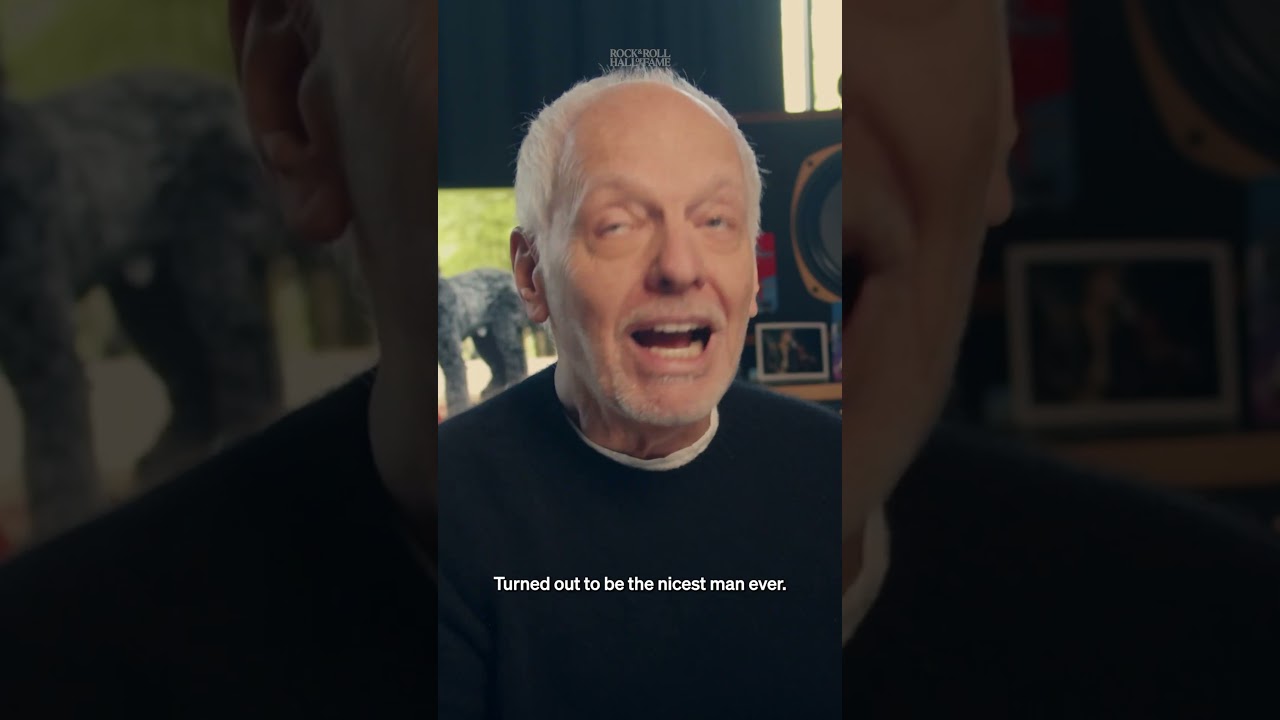
As Drake launched into the demonstration, Frampton was both astonished and entertained.
“Me and George are laughing, because what do you do?” he said. “It’s the most incredible sound. And it’s funny. It’s humorous, which is what I like about it.”
The talk box itself dated back decades. Jazz guitarist Alvino Rey had pioneered the effect in 1939 using a microphone designed for military pilot communications. But Drake brought it to a wider audience in 1964 with “Forever,” and Frampton immediately saw its potential.
“I said to him, ‘Where did you get that? Because I’d really like to get one,’” Frampton recalled. “And he said, ‘Well, I made this one myself.’”
It would take a few more years before Frampton got his own. In 1974, he received a talk box from Bob Heil, the sound-system innovator behind touring rigs for the Who and the Grateful Dead. Heil’s version followed earlier commercial attempts — most notably the Bag, released by Kustom in 1969 — but it proved especially roadworthy. Around the same time, Joe Walsh used a talk box on his 1973 hit “Rocky Mountain Way,” while Rick Derringer employed it on “Teenage Love Affair,” recorded with Walsh and Barnstorm.
With Heil’s talk box now on his pedalboard, Frampton took the electric guitar effect further than anyone before him. On Frampton Comes Alive! — one of the best-selling and most celebrated live albums in rock history — the talk box became a signature voice, featured prominently on “Show Me the Way” and “Do You Feel Like We Do.” Though later embraced by players like Slash and Richie Sambora, the sound became inseparable from Frampton himself.
Ironically, that success came at a cost. Frampton admitted last year that the album’s runaway impact ushered in “a very difficult period” as work began on its follow-up—proof that even a career-defining moment can cast a long shadow.

