
If you only have one pedal in your arsenal, chances are it’s some sort of overdrive. Fuzz, boost, overdrive and distortion pedals are the most popular stomp boxes out there, and for good reason. If you don’t have the luxury of being able to crank up a great tube amp to excessive volume to get the world’s sweetest lead tones — and few of us do — you need one of these machines to dirty up your sound and help generate the singing, saturated, sustaining sound that so many styles of electric guitar playing require.
Despite their popularity, however, the distinctions between the different pedals in the “OD” category can get blurred. While each of these pedals helps you get cranked-up tone at the stomp of a switch, each type works its magic in a different way, and many from within the same type can function very differently.
Let’s break down the overdrive category to define, dissect and demystify each effect in the group.
Boosters

Among the simplest and oldest of overdrive-inducing pedals is the booster, which, at its heart, is just a straightforward preamp that’s placed in front of an amp’s input. These are used to increase the guitar’s signal — either to create a loud, but relatively clean volume lift for solos, or to kick the amp into overdrive.
Many types of boosters first became popular in the mid ’60s, as elements within their design — flaws, you could argue — produced far less than the clean boost that was intended, and instead induced tonal enhancements that players came to love. Early examples such as the Dallas Rangemaster Treble Booster and Vox Treble Booster and Bass/Treble Booster owed their creamy, thick sound to a single germanium transistor, an archaic component that is still used as the magic ingredient in many current boosters (and fuzz pedals, as we shall see).
In addition to boosting the signal, the germanium transistor added a little midrange girth and high-end sweetening, elements that became crucial to the early lead tones of Eric Clapton, Jimmy Page, Brian May and many others.
Note that these didn’t merely boost treble as the name might imply. They did help highs push through, but they boosted other frequencies as well, and the “treble booster” tag was partly a sales point in an age when “more treble” was often the call of players muted by high-load guitar cords and murky live mixes.
In addition to boosting the signal, the germanium transistor added a little midrange girth and high-end sweetening, elements that became crucial to the early lead tones of Eric Clapton, Jimmy Page, Brian May and many others. These players used their germanium boosters to hit the front ends of a Marshall or Vox amp with a little extra oomph in order to kick it into a singing and more harmonically saturated tube overdrive.
As such, pedal and amp work together as one instrument, and few boosters are used purely for their own inherent tone, but rather for the way they perform in conjunction with a particular amplifier. Plenty of mass manufacturers and boutique makers offer contemporary versions of such vintage-styled boosters, but a different breed, the “linear” (or “clean”) booster, is also popular. These purport to retain the full frequency range of the guitar signal, and simply make it louder. In the process, they can also help overdrive a tube amp in the same way as many vintage units.
Fuzz

The real godfather of the dirt boxes — the fuzz pedal — arrived even before the booster, and it was initially intended as an effect that would let a guitar player mimic the raspy, reedy tone of a saxophone. One of the most famous fuzz-guitar parts of all time — the signature riff to the Rolling Stones’ “(I Can’t Get No) Satisfaction” — was originally recorded by Keith Richards as a “holding track” for a horn section that would eventually replace it. The “Satisfaction” riff was recorded through an early Maestro Fuzz-Tone, and it is archetypal of the fuzz sound, as are many of Jimi Hendrix’s legendary solos, often recorded through a Dallas-Arbiter Fuzz Face.
Each of these pedals, and others like them — both old and new — owe their tone to a pair of the hallowed germanium transistors previously mentioned. These two components — along with a simple network to govern their functions and connect them to a pair of potentiometers for Volume and Fuzz (or some form of level and drive controls) — combine to unleash seven deadly sins’ worth of ungodly sonic mayhem on your tone, but it’s mayhem with a smooth, warm, and furry heart.
Unlike linear boosters, fuzzes slather a wealth of their own stink all over your signal (and that’s precisely the idea), but they can also be used to drive a tube amp into clipping.
The very best fuzz pedals are beloved for their “playability,” meaning the extent to which their response and dynamics can be controlled by your pick attack and your guitar’s volume control.
Silicon transistor-based fuzzes followed germanium units, and these are known for their slightly harder and more crisply defined tones. This is not to say that silicon-based fuzzes are inferior, only different, and many notable players count themselves fans of each breed.
Unlike linear boosters, fuzzes slather a wealth of their own stink all over your signal (and that’s precisely the idea), but they can also be used to drive a tube amp into clipping. Ultimately, most great guitarists with definitive fuzz tones are using their pedals in both of these ways simultaneously to create a larger, more interactive instrument out of the individual components in their rig.
Overdrive
Just like it says on the box, an overdrive pedal seeks to replicate the sound of an overdriven tube amp. In the course of doing so, it often facilitates the real thing a little more quickly by pushing your amp into clipping a little earlier, just as a booster and fuzz will frequently do.
While fuzz pedals of the ’60s and early ’70s inherently sound very little like an overdriven amplifier — other than perhaps an amplifier in bad need of attention — it occurred to many players and pedal designers in the late ’70s that it would be useful to have a box that sounded like the warm, tubey crunch of a mildly pushed amp.
The granddaddy of overdrives is the Ibanez Tube Screamer TS808 (and its Maxon equivalent), manufactured for Ibanez by the Nisshin company from 1979 to 1981 (both small- and large-box versions). The TS808 and the TS-9 and TS-10 that evolved from it were adored by players who wanted less than the extreme hair of the fuzz pedal, but more than the pristine clarity of a clean amp.
Some makers praise the “vintage” JRC4558D dual op amp (as used in the most lauded of Tube Screamers), while others declare any op amps to be the death of transparency and dynamics.
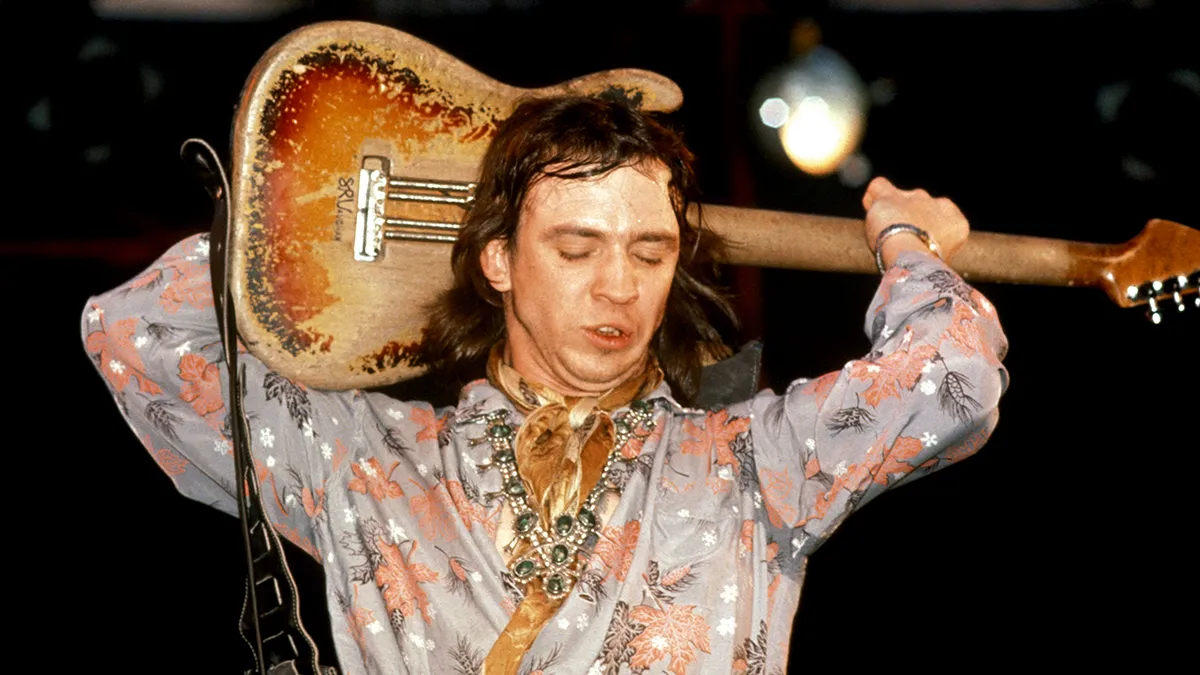
Several name players — Stevie Ray Vaughan and Eric Johnson among them — also used Tube Screamers for their amp-boosting functions, and the low-gain/high-volume control settings that facilitate this have become popular with many guitarists.
DOD, MXR, Boss and others issued formative overdrives, and the genre continues apace today as probably the most popular single breed of pedal. Maker after solder-dazed maker has chased the ultimate in transparent, tube-like, dynamic overdrives. It’s interesting to note that the majority of these pedals achieve their overdrive tones quite differently.
Some makers praise and utilize the “vintage” JRC4558D dual op amp (as used in the most lauded of Tube Screamers), while others declare any op amps to be the death of transparency and dynamics, and go the discrete-circuit route instead. Whichever way you go, a good overdrive is one of the cornerstones of any comprehensive pedalboard, and an extremely useful tone twister.
Distortion

Like going from a ball-peen hammer to a 10-pound sledge, a distortion pedal seeks to reproduce the full-stack tube-distortion rage that the kinder, gentler overdrive pedal barely hints at. In doing so, most distortion pedals also emulate the high-production-value version of this sound, rather than merely enhance the amp tone it starts with, complete with a scooped-EQ curve and liberal helpings of compression.
There are many flavors of distortion available, of course, but by its very nature this pedal aims to achieve its “sound in a box,” rather than partner up with a good tube amp to sound its best.
Most distortion pedals employ a combination of op amps and silicon diodes to do their dirty work.
An iconic example of distortion can be heard on Nirvana’s “Smells Like Teen Spirit,’ where Kurt Cobain used a Boss Distortion DS-1. Although the DS-1 preceded it by a year or so, the ProCo Rat, released in 1979, is usually considered the seminal heavy distortion pedal. (The MXR Distortion+, released in 1973, is really more of an overdrive pedal.)
Every major pedal maker on the market today offers their own renditions of this sonic fury. Most distortion pedals employ a combination of op amps and silicon diodes to do their dirty work, some using the latter in asymmetrical circuits to produce a more jagged and edgy form of clipping.
Whatever gets you to your own flavor of filth, you will most likely want to use your booster, fuzz, overdrive or distortion early in the pedal chain. If you are using more than one pedal, a quick rule of thumb says to put the milder, or cleaner, OD earlier in the chain. On the other hand, there are always notable exceptions. Wah-wah pedals usually like to go before fuzzboxes to work their magic, and messing around with the “accepted order” of other ODs might produce results that give your tone the extra zing you’ve been looking for.

