
All sorts of animals are represented in the Los Angeles area home of Twin Temple’s Alexandra and Zachary James — including game trophies and skeletons of a full-term baby they’ve named Rose and of an adult known as Charles, the latter from the Bethlem Royal Hospital in London that was nicknamed Bedlam for its gruesome psychiatric care practices.
“We’re collectors of all things kind of weird and macabre,” Alexandra acknowledges, “and our whole house is kind of like one giant… I was going to say ‘living,’ but dead memento mori. It’s like late ’50s to late ’60s records and a bunch of dead humans around. We’ve always been drawn to the darker side of things, darker stories in life.”
There’s also an elephant in Twin Temple’s room these days.

The group, which the married couple formed after tenures in other bands, has been operating since 2017 and started releasing its self-identified “satanic doo-wop” two years later. Though the sound has more in common with the Countrypolitan brand of the late ’50s and ’60s, the duo’s macabre and sometimes bloody imagery along with defining songs such as “Satan’s a Woman,” “I Am a Witch,” “Burn Your Bible” and “Let’s Have a Satanic Orgy” have courted favor from the metal and punk realms, including tours with Danzig and Ghost, among others.
It’s been a niche affair, but visible enough for someone like MAGA personality Alex Jones to decry Twin Temple as an “embodiment of pure evil.”
I’m really inspired by the darker side of American history, and music. I love a good murder ballad.”
— Alexandra James
But the group really became international news this summer when country artist Charley Crockett dropped Twin Temple as an opening act after learning about the Jameses’ practices and stage proclivities. That led to the duo’s July 29 appearance on Comedy Central’s The Daily Show, while Jack White invited them to open for him on September 29 at the Hollywood Palladium.
“It was shocking at first,” guitarist Zach tells us via Zoom. “We were a few days out from the [Crockett] shows starting. But I think all the support that everyone has shown since that’s happened has been so cool…and now we get to play a show with [White], which we’re obviously looking forward to. Overall we’re excited more people are hearing about the project — especially right now.”
The hubbub has, in fact, been fortuitous as Twin Temple will be releasing its fourth album, Doomed Lovers, on October 9. Produced by Shooter Jennings and recorded in the iconic Studio 3 at Sunset Sound in Hollywood, its eight songs find the duo at its most ambitious, lushing up its throwback melodies with a 37-piece Bulgarian orchestra, adding a romantic sweetness and sophistication to the dark underpinnings of Alexandra’s lyrics. The first single is called “Haunt Me,” which is exactly what Twin Temple is trying to do.
“I’m really inspired by the darker side of American history, and music,” says Alexandra. She faced profound and even horrific bigotry growing up mixed race (Korean-Caucasian) in the San Francisco Bay Area, an experience that’s impacted her worldview. “I love a good murder ballad. Obviously I love, like the necrotic, satanic lyrics of black metal. And then I love classic American storytelling, which I feel lives strongly in country music. Nobody can tell a story like Willie Nelson, or Loretta Lynn.
“A lot of people are like, ‘Oh, this is a gimmick. You’re not really Satanists. You don’t really mess with all that stuff.’ Well, come into our house and you will find we’re about that life. And definitely all these things kind of seep their way into my imagination, I think.”
Alexandra adds that Doomed Lovers follows “a four- or five-year really dark period for the duo,” both personally and professionally as it dealt with a variety of business issues before launching its own Pentagrammaton Records label. But she and Zach are, deservedly, all smiles about a current state of affairs that is, indeed, well beyond doom. And while their partnership is an equal collaboration, we took Zach aside for a look how guitar fits among Twin Temple’s sacraments, satanic and otherwise…

To deal with the obvious first — has it surprised you that Twin Temple and your music frightens people the way it does?
For sure, yeah. It’s interesting. It’s been entertaining to watch it unfold. I think it’s also a very American thing, being such a Christian nation. I think America is more satanic than anything, but that’s a whole other story. But it’s definitely a very American thing. We got to Europe and I’ve never had that kind of conversation there.
Part of it may be that Twin Temple doesn’t sound particularly satanic, or what most consider satanic.
Right. With, like, metal, it’s expected to have this kind of imagery. So part of this is cognitive distortion. It’s unexpected. People don’t think it’s real. It’s a really organic and natural thing, though. It wasn’t like we sat down one day and said, “Oh, I think it would be really interesting if we smashed these two seemingly opposite things together.” We were just really trying to develop something that truly represented us together. That’s how it came about.
We were just really trying to develop something that truly represented us together.”
— Zach James
How did you make your way into Satanism?
It’s something me and Alex both share. We feel like people are born Satanist. It’s just a way of viewing the world to us. It was really like finding there was a language and a vocabulary that did that. I think to us Satan is a symbol of rebellion and free will and autonomy. It’s part of this broader idea of the Left-Hand Path, which is kind of a humanist view. It’s a celebration of the human existence and the physical body as opposed to the repression and control that other religions like to propagate.
It was more of a discovery of, “Oh, this is what this is.” Punk rock, to me, has a lot of through lines with a lot of these same ideas that kind of push back against and subvert society norms and question things. For me, once I found that it made the whole thing resonate even more, and become even deeper.
What’s the chicken and the egg here? Did the music precede the Satanism, or was it created out of that?
Me and Alexandra had bands in the past. We came up in the punk rock scene in Los Angeles; that’s where it started. We were playing music together, and we had these shared values and way of viewing the world. We viewed Twin Temple as our magical child, where we merge everything we love together, as our relationship deepened and as our love deepened. It’s a vessel for our true will, which gets into Aleister Crowley and the ideas of Thelema — the idea of knowing yourself and finding what you’re supposed to be doing here, and then doing that unapologetically.
So I think it was kind of a process of us both finding that. And a refinement process, too. We’re still refining what we truly want to be doing, and getting more and more detailed every day.

When did you start playing guitar?
It kind of started unconsciously when I was a few years old. Somehow I got ahold of a toy plastic guitar. I’ve seen home videos of me kinda hitting that thing and singing to a camera tripod. I think there was a natural inclination to make music, and that resurfaced in my early teens, when I started to find my own musical tastes. I got into punk rock again, as mentioned, and at that point I wanted to consciously pursue music and I found, like, Johnny Thunders. I dug his playing.
And then I went backward, to Chuck Berry. I remember sitting down in a room with some friends and trying to learn the rock-and-roll pinkie stuff that Chuck made famous, and at that point really committing and being like, “I want to be able to make this sound. I want to emulate that,” because I enjoy it so much.
You can certainly hear that journey back in time when you listen to Twin Temple.
Yeah, absolutely. I think it was just an exploration of finding the punk rock guitar players, Keith Richards even, and hearing little licks and going, “What is that from?” and listening to different blues artists and stuff. I think that’s at the core. I also think that, stylistically, it’s not about perfection. I think perfection is boring. It’s more about conveying an attitude and a feeling. I think Johnny Thunders’ mantra was it’s not what you play it’s how you play it. As much as I love musicianship, and that’s all part of it, when it comes to lead guitar work I’m far more fascinated with the imperfections and just, like, classic American rock and roll guitar. That’s what I’ve always loved, and still do.
Stylistically, it’s not about perfection. I think perfection is boring. It’s more about conveying an attitude and a feeling.”
— Zach James
What were some of the most impactful discoveries along the way?
I think, again, you could track it back to Johnny Thunders covering “Love is Strange,” like Mickey Baker and stuff like that. At the same time I’m listening to the local AM oldies stations and getting exposed to all this music. And then I think as I dig deeper I start figure out all these through-lines, like Lieber and Stoller to Phil Spector, Phil Spector to Brian Wilson, Brian Wilson to the Ramones. It’s like this strange lineage that just goes deeper and deeper. I loved things I was hearing, and I just got more and more obsessed and wanted to know more, wanted to know who did that, where did they get that from, how did they do that? A lot of obsessive listening for sure.
What particularly surprised you in that process?
I think Link Wray was a big one for me. There was so much attitude and emotion on his playing, but it’s also so simple. He’s not a flashy guitar player, but what an incredible guitar player he is. I mean, “Rumble,” that got banned for inciting riots! That was very inspiring.
And, again, songs like “Love Is Strange” and digging into Mickey Baker’s solo instrumental work and what an incredible guitar player he is. I think also it’s really tone-driven for me; I’ve always been very, very obsessed and interested in sound. I feel like the wrong guitar tone can ruin a great lick. It’s all part of the conversation, and the palette — like Bo Diddley, just a really emotive and cool tone and, again, simple but it conveys so much more to me. Obviously I respect someone who can face-melt with a lead, but that’s just not the stuff I’m looking for.

Certainly Twin Temple doesn’t entirely lend itself to displays of screaming guitar. How do you pick your shots?
With the records, I view the guitar in two different ways. There’s the lead guitar element, then there’s the more arranged, ensemble element, and I’m writing for it in different ways. I think in the songwriting process, as we’re sonically visualizing the arrangements, it’s like, “Okay, this song would be cool if there was a guitar part” or “This is a great opportunity for a counter melody, why don’t I put it on guitar ’cause it’s more kind of a rock and roll song.”
So it’s letting the song dictate where the guitar goes, and it’s usually an intuitive process. There’s not a lot of logic. It’s not like, “Well, we’re at the second chorus, so we better put a guitar solo in here” or something. I try to just let it naturally happen, but obviously I’m always gonna inject little moments, little blues lines or something. It’s just a different vibe. It’s trying to invoke the period we’re embracing, which is the late ’50s to early ’60s in particular, just kind of drawing from all that spinning around.
With the records, I view the guitar in two different ways. There’s the lead guitar element, then there’s the more arranged, ensemble element.”
— Zach James
Has your gear changed over time to accommodate that?
Yeah, it did. In the early days I was a little more punk. There was more distortion, so using overdrive pedals all the time, or trying to push a tube amp. My old rig was very Johnny Thunders–coded; it was like a Twin Reverb and a Les Paul Junior, P90s. I remember when I was younger, before there were so many pedals and stuff, trying to find ways to mod out a master volume on the Twin. If you turn it up to 10 it’s going to sound great, but it’s also ear-splitting loud, so I never could get the tone right.
As soon as Twin Temple started I shifted to primarily clean tones. I shifted over to just strictly single coils. I think the first record is totally clean; there’s some tube breakup to give it an effect, but there’s no overly distorted guitars. There’s my Gibson 355, which is humbuckers but there’s a distinct change over to clean and, “Okay, we’re going to use reverb, we’re going to use tremolo and we’re going to use slap,” and then keeping it very period.
But for the newest record I expanded and used some fuzz for the first time. There were two songs where we used fuzz, like a Maestro copy, the “Jumpin’ Jack Flash” OG fuzz pedal. To me that was fun to bring in. You listen to the “Zippity Do Dah” record, which Billy Strange claims is one of the first fuzzes on record; he had a power tube go out during the session, which I always thought was cool. So it’s been fun to incorporate a little different tone and this record and just kind of bring in that, and an Ennio Morricone vibe as well.
Is there a particular writing process you and Alexandra have developed?
I think it changes a bit song to song, but on the whole Alexandra will bring a lyric and a melody idea, and typically I’ll write the accompaniment. Obviously we dip into each other’s creative processes throughout as well — she’ll bounce lyrics off me, and as we’re arranging I’m bouncing ideas off her all the time, like, “Oh, what if we do this” or whatever. So it’s collaborative along the way. We’re both very opinionated; there have been songs that we’ve torn our hair out for weeks at a time and we have to push pause on them and come back when we’re both amenable to one another’s opinion. [laughs]
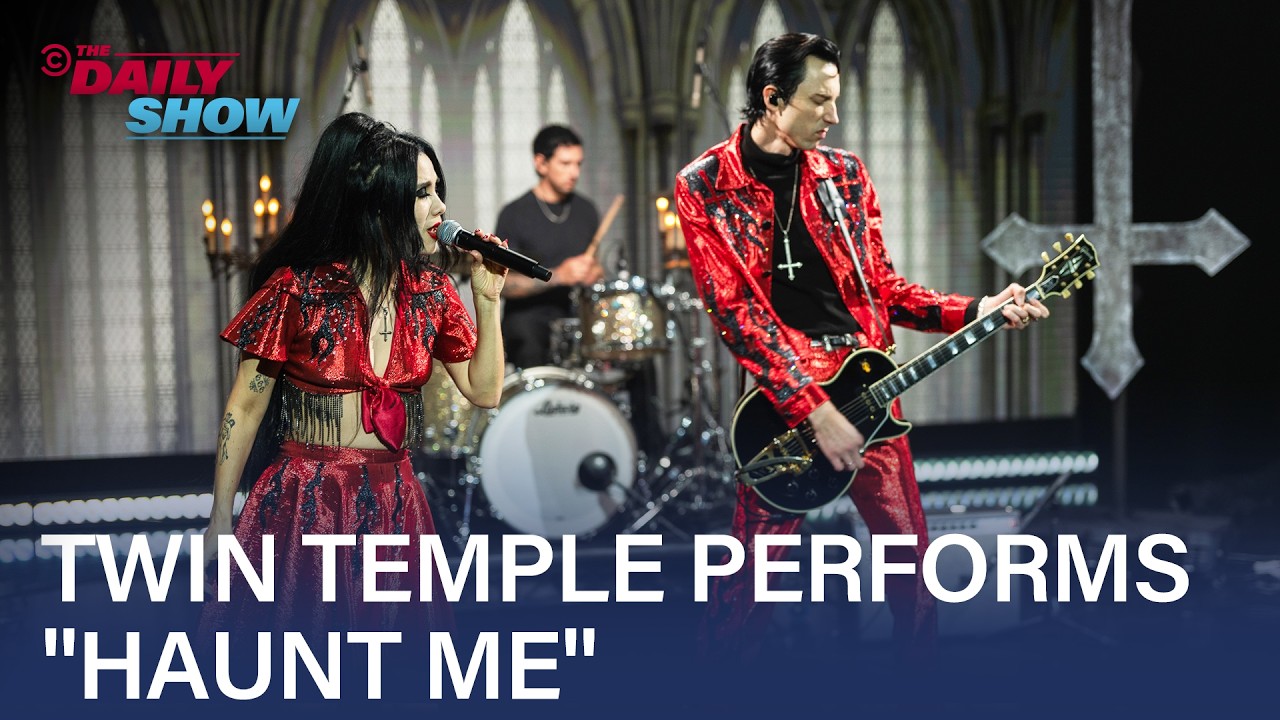
“Haunt Me” is a good example of giving the guitar some prominence, but within the stylistic parameters.
I think that was the second song we decided to use some fuzz on. It’s layered with Bass VI and some of the rhythm guitars — this is the first time we’ve done this — it was chords on the baritone guitar because we wanted it to feel really, just heavy, a lot of body without having to rely too much on distortion. To me the voicing of the chords was referencing Link Wray as well; in “Rumble” I noticed in his voicings he’d have a lot of low fifths in the chords, and that gives it a lot of weight and meat.
Then there’s a rhythm guitar that’s just playing cowboy chords, but it’s on a baritone which, again, more heaviness. And then there’s that counter on the fuzz guitar which is doubled and the Bass VI, which to me has an early Stones feel. So, yeah, there’s a lot of references in there for the guitar. I think the overall theme is this American gospel kind of vibe, so trying to keep it within that wheelhouse was a goal as well.
I love Barney Kessel. He taught Phil Spector how to play guitar and is just a really cool player.”
— Zach James
What baritone did you use?
The baritone was a Danelectro, and we got a Fender Bass VI. On this record we went kind of crazy down the Bass VI rabbit hole. It was my technique to double the Bass VI with the tick-tack bass sound and the double bass and little walking lines in-between. It was funny ’cause now people EQ the kick drum to give you that cutting sound, but back then they had a mono speaker and not a lot of kick drums, so they wanted this extra layer to help the bass cut through. I love that sound, and us and Shooter got really obsessed with Bass VI on this record. We had the Squier Bass VI, we had a Fender Bass VI, we had the Dano baritone — I even strummed the Dano baritone with Bass VI strings at one point in time.
So you were like satanic mad scientists in the studio.
[laughs] Yeah, absolutely. We had things we knew we wanted to hear and sounds we were looking for, so there was a lot of experimentation — a bit of slap on the Bass VI, some spring reverb, just a lot of work dialing in the sound and using that as a template moving forward to other songs.
What else is in the guitar arsenal these days?
I do have a ’64 Fender Jag that I use on all the records; that’s my go-to. It’s the guitar Billy Strange was using back in those songs, and I love the real thin, cutting tone. Especially in these arrangements you need a guitar that’s going to cut, tone-wise. I also have an early, mid-’60s Barney Kessel archtop that I use on a lot of stuff, and I love Barney Kessel. He taught Phil Spector how to play guitar and is just a really cool player.
I use it a lot unplugged as well on the records; there’s a lot of flatwound, unplugged archtop for some of the acoustic tones. I don’t take the vintage ones on tour, though. I use reissues; I’ve got a ’54 Les Paul reissues with a P90 that I really love, and then I feel like the Twin Temple guitar I started with was the Gibson 355 Custom, like Chuck Berry but it’s a black finish instead of his cherry red.
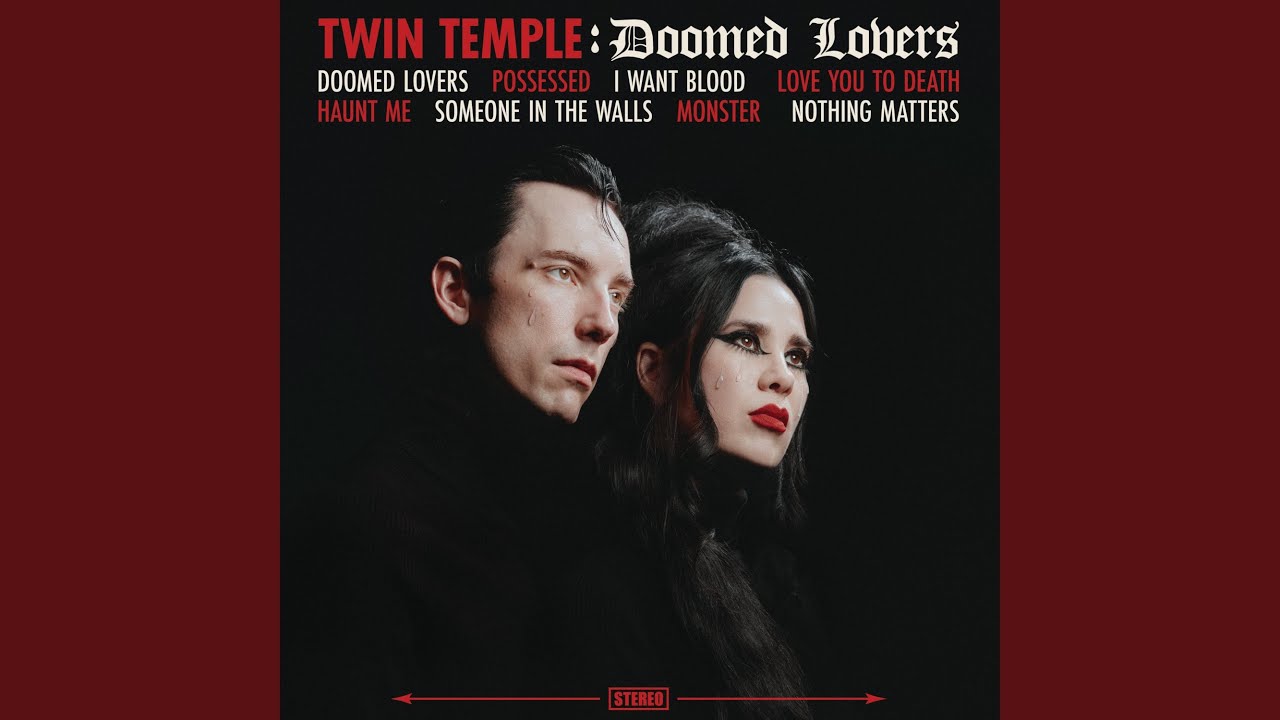
Doomed Lovers’ title track gives the guitar some more space as well.
Yeah, I feel like that song is everything firing all at once. We actually had an entirely different version of that. We recorded it and it was “done,” and we had a week left in the sessions. There was something about it that just wasn’t right. I sat at the piano and stripped it back to the basic chords and melody and ended up reworking the entire song; by the time we got to the bridge the whole sonic identity just fell into place and the guitar work fell into place.
I’m a big fan of Jack Nitzsche, who was an arranger for Phil Spector and many others; he did a lot of this really great arranged kind of arpeggio work with guitars, where there’s this classical that meets rock ’n’ roll. So I feel like sonically in the chorus drawing on that, there’s this harmonized, arpeggiated guitar part that’s kind of a slow ensemble piece where there’s an acoustic archtop, an electric guitar and they’re all blending to kind of add to that. The bridge is kind of a nod to Tommy Tedesco; he’s a really playful, always has these nice little licks, but they’re kind of unhinged, like off a few notes, just something slightly weird about it, and I really love that.
So I think the bridge was one quick pass, a couple little noodles and we just left it ’cause everything else was so arranged. I like when the lead guitar has a kind of frantic, unhinged moment like that.
I think we’re always gonna love classic American music, and I think the heart of that is the late ’50s, early ’60s period.”
— Zach James
Were the songs written with the orchestra in mind?
That’s been a creative goal for a very long time… so it was a nightmare come true. Getting to have that on the record was just incredible. It was part of the thought process from the start, and we worked with another arranger who helped us notate all the ideas for the orchestra. It was incredible having that palate, knowing that we’ were going to have that instrumentation and being able to think that expansively. On the last record [2023’s God Is Dead] we had one song with strings, but it was very different; we had one player come in and just overdub and stack.
But to have the full orchestra, to just move the air and have them all playing together…I feel like the string parts we reference are very romantic and classic, so it was fun to have that palate. The strings were done in Bulgaria, but we were live streaming and it was like four in the morning on Skype and sitting in the darkness and watching it happen. It was so incredible. And hearing them talk about it and humming parts between takes and stuff… The musicians were getting a kick out of it as well. They said a lot of times they’re doing little calls for TV show or movies, so to have music with identity was refreshing for them as well.
How was the experience of working with Shooter?
It was great. He came to our show at the Wiltern in 2022. He just bought tickets and came to the show and a mutual friend was like, “Hey, Shooter’s here.” So we met him and quickly bonded over our shared love all things weird and all things classic American rock and roll. He proposed the idea of making a record, and over a long-winded couple of years the timing worked out.
And he’s got Studio 3 over at Sunset Sound, which he’s dubbed Sunset Mountain. It’s the room where Prince recorded Purple Rain; the grand piano we got to record a bunch of the songs on was the Purple Rain piano. There’s just so much history there, so it was cool to be able to work in that room and be part of that history.
And Shooter is such a supporter, and so knowledgeable as well when it comes to that music, too. It was fun to be able to collaborate with him. He played piano on a few of the tunes as well, so we got to bust out some Floyd Kramer stuff and explore that Countrypolitan sound. He’s well-versed in it but hasn’t done much of that on his records, so it was a fun lane for us to explore together.
Are there more songs that you did during the sessions but didn’t release?
Yeah, there’s a batch we started with — like, again, the original version of “Doomed Lovers” was completed but is unreleased, so there are some songs that didn’t make the cut, or that got repurposed. A lot of times we end up reworking songs, whether it be keeping the lyrics or keeping a root, but, “Let’s try this as a ballad” or “Let’s try this with more of a groove or a rhythm.” We do like to explore, and because of that sometimes things get scrapped and we come back to them in a different way. So yeah, there are some more songs, but I don’t think they’ll ever be heard. You never know, though.
Do you feel like Doomed Lovers is a lane Twin Temple will stay in? Where do you see it growing from here?
I think we’re always gonna love classic American music, and I think the heart of that is the late ’50s, early ’60s period. But it pans from the Brill Building in New York with Lieber and Stoller and Doc Pomus and all those great songwriting teams and even the producers — Shadow Morton and the Shangri-Las, and we really love all that stuff. Then to Nashville in that same period you’ve got RCA [Studios], and then out in Hollywood you’ve got Gold Star and Phil Spector and Jack Nitzsche and even Nancy Sinatra and Lee Hazlewood.
I feel like there’s so much to explore and learn and even just to reference. There’s more ideas but I think it’s always gonna be classic American. It’s always gonna be rock and roll. I’m not sure where the muse will take us next but it’ll always be always gonna be grounded in that, for sure.

