
Rodrigo y Gabriela may be the most impactful guitar duo of this millennium. Their singular combination of Gabriela Quintero’s flamenco-inspired rhythmic genius with Rodrigo Sánchez’s laser-precision melodies is universally appealing. Since 2006’s self-titled LP launched them internationally, the Grammy-winning duo has sold millions of albums and concert tickets at venues including Radio City Music Hall, Royal Albert Hall and the White House.
They are both highly influential players. Their long and close relationship with Yamaha has been instrumental in the modernization of its nylon-string line. Gabriela was included in GP’s 2017 list of the top 50 acoustic guitar players of all time. And yet Rodrigo y Gabriela still stands alone, blazing its own distinct sonic trail followed by a dedicated global fan base including about a half million unique monthly listeners on Spotify.
They’ve always had a hard rock influence, mostly evidenced by Rodrigo, who has contributed more electric guitar over time, peaking on their 2023 release, In Between Thoughts…A New World. Their new release, OurHome (September 18, ATO), marks a return to the acoustic duo format at its core. There is some electric, however, most notably on the lead single “Monster” and the final track, “Simurgh,” featuring smoldering melodic licks from former Megadeth guitarist Marty Friedman.

One of Sánchez’s primary influences, Friedman resides in Tokyo, and his connection reflects the record’s deep Japanese inspirations. Most remarkable is the story behind the epic acoustic-and-electric track “Monster,” which was inspired by a story of the same name by acclaimed manga creator Naoki Urasawa. Urasawa in turn created the captivating illustrated video for “Monster,” which is a must-see with over a quarter million YouTube views in its first three months.
Other guests include Friedman’s wife, Hiyori Okuda, who plays cello on several cuts, and jazz superstar Hiromi, who adds otherworldly piano to “Akatsuki.” Yukihiro Atsumi plays acoustic on “Is in Your Pocket.”
In a Zoom conversation from their studio in Ixtapa, Mexico, Rodrigo and Gabriela reveal how the whole project nearly went a completely different direction. As it turns out, the death of their cherished studio cat inspired the title track and helped them find their way to OurHome.
Isn’t it crazy to consider that after all these years there’s not another prominent duo consistently doing anything quite like your pairing, either on nylon strings, steel strings, or one of each?
RODRIGO Well, first, it’s nice to hear that perception of this band. Before we started recording OurHome, we recorded a whole other album with a famous producer in Los Angeles with a full band including some recognizable names in the rhythm section. But something wasn’t right about it, especially with the production. It sounded awesome, but it wasn’t Rodrigo y Gabriela, so we started over.
The first song written for this album was “OurHome,” and it was inspired by the passing of our beloved cat that lived here in the studio, Pelusa. That gave us the idea of going back to the acoustic guitar, at least for me, because I was writing this song for Pelusa on my acoustic guitar, at home. I discovered the melody, and when I came to the studio the next day to show it to Gab, she loved the tune. She understood where it came from. It was very touchy for both of us.

Please tell more about Pelusa’s personality and how her passing influenced the music.
GABRIELA Colette [French novelist Sidonie-Gabrielle Colette] said that there are no ordinary cats, because each one is an individual, a full universe. Pelusa was a particularly commanding and demanding kitty that we called “Her Meow Highness” because she was a complete queen with zero tolerance.
The lyrics were basically Pelusa saying, ‘Stop messing around. Stop bullshitting. Just play your guitars. Go back to where you truly belong. Be authentic.’”
— Gabriela
I have a rescue place for kitty cats, and she was there with all my other beautiful babies, but then she tested positive for feline leukemia, which is very contagious. They told me I should put her down, but I couldn’t do it, so she became the studio kitty. Despite the prognosis that she would die very soon, she stayed healthy for five years. When she was here, it was so incredible because she trained me. She would meow at me like, “I want this, or I want that. Fuck that guitar!” And I’d be like, “Okay, sure!”
But then she got a kidney disease common in cats, and I knew that it was time to let her rest. We held a ceremony here at the studio with our whole touring and studio staff to say goodbye. It was beautiful. That was when we were still searching and experimenting with our musical direction, like, “Should we go electric again?” We did that cool demo in Los Angeles with the band, but we were essentially just fucking around. When Pelusa passed, that’s the message that really hit me and touched me.
Rod was super sad. He wrote and showed me the melody to her song. I came up with harmonies and a bridge. We just let everything flow with the two acoustic guitars, and in less than a day we had the track. That was Pelusa’s message for me on that song, and I actually wrote lyrics to it. The lyrics were basically Pelusa saying, “Stop messing around. Stop bullshitting. Just play your guitars. Go back to where you truly belong. Be authentic.”
Sometimes that’s the gift of death. It makes you face the reality of what is truly important for each person. That’s the meaning of “OurHome.” We didn’t have the title yet, but we knew it was a Pelusa tune, and her message from beyond saying, “You two shut up and play.” [laughs]

How did you get the title, and how does that connect to the album’s Japanese theme?
RODRIGO We’ve been touring in Japan since 2006 or ’07, and we even recorded an album there, [2008’s] Live in Japan. So we’ve had a long connection with the Japanese fans, but we’ve always been busy on tour. Last year, when we were in the middle of writing this album, we asked our management to organize a tour to Australia and Japan with a break afterwards so we could stay in Japan on holiday.
A lot of players would agree that playing guitar is like a nectar — something so sweet that it’s very hard to describe. But sometimes we musicians can get lost in our artistry.”
— Gabriela
GABRIELA It was all very magical because, on our last day in Australia and our first day off, when we were walking down in Melbourne and talking about many things, we got this message very clear from Pelusa. And it was the seeds of what OurHome really means. It’s about what makes you feel alive, happy and fulfilled. It doesn’t come from drugs or anything artificial. It’s something that comes from within.
Playing guitar is incredible. A lot of players would agree that playing guitar is like a nectar — something so sweet that it’s very hard to describe. But sometimes we musicians can get lost in our artistry. So we were talking about those things and agreed. Now that we have this Pelusa track, that’s the direction.
Everything we love and care for can be in our music. And it can be something from within, to share with the world, instead of trying to please the world, have more fans, more followers, get bigger venues and blah blah blah. So, OurHome started there. Like, stop fucking around. Be yourself. Play what you love to play. And then everything can become your home when you vibrate with high energy.
As we were talking about this, Rod said, “Yes, that’s our home.” Then we looked up, and right there on the side of a building was a sign that said, “Our Home!”

And a photo of that sign became your album cover. If you had any doubt, there’s the universe shouting that you’re on the right path.
RODRIGO Exactly. And then the next day, we traveled to Japan for the first time on holiday and experienced a major connection with the country, the people and the culture. We came back with fresh ideas and at some point I said to Gaby, “I know this sounds crazy, but how about recording the album in Japan?”
The title track is an interesting blend of acoustics that’s brisk and driving. And then just when you think you know where the tune is going, a string section enters to raise the dynamic and literally take it home. How did that come about?
RODRIGO First, we had to find a studio, and Marty Friedman helped us find one in Tokyo where they spoke fluent English [NK Sound Tokyo]. We wanted to add another layer but were hesitant to go beyond our acoustics in the same way we had done on the previous album. We asked ourselves what instrument could help add the right textures, and we decided on cello. Marty Friedman’s wife is a classical cellist, and since Marty was going to be a part of the album, it was a perfect match to invite her. Hiyori Okuda plays cello on “OurHome,” “Akatsuki,” “Flying Underground,” “Quicksand,” “Monster,” “Astrum in Corpore,” “Is in Your Pocket,” “Hinomaru Twins” and “Simurgh.”
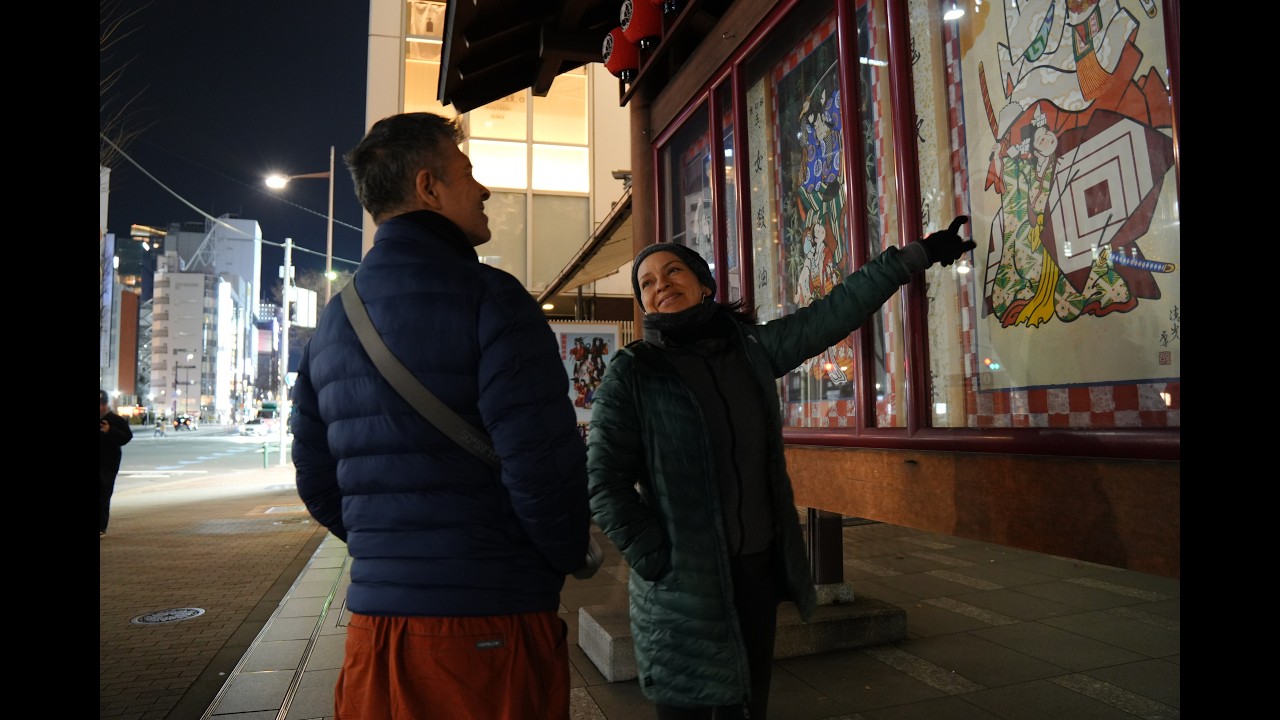
How does your Yamaha endorsement factor into your Japanese obsession?
RODRIGO The first time we went to Japan, they came to see us play and we signed a deal with them right away because they understood what we needed when we were playing gigs like the Fuji Rock Festival or supporting Muse at Wembley Stadium. We needed custom guitars and pickups.
You’re referring to the development of Yamaha’s multi-element Atmosfeel pickup and preamps system?
RODRIGO Exactly. Back in the day there was nothing like that, especially for nylon strings.
You two were the poster artists for the NX Series when it launched in 2020, with Rodrigo representing the NTX with its thinner neck and body, and Gabriela the NCX with its more traditional neck and depth. If I remember correctly, the NTX5 and NCX5 were essentially like Japanese production versions of your personal performance instruments, which are customized with highly specific extras that most mortal players in standard gig situations might not really require. Is that still the status?
RODRIGO Exactly.

GABRIELA My guitar has nine different piezo pickups placed all around the inside to catch the sound everywhere I tap on the guitar. Yamaha has been so great to us, and we’re so grateful to them. The whole Yamaha team came to the studio one day to see what we were playing and hear the recordings.
There are two great videos for “Monster,” the official illustrated one, and the “making of” that reveals your process in the studio. The backstory is remarkable. You wrote “Monster” based on a manga of the same name by Naoki Urasawa, who in turn created the illustrated video. How did he know about the song in the first place?
RODRIGO That connection came about on the tour last year. We were already playing that track, just testing the waters. Gab told the crowd in Japan the story of “Monster” being inspired by Urasawa’s story. He’s a megastar there. Everyone in Japan is aware of him. Someone on the promoter’s team knew him and told him. And then he turned out to be a big fan of ours because he plays guitar.
He wanted to meet us. We both wanted to go see Eric Clapton at the Budokan, so they put us together backstage. He had two books of Monster, one with a drawing for Gabriela and one for me. And he also had two of our Metaevolution albums for us to sign. [laughs] It was crazy. He came to the studio where we were recording, loved the song and suggested that we collaborate by having him do the video for “Monster.” We were so happy, like, “Are you kidding?”
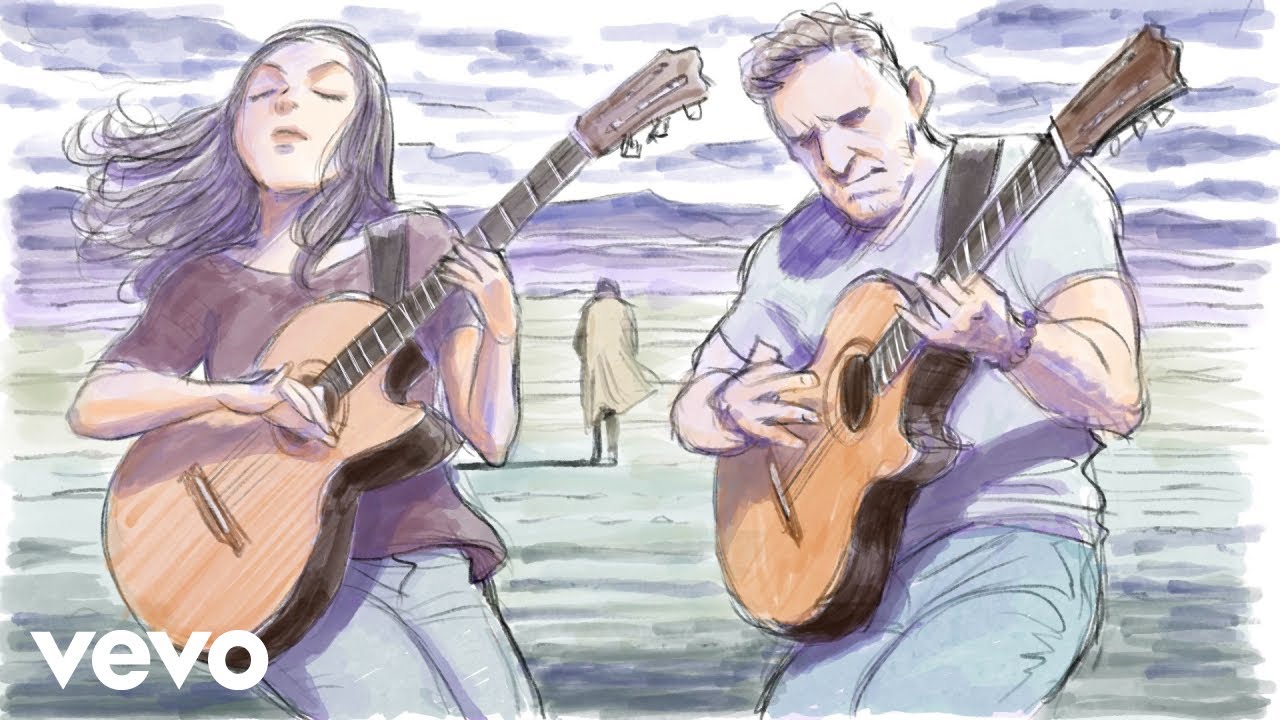
What did you think when you saw the video depicting his process of illustrating the two of you?
GABRIELA It’s incredible because that landscape where we are playing in the drawing is a very special landscape in the story of Monster. It was like, if you’re a Star Wars fan, imagine that you met George Lucas and then he put you in a scene on one of the planets or something!
The illustration develops so slowly that it literally draws you in. First you see the outlines, then it starts to fill in, and finally there’s the full color image.
GABRIELA See, that’s Pelusa’s message. When you act from a place of real authenticity, truly honest with yourself, and then you do the best you can being led by what you love and what makes you feel alive — things like that happen naturally, without the industry trying to put you with this person or that person. We are so tired of that bullshit. We want to collaborate with people who want to collaborate with us. For so many years it was trying to do all of this, and finally we were like, fuck all that. We’re going to do what we love the way we want to do it.
That’s what happens when you listen to your cat. They know things.
GABRIELA They definitely do.
