

Steve Howe still marvels at the intricacies of “Siberian Khatru,” the guitar-driven centerpiece of Yes’s 1972 album Close to the Edge. With its spidery central riff, shifting rhythms and intricate vocal harmonies, the song was a formidable undertaking even for a band at the height of its progressive-rock powers.
“It wasn’t ‘Close to the Edge.’ It wasn’t ‘And You and I.’ It was much more of a rocky song,” Howe tells Guitar Player. “The intricacies of singing and playing everything at the same time... was a marvelous challenge. I sometimes can’t believe we put all those bits in there.”
Interestingly, the guitarist says the song’s distinctive central riff wasn’t his contribution. It came from drummer Bill Bruford.
“I don’t know if he hummed it or played it on piano. Bill had enough piano chops to be writing stuff on there,” Howe recalls. “It may have been on cassette. It was one of the key ingredients. That’s such a cool riff.”
“Siberian Khatru” is packed with challenges, even for a guitarist of Howe’s caliber.
“‘Khatru’ [is] a very complex song, such a jumbled-up mix,” he says. “It’s all riffs. The beat is marvelously tricky. It wasn’t like we were fiddling around with a strummer here — there was no strumming. We were pulling out all the stops.
“It’s a very tight arrangement. There were notes you could add, and you better not miss any, ’cause every note was vital. It had to be practiced a lot.”
And, with a laugh, he adds, “Why it didn’t sound like a complete pile of crap, I don’t know...”
Howe solos twice during the song. The first, in the midsection, follows Rick Wakeman’s harpsichord break and features the guitarist playing a recently acquired Gibson BR-9 steel guitar.
“I’m kind of a chord guy,” Howe explains. “If I invent a chord sequence, I don’t know what to do with it, but it may have melodic implications in what happens. When I’ve got the structure as chords, I think about embellishing it — ‘What could I play here?’
“I just improvise, and I suddenly go [sings], ‘Oh! That’s good, that.’ So I develop the tune kind of patiently, fumbling around, really, to find out how I can develop the tune and keep it going.”

The song’s outro features an even more unusual guitar moment. Howe says he was struggling to finish his solo when he asked co-producer Eddie Offord to turn off his guitar amplifier, which was in another room.
“I was struggling to get my solo done on that,” he remembers, “so I said, ‘Eddie, turn off my guitar. I don’t want to hear it,’ ’cause my amp was out in the other room.
“So when we turned it off I couldn’t hear it, and I made that solo out of thin air. It was quite a different perspective, because usually I’m feeding off the guitar I’m hearing, but instead I was feeding off the theme [of the song] that was being played, and I was playing around it.
“It was kind of an experiment... very interesting. I wish I did it more often.”
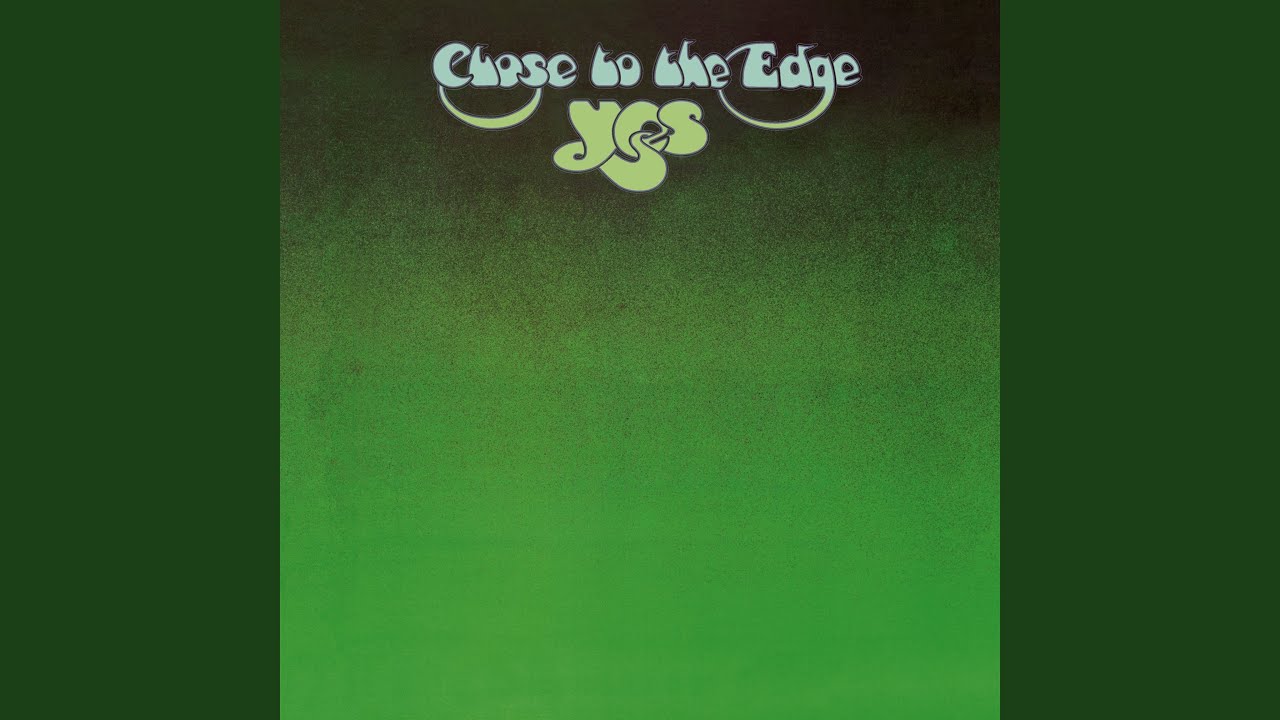
The arrangement of “Siberian Khatru” reflected the collaborative approach that defined Close to the Edge, Yes’s fifth studio album and Howe’s third with the group. Released in September 1972, it followed the band’s two landmark 1971 albums, The Yes Album and Fragile, the latter featuring the commercial breakthrough “Roundabout.”
Howe and singer Jon Anderson had begun developing the concept for Close to the Edge soon after completing Fragile.
“After Fragile, Jon and I went away and started beavering away on the title track, and it gradually kind of grew this idea that it was going to be 20 minutes long,” Howe says.
“Ten minutes was an achievable thing; we’d already done it a few times, so that was part of the story, this venturism of having something kind of big. It escalated forward into something we’d end up being really proud of.”

The band’s arrangements often emerged through a process of exchanging ideas, recording fragments and gradually finding a place for everyone. The 2025 Rhino Super Deluxe edition of Close to the Edge, featuring remixes by Steven Wilson, offers a closer look at that process, including early recordings and a studio run-through of “Siberian Khatru” dubbed “Siberia.”
“Most of the early recordings were everybody throwing in stuff — that’s the kind of arranging Yes did,” Howe recalls. “We fired off each other; there was this… ‘competitiveness’ doesn’t sound right in music, but you’re trying to work towards an end that you all like. It was fun to record ideas and bring them in, usually on a cassette, and then construct them.
“At that point Yes became very good at taking something and completely changing it — opening it up, making space for other things to happen.
“Like on ‘Khatru,’ for instance, we didn’t have a harpsichord in the rehearsal room; Rick may have played something on the piano and we thought, ‘Oh, you can do something there,’ and someone said, ‘Why don’t you use a harpsichord?’ That’s the way it worked.”
Howe says the song also represented a vocal departure for the group. He, Anderson and bassist Chris Squire had to develop a three-part harmony that was considerably less polished than the familiar blend of Crosby, Stills and Nash.
“I think the opportunity to have a three-part harmony song like that was... different for us, too,” Howe says. “In ‘Close to the Edge’ you get Jon Anderson singing away, in wonderful voice, and Chris and I are there.
“But suddenly ‘Khatru’ is like a three-voice approach. But instead of it being, like, Crosby, Stills and Nash, all smooth, we’re kind of honky and we’re kind of shouty. Reproducing it onstage was all one marvelous challenge.”
The song became a staple of Yes’s live repertoire, opening the group’s 1972–’73 tour with an excerpt from Igor Stravinsky’s “Firebird Suite.” It also led off the 1973 live album Yessongs and has returned to the set list at various points over the decades, including the band’s 2023–24 Classic Tales of Yes Tour.
The nimble intro to “Siberian Khatru” also drew on ideas Howe had accumulated over time.
“I’m a bit of a deep-pocket guy as far as riffs and musical ideas,” says the guitarist, who previously shared five of his top guitar tips with Guitar Player. “I’ve got a sort of stockpile, so when we’re thinking, ‘Oh, we need something like this, a solo maybe or in this case a beginning,’ I’ll go in and see what I have that might fit and then develop it from here.
“Sometimes they’re things I tried on other songs that didn’t make it for one reason or another. There’s things on all three of those albums” — The Yes Album, Fragile and Close to the Edge — “that actually stem from earlier recording.”
Howe has since had to put some of Yes’s touring plans on hold after undergoing what he described as “an essential operation that requires recovery time.” Speaking with Guitar Player three months after the procedure, the guitarist said he was making progress, albeit slowly.
“I don’t want to dwell on it too much; if I start talking I’ll go somewhere I don’t want to go,” he told us. “I had this major thing and it was pretty difficult, and it’s gonna take some time to get me back to normal.
“But I’m keeping up my playing and my momentum. It’s been three months now since I had the operation, so I’m making progress, slowly.
“So we rescheduled everything we had this year for next year and hopefully everything will be hunky dory and we’ll be back around and try and do all the things we were going to do.”
Yes plans to return to the road early next May, performing its 1971 album Fragile and more, beginning with U.K. dates before heading to Japan. North American shows are also under consideration.
The band has meanwhile released Aurora, its 24th studio album and third in less than five years. Produced by Howe, the nearly hour-long collection leans further into Yes’s progressive-rock hallmarks, including the four-part, 13:44 suite “Countermovement.”

