

Eric Clapton was barely 20 when a piece of famous London graffiti declared that the British blues guitarist wasn’t just the greatest player in the world — he was God. But while the nickname stuck, Clapton himself has never been quite so convinced of his own greatness.
His reputation soared after he left the Yardbirds for John Mayall’s Bluesbreakers, a move Clapton attributed to musical differences, although his former bandmate says class wars also played a part. The stint proved pivotal to his development, and he would go on to cement his standing as one of Britain’s premier guitarists with Cream before forming a powerful guitar tandem with Duane Allman in Derek & the Dominos.
Yet by 2006, Clapton was questioning whether his playing still measured up to his younger self.
Appearing on CBS’ Eye to Eye to promote his 17th solo album, Back Home, he was asked about a revealing admission that had been making the rounds: “I’m not as good as I once was.”
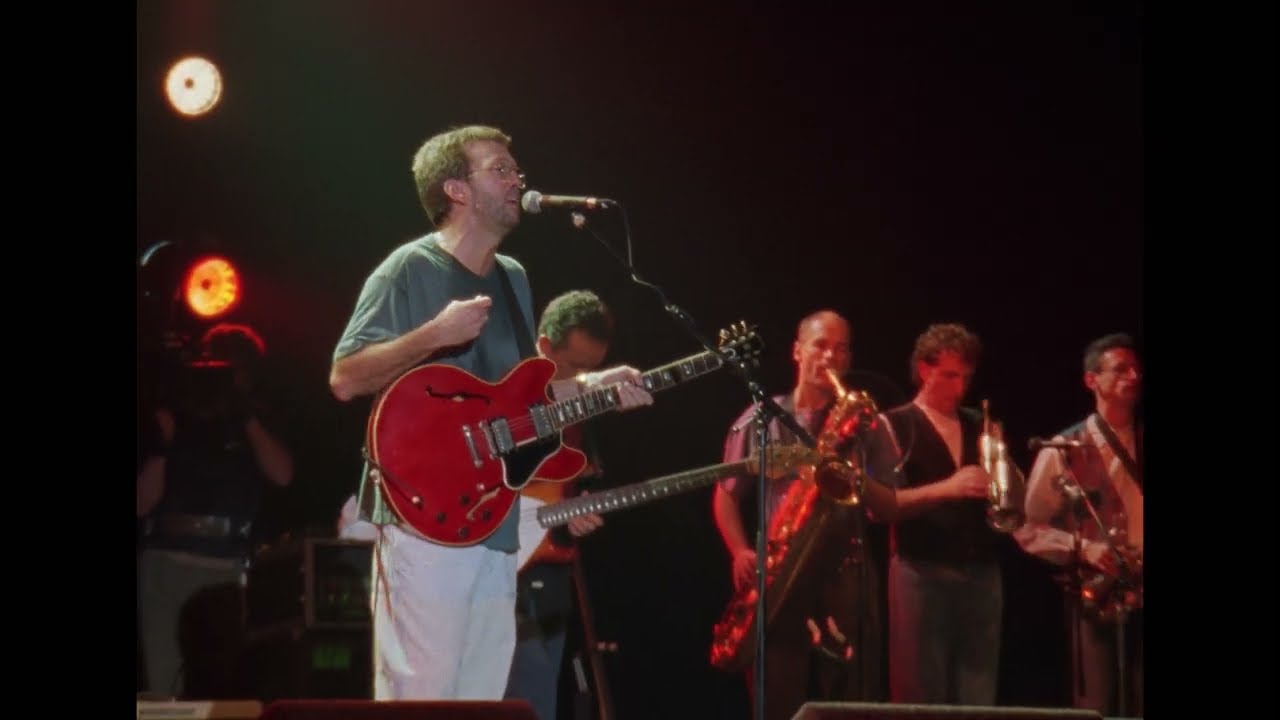
“That’s absolutely true,” he conceded. “It was on YouTube. I was just surfing [the internet] and I looked at YouTube: I put my name in, and I got a piece of footage of me from the mid-’90s when I was just playing blues songs.
“There were some things that I was doing that I think I’ve sort of unconsciously let go of,” he added. “I don’t do them anymore, probably because they’re too hard to do.”
The footage may have come from around the time of From the Cradle, Clapton’s acclaimed 1994 return to the blues after what he once described as a three-decade departure from his musical roots. Whatever the source, watching his younger self play had left him with a sobering impression of how much his technique had changed in roughly a decade.
“I mean, I still believe I can play with the same amount of emotion and feeling and expression that I’ve always set out to do,” he explained. “It’s just logic, isn’t it? The faculties have got to start wearing away at some point.”

It was a frank assessment from a guitarist whose reputation might suggest he had little left to prove. But Clapton has long been his own harshest critic, regularly finding fault with his performances and questioning whether he could have done more with less.
“I always overplay,” he confessed in 1986. “Whenever I listen back to stuff, I’m always disappointed. I hate listening to cassettes of shows. I listen sometimes, and think I could have done three notes to those 10. Just halved it and made it more meaningful. But it’s very difficult.”
That last admission gets to the heart of Clapton’s relationship with the blues. For him, playing well isn’t simply a matter of speed or technical ability. It’s about finding the right notes, making them count and knowing when to leave space.
His admiration for Jimi Hendrix offers another glimpse into the standards he sets for the music. Recalling the first time he saw Hendrix perform a Howlin’ Wolf staple, Clapton was struck by the difficulty of what he was hearing.
“I don’t know many people who can play that,” he said in 2012. “It’s a very, very tough piece of music. But Jimi did it, and then he put the guitar behind his back, and I thought, ‘My God, this is like Buddy Guy on acid.’”
Clapton has also been forthright in his criticism of other players’ approaches to the blues, including Eddie Van Halen’s, even though Van Halen knew Clapton’s “Crossroads” solos inside out. His judgments reflect a musician with deeply held ideas about what the blues demands — and how easily a player can miss the point.
That makes it worth taking Clapton’s verdict on his own decline with a pinch of salt. Perhaps the mid-’90s version of Slowhand really could play circles around his 2006 self. Or perhaps, as his earlier comments suggest, he was once again measuring himself against an impossibly high standard.
His struggles were not limited to the guitar. In 1998, Clapton spoke about feeling suicidal and coming close to quitting despite his fame and success. His self-criticism has long extended beyond the question of whether he can still play as well as he once did.
Clapton may hear limitations when he revisits his old performances. But his own assessment is only one part of the story. For generations of listeners, the playing that he scrutinizes so mercilessly remains a benchmark — and the guitarist who once inspired the declaration that he was God has never stopped trying to get better.

