

When Jimi Hendrix first performed in London, he blew everyone’s minds – and seemingly every player worth their salt has since claimed to have been there for those changemaking early shows. Eric Clapton was certainly there. And while he recognized Hendrix as a generational talent, he also believed that the guitarist’s original backing band, the Jimi Hendrix Experience, was “a mistake.”
Clapton, Jeff Beck and Jimmy Page were three of the hottest guitar players in London when Hendrix arrived on British shores, and the American guitarist quickly found himself at the center of the scene. One of his first performances was an impromptu jam with Cream in October 1966, just days after his arrival.
His introduction to the British music scene quickly became the stuff of legend. Beck has said Hendrix changed the game; Paul McCartney has recalled watching the then-unknown guitarist play to an empty club; and Robert Fripp considered him something more than a mere guitarist.

By the time of his death four years later, Hendrix had released four landmark albums, written some of the most iconic riffs and solos ever committed to tape, and helped kickstart an electric-guitar revolution. Yet Clapton’s assessment of the trajectory of his career makes for interesting reading.
I felt from the first that he should have had at least an American band, whether they were white or black didn’t matter, as long as they knew the music they were playing.”
— Eric Clapton
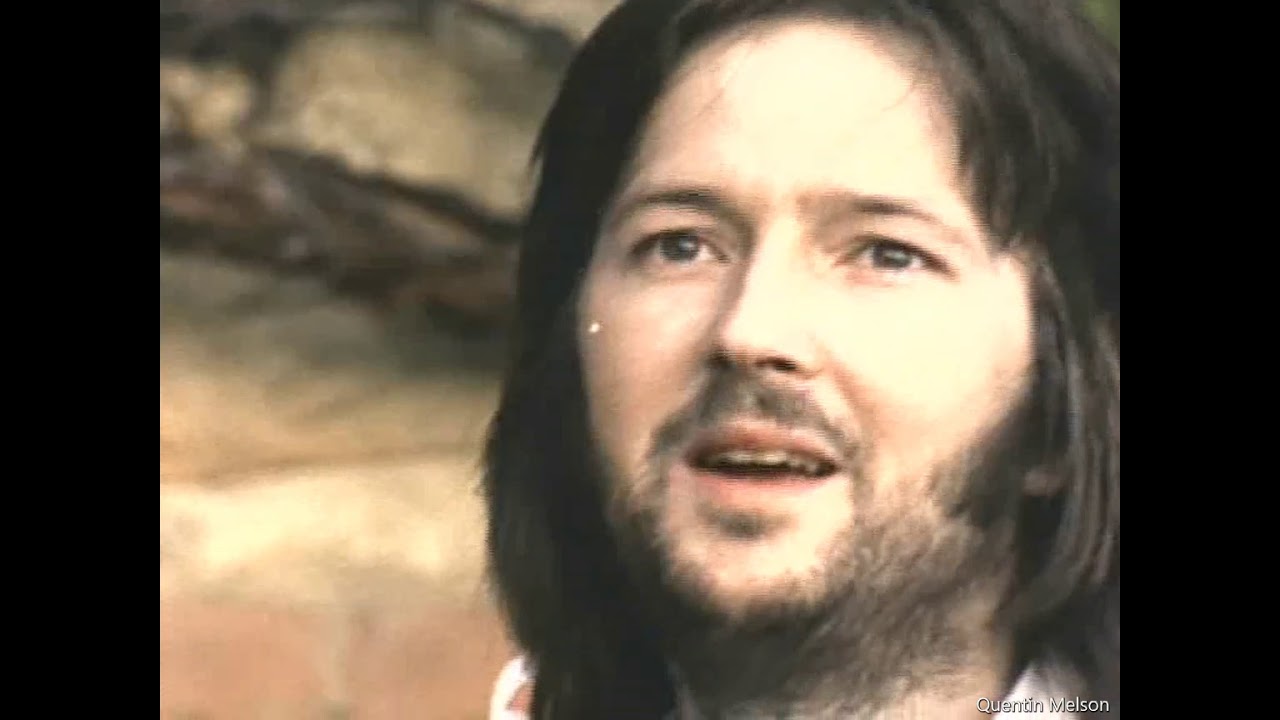
“I think the best I knew him was at the beginning,” Clapton said in a 1973 interview uploaded to YouTube by Quentin Melson.
Upon the recommendation of the Rolling Stones’ Keith Richards, the Animals’ bass guitarist Chas Chandler became Hendrix’s manager and brought him to London. Chandler had ambitions of creating a backing band that would spotlight Hendrix’s virtuosity while introducing him to a British scene that was becoming increasingly adventurous and technically accomplished.
The result was the Jimi Hendrix Experience, completed by bassist Noel Redding and drummer Mitch Mitchell. But Clapton didn’t believe the lineup was necessarily the best possible vehicle for Hendrix’s talents.
“I thought it was a bit of a mistake,” he said. “I thought it was a hype really; I felt from the first that he should have had at least an American band, whether they were white or black didn’t matter, as long as they knew the music they were playing.”
Hendrix’s approach to the blues was indeed different from what British audiences – and many British musicians – were accustomed to hearing. But Clapton believed Chandler had assembled the Experience in a hurry.
“I felt that Chas had really just picked up two free musicians who were in the rock field loosely,” Clapton explained. “I think Mitch, before that, was playing with Georgie Fame and was more into the jazz thing,” while Redding had been playing pop and rock in bands including the Loving Kind.
It’s easy to understand why Clapton felt Chandler might have been trying to put square pegs in round holes in a bid to capitalize on Hendrix’s extraordinary talents. But, as Clapton acknowledged, the results quickly spoke for themselves.

“They really got into it very quickly,” he said. “I thought at first that it could have been a better band, or a bigger band. But it worked in the end, obviously. He’d been in London for about a week when he got the Experience together, and he had the whole club on its feet. They couldn’t believe it. He could have been up there on his own; he didn’t need anyone else.”
Hendrix had crossed the Atlantic to make his name after struggling to establish himself in the United States. His early career had included stints backing Little Richard, although his relationships with the singer and other bandleaders were complicated by his growing reputation as a ladies’ man.

Clapton, ultimately, wanted the best for Hendrix because he understood just how high the guitarist’s ceiling was. In that same 1973 interview, he compared Hendrix to Howlin’ Wolf. And years later, he recalled one of the first times he saw the guitarist play.
“We were playing at the London Polytechnic the day Jimi arrived in England, and Chas Chandler brought him to see us,” Clapton told Uncut in 2012. “He got up and played Howlin’ Wolf’s ‘Killing Floor’. Even today I don’t know many people who can play that. It’s a very, very tough piece of music. But Jimi did it, and then he put the guitar behind his back, and I thought, ‘My god, this is like Buddy Guy on acid.’”
Hendrix’s dazzling showmanship actually scuppered Clapton’s plans for a “solo odyssey,” forcing him to focus instead on life in a band.
I thought, ‘My god, this is like Buddy Guy on acid.’”
— Eric Clapton
Yet while Beck was reportedly so overwhelmed by Hendrix’s arrival that he briefly considered retiring, Clapton’s response was far less apocalyptic.
“I fell in love with him,” he said. “I think Ginger [Baker] and Jack [Bruce] felt threatened because they could see he was going to corner the market, for sure. But I felt an incredible sense of relief that there was somebody else on the planet who was as devoted to that music as I was. Of course, he was a showman. But he knew what the blues was about.”
Hendrix would ultimately become the barometer against which trailblazing guitar playing was measured. Leslie West, for example, said he knew he was onto something with Mountain’s “Mississippi Queen” when the song won Hendrix’s approval.
Maybe Chandler simply got lucky with the band he assembled. Or perhaps Hendrix was destined for success with just about any musicians behind him. Either way, Clapton’s early doubts about the Experience didn’t diminish his awe at the man at its center.
“He could have been up there on his own,” he said. “He didn’t need anyone else.”

