
Yes guitarist Steve Howe is happy to entertain inquiries about his health — especially after postponing the group’s tour plans during the spring to undergo “an essential operation that requires recovery time.”
But he also doesn’t have a lot to say about it.
“I don’t want to dwell on it too much; if I start talking I’ll go somewhere I don’t want to go,” he tells us via Zoom from his home in the English countryside. “I had this major thing and it was pretty difficult, and it’s gonna take some time to get me back to normal.

“But I’m keeping up my playing and my momentum. It’s been three months now since I had the operation, so I’m making progress, slowly.
“So we rescheduled everything we had this year for next year and hopefully everything will be hunky dory and we’ll be back around and try and do all the things we were going to do this year.”
Yes will, in fact, hit the road early next May to play its 1971 album Fragile and more, first in the U.K. and then in Japan, with dates to be announced. North America is also in the band’s sights, with details still being determined, too.
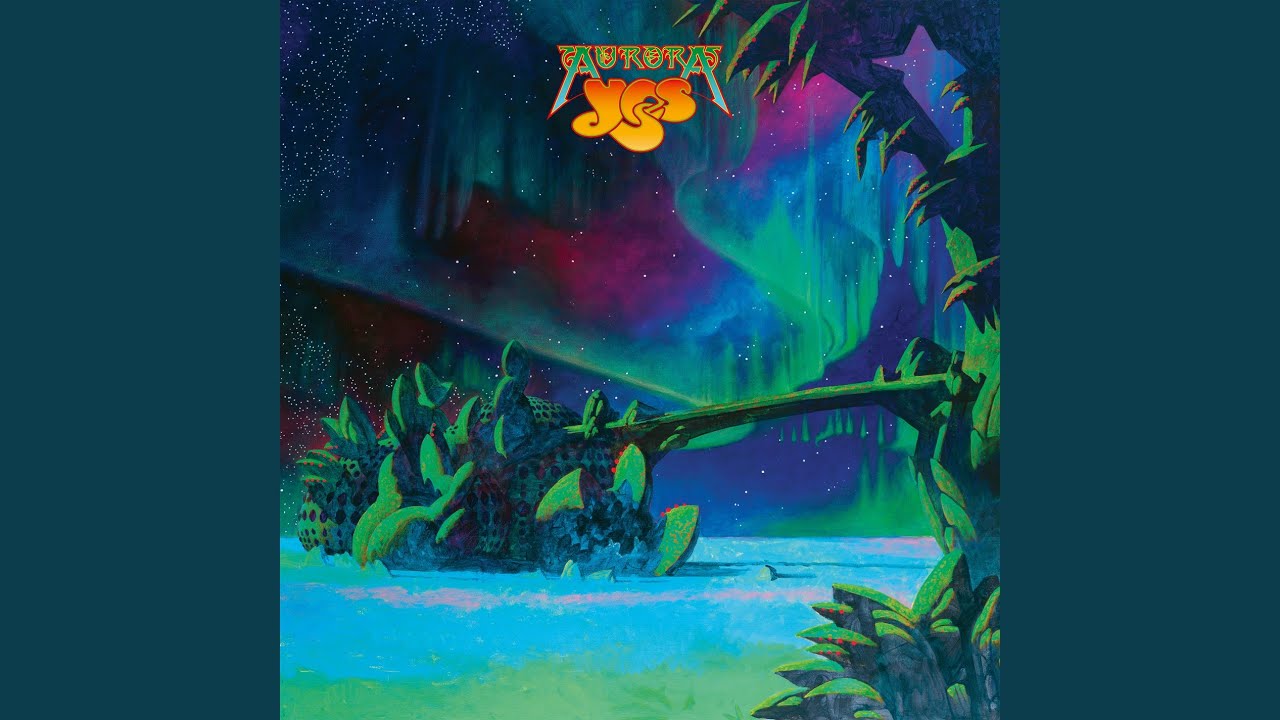
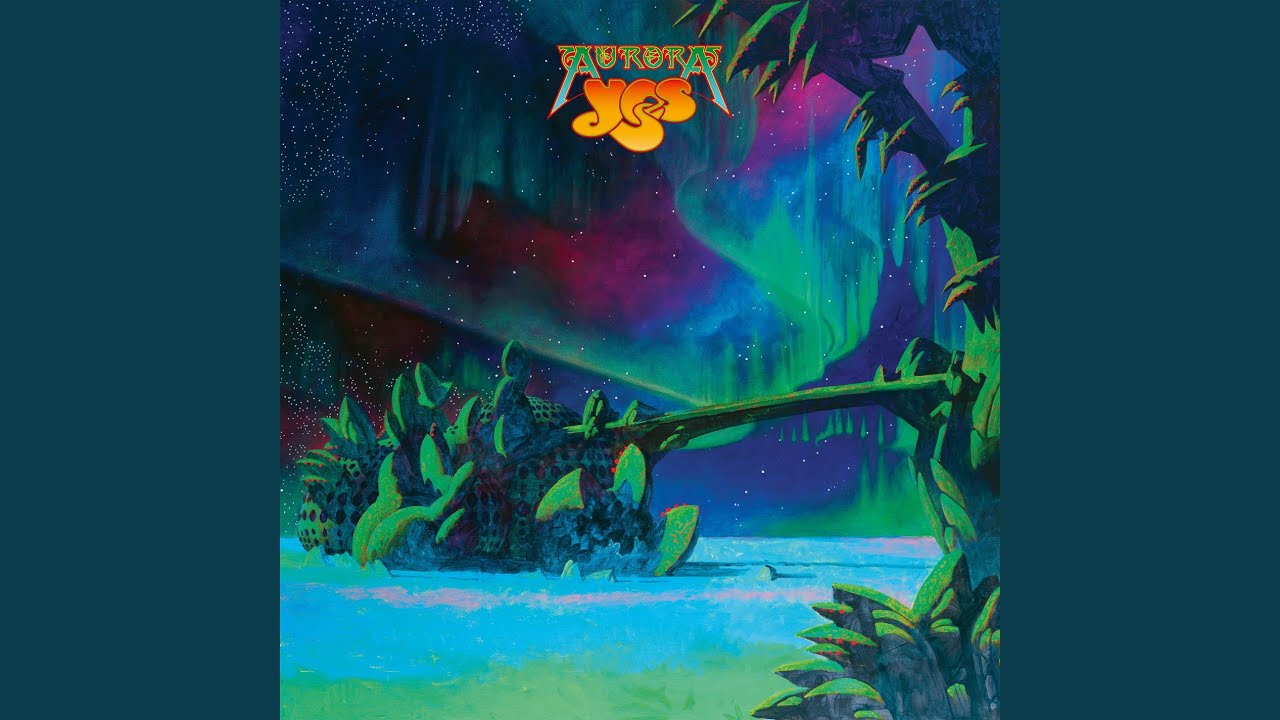
Howe has had plenty to consider during his downtime, meanwhile. Yes did release Aurora — its 24th studio album and third in less than five years, and third consecutive album produced by Howe — during June. Weighing in at nearly an hour, including bonus tracks, it leans even further into the hallmarks of Yes’ progressive sound, with one epic in the four-part, 13:44 suite “Countermovement.”
And while, like its immediate predecessors — 2021’s The Quest and 2023’s Mirror to the Sky — Yes made use of file sharing and other technology, there were also more opportunities for band members to get together now that frontman Jon Davison and bassist Billy Sherwood are spending more time in the U.K., where Howe and keyboardist Geoff Downes reside. (Drummer Jay Schellen remains a full-time U.S. resident.)
On top of that, Yes has just come out with a 25th anniversary edition of Magnification, an album that found the Rock & Roll Hall of Fame troupe working with an orchestra again for the first time since its second album, Time and a Word, in 1970. It was also the only Yes album recorded as a quartet (no full-time keyboardist, though late drummer Alan White played some piano) and the last Yes album to feature co-founder Jon Anderson before his acrimonious departure in 2004.
So Howe, robust and in good humor, is eager to make up for lost time now, with plenty to review and look forward to in the not too distant future.

It must have been frustrating to have a new album and tours on the runway and have to put the brakes on everything earlier this year.
It’s immensely disappointing; I feel it probably more than anybody else because I’m the subject matter of it. I had ambitious goals that we just had to postpone ’til next year. But we still put Aurora out; it was in the process, so we couldn’t really stop it. Sometimes the world doesn’t wait for you and other times it does, so you have to make judgment calls.
This has been the most productive period for Yes since, really, the ’70s. Are these last three albums of a piece, do you think?
It’s immensely disappointing; I feel it probably more than anybody else because I’m the subject matter of it.”
— Steve Howe
Yeah, yeah. To my mind these are a sort of trilogy, obviously, a set towards continuing that Yes doesn’t exclusively rely on its old material, and there is a creative pulse in the band. The Quest was like a golden opportunity, and then we did Mirror to the Sky and stepped up a bit and got more compelling. And Aurora is the pinnacle of our achievement, to us. But primarily I’m happy we’ve been able to make new music. That’s a beautiful thing. We want it to be in respect of the past music but we don’t want to cheapen it by pastiching some features of our music together. We got it completely with a blank piece of paper and start saying, “What do we got?”
With you producing, of course, this really is your representation of Yes and what it is at this point in time.
It’s been joyful to produce Yes for three albums. I’ve helped to do that all through my career, but never have I had credit — and also the authority to do something I wanted to do. I’ve tried to make it as fun and as pleasant, as nice as possible. This wasn’t a moment for me to become dominant and sort of call all the shots. But like an orchestra, a conductor does have a job to do; although I don’t primarily do conducting I do have a responsibility — I do have a possibility, that’s a better word, of being able to steer this where it has the history kind of wrapped up in it but takes it somewhere new.
Everybody loves a big Yes epic. What’s the story of “Countermovement” on Aurora?
I surprised them with that one. We had two songs floating around, and neither of them had been developed a great deal. One day I thought, This is sort of untidy; maybe I can do a ‘Luminosity’ on it, or a ‘Mirror to the Sky.’ I think this album needs this.
They weren’t in the same keys and they weren’t at the same tempos, but that didn’t put me off them. And then I had two instrumentals that were viable, and I was happy to offer them to Yes. So what I did was kind of transplant those two instrumentals into the two songs and sort of jiggle around with it, a bit like a jigsaw trying to find out how they fitted together.
I don’t mind if somebody says ‘It’s too long’ or ‘Can you make it longer?’ Most probably the answer to both is ‘no.’”
— Steve Howe
To be honest it was longer once, and we got some advice that maybe that idea’s gone a bit far, so we brought them back in, trimmed them back so it was back into a conceivable shell.
So that’s what happened, and everybody grew to like it, and I think it does the album a pile of good.
How many times during Yes’s history have you heard the words, “It needs to be shorter?”
[laughs] Well, I suppose, straightaway, “Roundabout” was a bit too long for Atlantic. There’s been easier times and there’s been harder times. And you do have to consider length. I mean, Tales (of Topographic Oceans) was a colossal undertaking.
I don’t mind if somebody says “It’s too long” or “Can you make it longer?” Most probably the answer to both is “no.” But one must never be flippant about advice. It comes to you for a reason. That’s how I used to bounce back from criticism in the ’70s, when people would say, “What do you think about the press not liking your music anymore?” You learn to flow easily within criticism and not be undermined, which is an important ingredient.
There’s an acoustic segment in “Countermovement,” during the “Anytime Soon” section, that seems to make direct reference to “Your Move.” Deliberate?
No. It’s fortunate that whenever I pull that Portuguese guitar out, something happens. The first time everybody heard it was “Your Move,” so it has a constant link to that. But after that came things like “Wonderous Stories” and “Nine Voices” and now part of “Anytime Soon.” I don’t think it’s a total reference, but there are only so many things I can play on that guitar because of the tuning. “Wonderous Stories” was a test; in fact, “Nine Voices” was a test, in a way. But I like bringing that out and having that familiar sound. I also like the newer sounds.
But one of the sounds I like best, of course, the oldest sound I’ve got is my [Gibson ES-]175. That is again all over the soloing of this album, as it’s been throughout the years of me playing other guitars. It’s generally appeared again because it’s my best guitar.
On the other side of the spectrum on Aurora is “All Hands on Deck,” a three-minute jolt of total energy. Were you just in that mood on that day?
I don’t like Yes becoming a pomp sort of band, without any rock and roll. Without rock and roll we’re asleep at the wheel. We’ve got to be a rock band; I guess that’s partly why that song is there, the reason it’s brazen and bravado-ish. I like the rock ’n’ roll element being in Yes, and that’s what that song is.
When it started out, I just had a chorus — [sings] “all hands on deck” — and I thought people might like that, just for a change, instead of a page of endless lyrics. And they didn’t; they said, “Is there just a little bit more?” So I wrote some more and it’s still quite sparse. It’s not a big story, but it is about a sinking ship, which could be a metaphor for just about anything — a sinking band, a sinking planet, a sinking environment, whatever you like.
You bust out the washboard again for “Jambustin’,” one of the bonus tracks.
One of my hidden skills is definitely the washboard. I think it’s a brilliant instrument, totally underrated.”
— Steve Howe
One of my hidden skills is definitely the washboard. On my own albums I’ve done quite a lot of washboard. I think it’s terrific. I think it’s a brilliant instrument, totally underrated.
I have a story; one day the phone rang and it was [producer] Trevor Horn, and he said to me, “I’ve got something going on with a recording here. It’s Malcolm McLaren, and he wants a washboard. Don’t you play washboard?” I said, “Yes, I’m the best in London,” and he says, “Well, you’re the only one in London. I can’t find anybody who plays it. Come in.” So I went a few days later and played on some track Trevor was producing. I quite like that story.
Is this current burst of creativity continuing? Are you starting on the next one yet?
No, we haven’t, for one big reason: due to my operation we put everything on hold. But there are some ideas that have been floated around a little bit, and as this period of a year goes through, in a few months we might choose to do something, but we don’t tell anybody when we’re doing it. So the answer is [leans into screen and whispers] “no.”

The Magnification reissue is the other major Yes release this year. What kind of perspective do you have on that album 25 years on?
I don’t know whether you remember the old TV series with Phil Silvers in it [The Phil Silvers Show, a.k.a. Sergeant Bilko]? He used to say, “Oh, it’s hell, Sarge.” So that would be my first answer; “Steve, what do you think of Magnification?” “It was hell, Sarge.”
It was really difficult, and it shouldn’t have been because there were only four of us in the band. The only reason it’s passably good is because I put my foot down and said, “Those mixers are just awful.” I couldn’t believe it; the bass, drums and the guitar became a sort of backstory to the orchestra. So I insisted that even though it was against all odds for the schedule to allow us to do it, I was going to listen to the album and make notes.
I insisted that even though it was against all odds for the schedule to allow us to do it, I was going to listen to the album and make notes.”
— Steve Howe
These are the days of faxes, as well, so you can imagine they’re sitting in the studio and they get the first fax, “at .02 do this, at 10 seconds the guitar needs to be focused. Can you turn it up there?” I went through the album thoroughly and gave them faxes, every song, and said, “It’s got to be like this. You can’t put this out without me liking it.” So, yeah, I went through that, and the only reason I can listen to it is because that sort of detail went into it.
How do you feel about the songs, in hindsight?
Oh, any of its pitfalls are overshadowed, I think, by the adventurousness of what we did there. Some of the songs were pretty adventurous. They did take arrangements to a good level. So I’m fairly happy about that. A couple of the songs shouldn’t have been there, ’cause they weren’t really good. But I think Yes sometimes compensates with a bit of charm in a song; “It’s not a great song, but it’s quite charming,” I might say to myself.
Yes toured with Deep Purple a couple of years ago, and we recently saw them reunite, for a song with one of your contemporaries, Ritchie Blackmore. What did you make of that?
I thought it was great. They’re such a lovely bunch of guys, and their lead guitarist [Simon McBride] is fantastic. To have the balls or, let’s say, the gall on both sides of that endorsement, that Ritchie was prepared to come back and play the song and also they were prepared to open it up so that he could… There you are.
Music tells all sorts of stories in one second. It’s a bit like when Art went back with Paul and you had Simon & Garfunkel again, and what a moment. What a joy. But it doesn’t mean all unions are good, because they’re not; the Union Tour of Yes [1991–’92] was unbelievably difficult, for instance.

You’ll be doing the postponed Fragile tour dates in the U.K. and Japan next year. What else is on the docket?
Something will be happening pretty big for next year with touring in the U.S. but we cannot specify anything about that at the moment. After Japan we won’t be playing the Fragile tour anymore; we’ve got a brilliant idea — I can’t tell you what it is, but I can tell you it’s absolutely brilliant. [laughs] I’m kidding, but we’ve got an idea and it seems to hang together and it’s a little different. That’s what I think keeps Yes alive, is difference. The same isn’t enjoyable. You don’t want to just add a little thing to it, a twist in the tale. You want it to be different.
After all these years, has your view of what progressive rock is changed?
It starts with the word “freedom” — to do any musical molding, any musical style-referencing. It has to have structure; Chris [Squire] was a big advocate of that. He’d say, “Steve, yeah, that’s a really nice guitar solo, but I hope you appreciate the structure.” So we weren’t the kind of band where everybody improvised. “Five Per Cent for Nothing” might sound like that, but it wasn’t. That meant you worked together to make something that did have improvisation but it also had structure.
And I think there’s the beauty of being able to put in any musical reference, whether it’s washboard [chuckles] or folk or jazz or… Blues was the thing we avoided the most, but there’s still a little bit of it in there. Really what it is is the most marvelous hodgepodge. It has to combine things, ’cause if it doesn’t it’s just a song and it doesn’t resonate. It might be a nice song, but you can’t call it prog ’cause nothing happens to it.

