
Given Warren Haynes’ assortment of band affiliations, solo recordings and collaborations, it takes a proverbial scorecard, or maybe a spreadsheet, to adequately track his long and accomplished career.
It dates back to the Asheville, North Carolina, native’s tenures with David Allan Coe, the Nighthawks and the Dickey Betts Band, the latter of which led to him joining the Allman Brothers Band for its reformation in 1989. Haynes and bassist Allen Woody concurrently started Gov’t Mule, while Haynes landed in the Grateful Dead spin-off the Dead and worked with a prodigious list of others — the Derek Trucks Band, the Gregg Allman Band, Joe Bonamassa, Peter Frampton, John Scofield, Mountain, Trombone Shorty, Michael McDonald, Walter Trout and Dolly Parton.
And that really is just naming a few.

He’s orchestrated quite a career, but Haynes really raised some eyebrows when he started playing with orchestras, as documented on his new album, Dreams & Songs: A Symphonic Journey, out September 18. It started during August 2013, when he became part of Jerry Garcia Symphonic Celebration concerts honoring the late Grateful Dead mainstay and expanded into Dreams & Songs.
The new live album finds Haynes marrying his electric guitar firepower with orchestrations that complement, rather than overwhelm, the songs. The set list spans Haynes’ entire career, with plenty of surprises — if you had an orchestral “Whipping Post” on your bingo card, congratulations — and arrangements by an all-star cadre of conductors that includes David Campbell, Vince Mendoza, Chris Walden, Jim Gray and Sean O’Loughlin.
The album, co-produced with Don Was, hails from a one-night 2019 stand at the Thomas Wolfe Auditorium in Asheville, with the 64-piece Asheville Symphony and a band that included ABB bandmate Oteil Burbridge on bass and John Medeski on keyboards. Rich Daniels of Chicago’s City Lights Orchestra has been the Dreams & Songs conductor throughout, and the road goes on for the concept amidst Haynes’ other endeavors — including a pair of shows next March at Nashville’s Schermerhorn Symphony Center.
In the meantime, Haynes is gearing up for Gov’t Mule’s next outing, a co-headlining run with Ziggy Marley that starts September 23. With the Dreams & Songs album on the horizon, he chatted with us via Zoom about the unique challenges of surveying his body of work with such lavish accompaniment.
Because you don’t have enough on your plate [Haynes laughs], what led you down this path?
Well, the whole thing goes back, I guess, around 10 years, when I got the offer to do the Garcia Symphonic Celebrations, doing Garcia’s music with a symphony. At that time I had never worked with a symphony at all; it wasn’t something I had given a lot of thought to, although I had thought about it in the back of my mind. So when they made me that offer I said, “Yeah, that sounds like a lot of fun. I’d be honored to do that. I guess I better focus and see what happens…” And that grew into my own thing with an orchestra.
A lot of this was to prove a point… and not just sound like the orchestra was glued onto a bunch of pre-existing arrangements.”
— Warren Haynes
It’s a different animal than the Mule, or everything else you’ve done.
In the beginning it was a little intimidating, but like anything else, the more you do it, the better you get at it. After two tours I did that way, I got a much better understanding of what it would be like to work up arrangements of songs from my last 30-something years, and since there was a vast amount of songs to choose from, we were able to concentrate on just choosing the songs that would work really well in that setting, not just do rock music or jazz or pop music with a symphony just for the sake of doing it.
A lot of this was to prove a point and do something unique that kind of went beyond where I think rock bands have taken symphonic treatments in the past… and not just sound like the orchestra was glued onto a bunch of pre-existing arrangements. I wanted improvisation to be a big part of this. I really wanted to focus on, “Okay, how do I make this where every song takes an interesting transformation with the orchestral treatment?”
I was pretty confident we could, given all the catalogs to choose from — the Dead catalog, Allman Brothers, Gov’t Mule, my solo work. There was a lot of stuff to choose from. We sent it to a lot of amazing arrangers and tried to fit each arranger to each song and focus on their strengths. It was a tedious process, but amazing. I’m really happy with the way it all went.
Were there any previous rock band/symphony collaborations that provided a model for Dreams & Songs in any way?
Thelonious Monk Orchestra at Town Hall [from 1959] — what a wonderful treatment that was. It wasn’t a full orchestra, but that was a great inspiration for me. Otherwise, Zappa’s London Symphony Orchestra records were something really special. Most of the stuff I’ve heard or heard about through the years I’ve not paid attention to. This was more, “How can we do it in a way that’s unique and fits into our normal philosophy we preach all the time?”
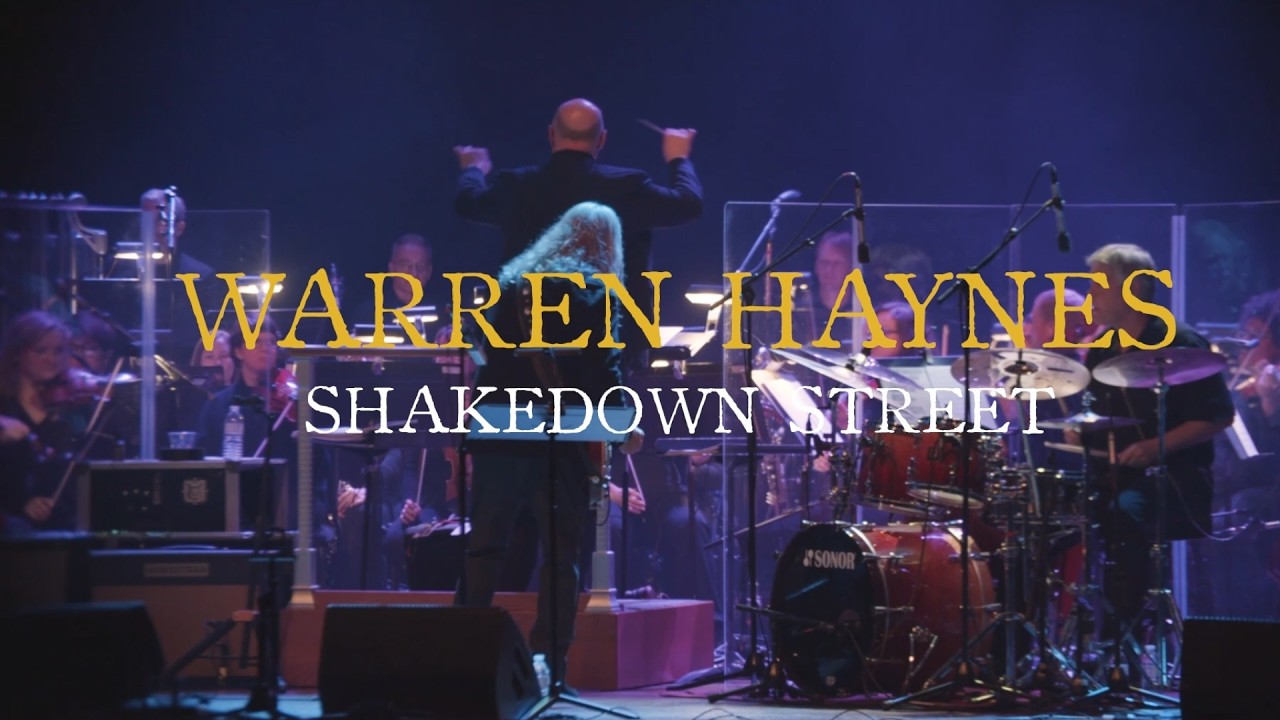
You mention the importance of improvisation, which seems the anathema to what an orchestra does. How did you strike the balance?
There are times when the orchestra just lays out and the band is improvising and the symphony can come back in on cue. I’ll cue Rich Daniels, the conductor, and he’ll cue the orchestra when to come back in.
Another way is that we’ll improvise to what the symphony is playing in certain parts that are more open and allow for it. And then there’s certain songs where what the symphony is playing was originally an improvisation that now has been orchestrated. Between those three things, there’s a lot of interesting applications that are kind of unique.
Which of the arrangements did you find most surprising, and even transformative for their songs?
Steven Bernstein did a really New Orleans-ish treatment of “Black Peter” that I think is really cool. There’s a lot of Dixieland-ish stuff that’s being read by the orchestra that kind of gives it an improv vibe that’s straight from New Orleans.
It’s just a song-by-song process and that intangible thing where you go, ‘Wow, this really sounds amazing.’”
— Warren Haynes
And Medeski’s take on “Thorazine Shuffle” was really interesting, the way he kind of applied this avant-garde treatment to it, but well within the boundaries of classical music and orchestration. John has that background, and one of the reasons I chose him to arrange that song and for “Instrumental Illness” is based on that. He’s the right person to do those two songs in particular.
Did you envision the Dreams & Songs presentation as something that would reflect and take stock of your whole career?
Oh yeah. When the Asheville Symphony Orchestra reached out about doing something together, my initial response was, “Huh? What would that be?” I was intrigued by the concept, but I didn’t have any definite ideas.
Then my wife, Stephanie, and I were talking about it, and she said, “Well, what if you did a retrospective type of approach, where you can choose things from all the different paths you’ve been traveling down the past several decades?” I thought, That makes sense. It gave me a lot of stuff to choose from, and a reason to do it.
Once we started looking at it that way, it became a whole different kind of concept. I looked at this whole set list, starting and ending with “Dreams and Songs” and closing the first set with “Terrapin Station” and closing the second set with “Whipping Post” was like a journey.
We change the sequence in the live shows we’ve done so far, and we’ll continue to change it in the future, but for this particular event I felt really good about the way it flowed and the way it bobs and weaves.
The real key is, “Does it take it somewhere beyond where it was, and is that a good thing?” It’s just a song-by-song process and that intangible thing where you go, “Wow, this really sounds amazing.”
Doing “Whipping Post” like this seems a little ballsy.
Well, you know, “Whipping Post” is the ultimate closer for the show. It’s interesting: Medeski and I were saying how that song is almost a symphonic arrangement on its own; the way the original version of it — even in the studio version — has that climb at the end [sings]. That whole thing is very symphonic, and the Allman Brothers Band used to do it with the timpani [played by Butch Trucks] and the ending and all that stuff, and the different movements. It was kind of crying out for it.
And also it’s one of my all-time favorite Allman Brothers songs, without question, and improvising on “Whipping Post” has always been just an amazing experience. It’s one of the great improv songs of all time, I think. And for someone like me, who played it hundreds and hundreds and hundreds of times, to do it with an orchestra was a really cool challenge. It’s kind of a roller-coaster ride.
The song order is non-sequential, of course, but which of them do you think best represents the “beginning” of the story?
Probably “Broken Promised Land” from my first solo record. That really works well with the symphony, and the original version had [backing vocalist] Alfreda Gerald answering my guitar solo and this version has Jasmine Muhammad doing her own take of the same thing, but with the orchestration, and it’s one of the highlights of the show.
To do ‘Whipping Post’ with an orchestra was a really cool challenge. It’s kind of a roller-coaster ride. That song is almost a symphonic arrangement on its own.”
— Warren Haynes
That moment where she and I are doing call-and-response and the orchestra comes back in at the end — it’s so powerful. You can feel and hear the audience kind of rise up. It’s one of the few times during the program that they actually are applauding in the middle of the song.
So from a chronological standpoint, that’s the song that meant something the earliest on in my career and turned out to be the only song from my first solo record that was included in this program.
What else has a particularly profound connection here?
I picked “Just Another Rider,” the song Gregg and I wrote together. There’s an interesting connection there that most people don’t realize. I think the Allman Brothers rehearsed that song but never performed it and never recorded it. It was written toward the end of that whole run, and there was a moment where it looked like we might actually perform or record it, but we never went further in that recording direction.
So Gregg decided to do it on his solo record [2011’s Low Country Blues], and it’s a really cool version, but it doesn’t utilize this horn line I had written for the song. So I was able to go to Steven Bernstein and say, “Hey, can you incorporate this horn line into this arrangement?”
That wound up being one of my favorites, and the way he breaks it down to all string bass at the end and the band lays out and Medeski and Greg Osby solo on top of all the acoustic bass is just beautiful. That’s one of the highlights for me, and that’s a song that’s probably lesser known to a lot of people.
This being a retrospective project, what kind of perspective did it give you on everything you’ve done?
It’s never gone unnoticed that I found myself on the inside of the two institutions that are the pillars of the jam band scene — the Allman Brothers and the Grateful Dead. That’s a big deal. I had the Allman Brothers for 25 years, and my experience with the Dead camp is a little more limited — more with Phil Lesh and Friends than anything.
But the two tours I did with the Dead, I have extremely fond memories of those, and my relationships with all those guys. Bob [Weir] and I played a lot through the years. Mickey [Hart] and Billy [Kreutzmann] and I play. I was honored to be inside of that to the extent I was.
It seemed like after Garcia died and the Dead disbanded, the Allmans kind of took the mantle. Did it feel like that at the time?
Somebody was talking the other day about how those two worlds have kind of overlapped now — Oteil being part of Dead & Co., and myself and Jimmy Herring and Derek [Trucks] having all done stuff with Phil through the years. I think there’s something poetic about the whole… I don’t know if it’s symbiotic, but in some ways they’re very different and in some ways they interconnect.
Having the opportunity to be involved with both to the extent I was, as a songwriter as well as a singer and musician, it’s something that I’m very proud of and learned a lot from. That’s the only way that particular set of knowledge can be achieved, by being on the inside and being included in that inner sanctum. To be able to pick the brains of the original members from time to time was a really special thing.
So what did you learn that you couldn’t have known before you got inside like that, even as a knowledgeable fan?
I remember Dickey Betts telling me one time that the big difference between the Grateful Dead and the Allman Brothers was that the Dead has this way of relaxing and waiting for the magic to occur, and the Allman Brothers were impatient and forced the magic to happen. And he looked at it, as I do, that both things are equally beautiful — they’re just different approaches, and in some way an East Coast/West Coast kind of thing.
Do you have some new music on the horizon?
There’s a lot of stuff I’ve been writing that’s somewhere in between [2015’s] Ashes & Dust and [2024’s] Million Voices Whisper that will be for an upcoming solo project; there are some songs that actually go back as far as Ashes & Dust, and some that are brand new.
I’m also thinking about an instrumental jazz-influenced sort of record, which has been on my radar for a long time but I still haven’t done it. That’ll probably include some collaborations as well.
I would love to do a Gov’t Mule record with Kevin Scott, who’s our new bass player and is fantastic. Those are things that are dangling in front of us at the moment, so we’ll see what’s next on the horizon. Going all the way back to the COVID lockdown, I’ve just been really excited about getting as much material recorded as possible and actively writing as much as I can. That’s carried forward, and the whole process has been very inspirational.

