

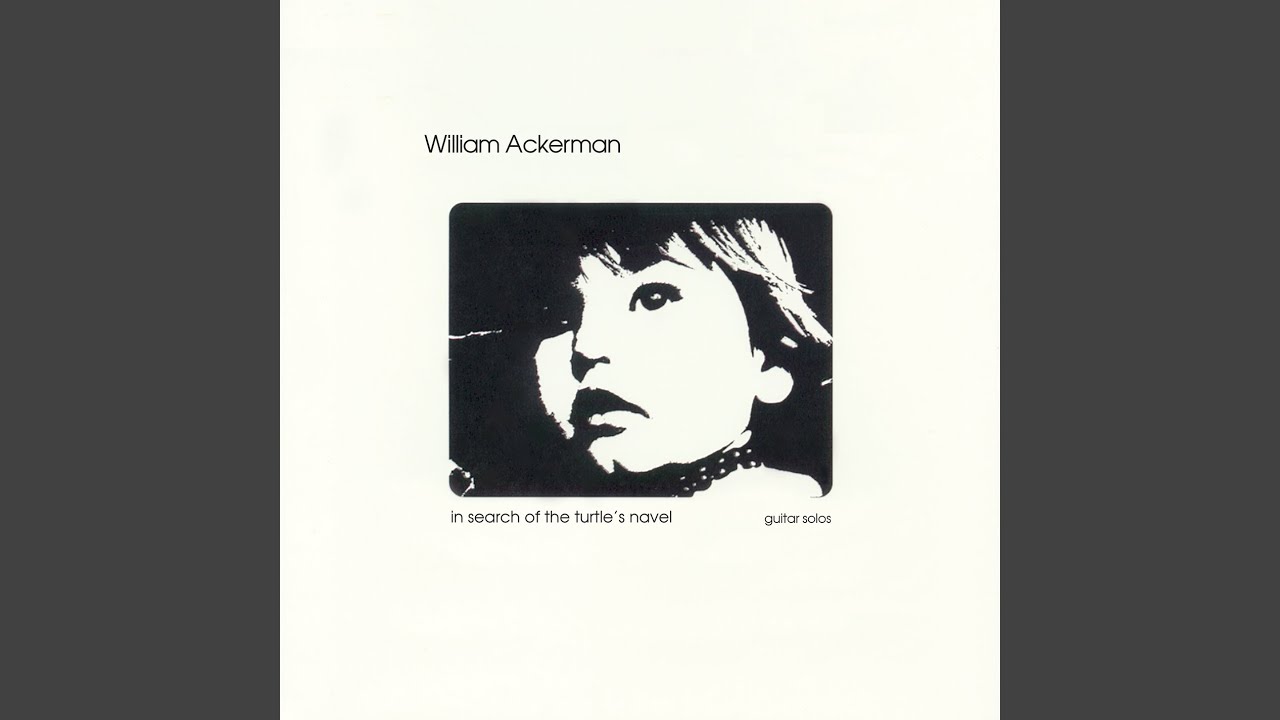
Fifty years ago, William Ackerman had little ambition beyond recording an album of original guitar instrumentals and releasing it on a homespun label he founded with his girlfriend, Anne Robinson. He didn’t expect to sell many copies, let alone launch a record company that would help redefine the acoustic guitar and introduce the world to players such as Michael Hedges.
“When I recorded my first record In Search of the Turtle’s Navel, I went to the record pressing plant and was told that the minimum order they would take was for 300 pieces,” Ackerman tells Guitar Player. “I thought that I would probably end up having 150 of those sitting in my closet for the rest of my life.
“And that’s really not an exaggeration, as I really thought I was never going to sell 300 copies of the album. And it obviously turned out to be very different.”

He called me up later that night and said, ‘This is really, really good. Can I have some more of these records?’ And I said, ‘Yeah, sure.’’’
— William Ackerman
Ackerman gave about 20 copies to the Plowshare Bookstore in Palo Alto, hoping to sell a few. The store began playing the album, attracting customers’ attention. Sales quickly followed.
Around the same time, he renewed his friendship with a childhood next-door neighbor, Michael Kilmartin, who had first turned him on to guitar. Ackerman was 12 when he first heard Kilmartin play electric guitar. It was the moment he fell in love with the instrument.
“One day I was walking about a block up from the bookstore when I saw Michael, who I hadn’t seen for at least 15 years or so,” Ackerman recalls. “I said, ‘Michael, you’re the guy who first put a guitar in my hand, and I just did this little record.’ So I went back to the Plowshare Bookstore and handed him a copy.
“He called me up later that night and said, ‘This is really, really good. Can I have some more of these records?’ And I said, ‘Yeah, sure.’ It later turned out that, at the time, he was the head of radio promotions at Fantasy Records, whose biggest act was Creedence Clearwater Revival. So he had a lot of control over things.
“He told me that he had sent the records to several major radio stations across the country, and all were reporting heavy airplay. I had to get on the phone and start talking to these radio people to thank them for playing it.
“So I did that. One of the radio stations in Seattle told me that my record was being played more than any record they had played in years. And they asked, ‘What are you doing next Saturday?’ I said, ‘Nothing in particular.’ And they said, ‘Let’s do a concert!’”
Having never played a paying concert before, Ackerman was hesitant, so he asked his guitar-playing cousin Alex De Grassi, who was working with him as part of his building crew, to accompany him. The pair drove up to Seattle and, when they arrived, were surprised by what they saw.
“It was the Seattle Opera House!” Ackerman exclaims. “We then walked into this huge, dark area, and this huge door opened, and I found myself suddenly on the stage in a room filled with 2,300 people! And that was the first paying gig I ever had in my life. At some point in the show, I ran out of music, so I told the audience that it was all I knew; otherwise, I would have to play these things all over again. And the audience went, ‘Do that!’
“As Alex was in the wings, I explained that my cousin was a much better guitarist than I am, so I would get him to join me. But Alex began waving his hands, going, ‘No, I don’t want to do this.’ But I walked up to him and said that the people wanted to hear him too.”

Within a few years, Windham Hill would become a major springboard for a new generation of groundbreaking acoustic guitarists, including De Grassi. One of the players who came to the fore was Michael Hedges, whom Ackerman discovered one evening while walking past the New Varsity Theater in Palo Alto.
Michael took the acoustic guitar to a whole other level. It broadened what an acoustic guitar could be. It was another one of those things that defined what the label could do.”
— William Ackerman
“The owner of the venue happened to see me and kind of grabbed me and said, ‘You’ve got to hear this guitarist,’” he recalls. “So I went in and checked out the show, and it was Michael Hedges playing the guitar. I couldn’t believe what I was hearing. He was incredible.
“I remember taking out a pen and starting to write what I remembered of a Windham Hill contract, as I wanted to sign him there and then. Michael completely redefined what the guitar could be. And that was also, obviously, a wonderful thing to broaden this perspective of what Windham Hill offered.”
With Hedges onboard, Windham Hill expanded its audience, while he helped showcase the untapped sonic possibilities of the acoustic guitar.
“Michael took the acoustic guitar to a whole other level, as what he was doing on the guitar was absolutely unique,” Ackerman says. “It broadened what an acoustic guitar could be. It was another one of those things that defined what the label could do. That was really so important, because it was new and showed what things were possible. I loved what he did and, after having heard him play, told him he could do any damn thing he wanted.”

One element stood out across Windham Hill’s recordings: their distinctive, atmospheric guitar sound.
“As a guitarist, I know the sound of a guitar up close, so I wanted to have microphones really, really close,” he says. “And that really defined Windham Hill. And I think that was part of what made Windham Hill so unique. I mean, nobody was putting microphones in that proximity. Literally, nobody would even think to do it. And it worked.”
As a guitarist, I know the sound of a guitar up close, so I wanted to have microphones really, really close. And that really defined Windham Hill.”
— William Ackerman
Ackerman says the recording process was usually straightforward.
“Because the players were all so talented, there wasn’t a hell of a lot of editing happening,” he says. “We might get three, five, or sometimes seven takes, and there was always one track that was really it. You might grab something from another one of the takes, but it would be very rarely done. We wouldn’t spend days doing edits, but there might be a few places where you had an incredibly great take but had a flaw, and we had a backup recording that we could fix with.”
Windham Hill also shared some of its aesthetic with Germany’s ECM Records, founded in 1969. Both labels developed distinctive recording styles and cultivated recognizable visual identities through carefully considered cover art.
Their catalogs, however, occupied different musical territories: ECM ranged across jazz, classical and experimental music, while Windham Hill became particularly associated with contemporary acoustic guitar and melodic instrumental music. Windham Hill’s covers, designed by Robinson, were minimalist, typically featuring nature photographs framed by generous white space.

The label’s distinctive sound and look helped it establish an identity that was difficult to categorize. Some journalists lumped it into the burgeoning “new age” category. Ackerman bristled at the association.
“A lot of writers just didn’t know where the fuck to put it, and so that pissed me off,” he says. “I never embraced it. What I wanted was for Windham Hill to be seen as a unique nation of music. And I think that we were pretty successful in doing that.”
I would have loved to have been able to sign Pat Metheny, But, obviously, he had it nailed down with ECM with what he was doing.”
— William Ackerman
Ackerman sold his share of Windham Hill to BMG in 1992. Co-founder Anne Robinson retained her stake until 1996, when she also sold to BMG. Windham Hill’s catalog is now part of Sony Music’s holdings.
“Though I wasn’t in the office anymore, I was still making judgments,” Ackerman explains. “It had become a corporation, and I was no longer close to all these people, so it was less something that I wanted to be around.”
That desire to establish Windham Hill as a distinct musical identity was central to what Ackerman wanted the label to represent.
Looking back, Ackerman is proud of what he achieved with Windham Hill, and of the generation of guitarists he helped introduce to the world. Was there anyone he wished he could have signed but never managed to?
“I would have loved to have been able to sign Pat Metheny,” he says. “He was a very sweet guy and I loved what Pat did. He was a fan of what we were doing and really thought that we were doing a wonderful thing. But, obviously, he had it nailed down with ECM with what he was doing.”

Still, Ackerman had helped bring Michael Hedges to a wider audience, and few artists better exemplified what Windham Hill stood for. Hedges expanded the possibilities of the acoustic guitar and inspired generations of players, becoming one of the most enduring figures in the label's legacy.
Michael was a genius and literally invented a whole new world for acoustic guitar. And I’m not overstating it — what he could do with the acoustic guitar was outstanding.”
— William Ackerman
His impact was also a testament to what Ackerman had set out to achieve with Windham Hill: creating a home for distinctive musical voices and showing the world what the acoustic guitar could become.
“Michael was a genius and literally invented a whole new world for acoustic guitar. There are certainly other players that are perfect, but with Michael — and I’m not overstating it — what he could do with the acoustic guitar was outstanding.
“Of course, then every young guy in the world thought that all he had to do was slap a guitar and imitate Michael Hedges. But Michael was an enormous innovator who gave us a whole concept of what the potential was for the steel-string guitar. Here you had someone who moved out of almost a folky kind of thing with a steel-string, showing you that you could do this and that with it. It wasn’t going to work just to imitate somebody else. You’ve got to have something that is unique that you can present.
“And obviously Michael did that in spades. There was nobody really doing anything else. People were looking at this guitar player doing something that they’d never seen or heard before.”

