
In the 1990s, women in rock were often pushed into one of two boxes: the politically charged Riot Grrrl movement led by bands like Bikini Kill, or the introspective indie-rock scene embodied by acts like the Breeders and Hole.
The Donnas carved out a middle ground. They weren’t overtly political, yet their very existence was a kind of radical act. The band proved that women could dominate a mainstream genre like hard rock without needing a manifesto to justify it. Instead, they made it about freedom and fun, offering a raucous alternative to the “virgin pop princess” archetype that dominated the era of Britney Spears.
While casual listeners might file the Donnas away as a “forgotten” act of the early 2000s, music historians and rock fans increasingly view them as a crucial bridge in the evolution of women in rock. They didn’t just play rock and roll — they mastered its mythology and claimed it as their own.

The Donnas — singer Brett Anderson, guitarist Allison Robertson, bass guitarist Maya Ford, and drummer Torry Castellano — were a true garage-band success story. The group formed in 1993 while the members were still in eighth grade in Palo Alto, California, and endured years of ridicule from classmates who thought a group of girls playing loud punk rock was a joke.
Inspired by the Ramones, the band adopted matching monikers — Donna A, Donna R, Donna F, and Donna C — along with gold nameplate necklaces. To critics it looked like imitation, but the look presented a unified front that emphasized sisterhood over individual stardom.
Their most important contribution was subverting the hyper-masculine tropes of ’70s and ’80s arena rock. Before the Donnas, hard rock often felt like a sausage fest, where women were the subjects of songs — the groupies, the heartbreakers, or the “shallow bitches.”
The Donnas flipped that script. Taking the swagger of bands like AC/DC, Kiss, and Mötley Crüe, they applied it to a female perspective. On songs like “Take It Off” and “Too Bad About Your Girl,” they were the ones in the driver’s seat — singing about no-strings fun and objectifying “dudes” with the same cheeky hedonism traditionally reserved for male rock stars.
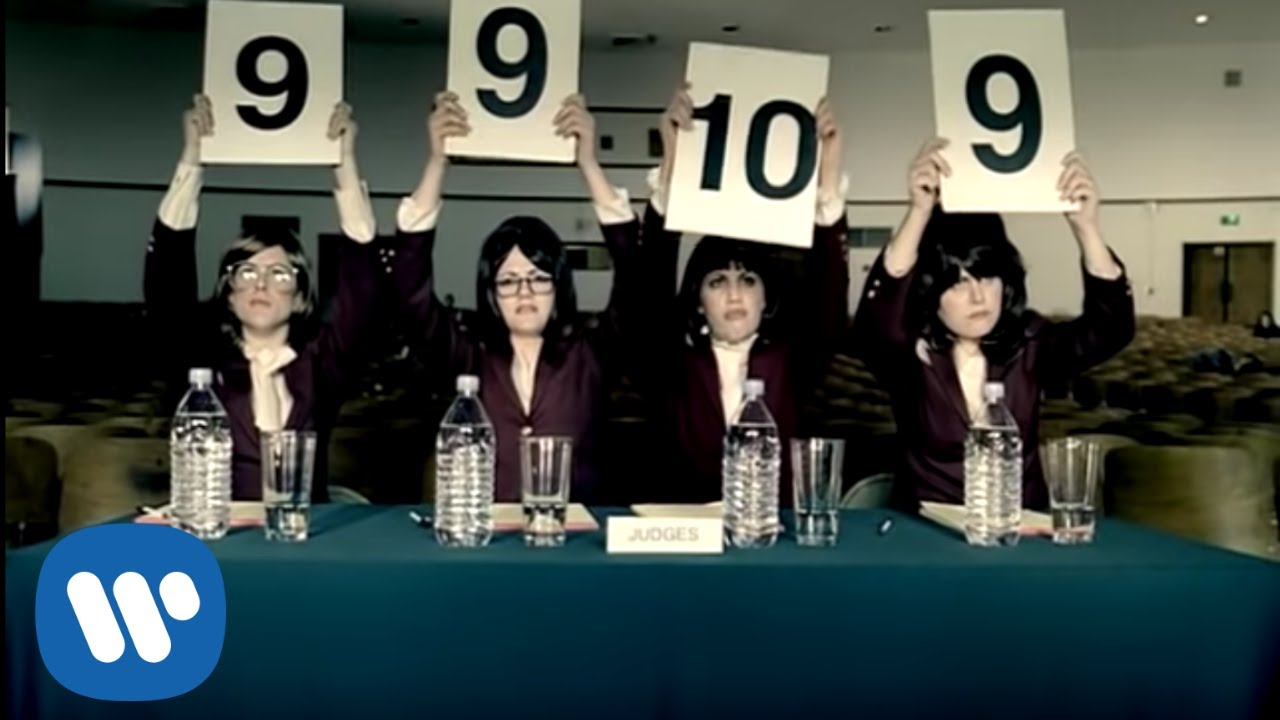
By the time the band signed with Atlantic Records for their 2002 breakthrough Spend the Night, they had already spent nearly a decade honing their craft. That experience gave them a level of technical proficiency — particularly Robertson’s muscular electric guitar work, typically peformed on Gibson Les Pauls, SG Classics and Explorers — that helped silence critics who dismissed all-female bands as manufactured.
Robertson later said that pressure shaped the way she approached the guitar early in the band’s career. By the time Gold Medal arrived in 2004, she no longer felt the need to prove anything.
“The guitarist on Gold Medal is someone who doesn't care about impressing anyone but herself,” she told Guitar Player in 2005. “In the past, I always wanted to throw in something just to show people I could do it. That had something to do with being young and immature, and it also had something to do with being a girl. You're never good enough.”

As Robertson explained, the doubters only pushed the band to work harder.
“We get so much flack that it has absolutely compelled us to try to be heavier, play more complicated riffs, and write things that haven't been written before,” she said. “Trust me, if you're a woman, you don’t want someone saying, ‘Oh, they're just girls ripping off the same old riffs.’”
The band also abandoned their matching “Donna” monikers. Though originally inspired by the Ramones, the gimmick had become another talking point for critics — even as male bands adopting similar aesthetics were often praised.
“Any time we do something that's intentionally ironic or kitschy it’s considered a gimmick, and we get blasted for it,” Robertson said. “But put a guy band in matching outfits and it's considered pure genius. It's even funnier to us when those bands copy, say, the Kinks and pretend they're doing something awesome that has never been done before. Usually they're just taking the music to a lamer level, but they often get respected for being ‘archivists of classic rock.’”

Robertson wasn’t convinced the Donnas were making much progress.
“Probably not in our lifetime, but one of the goals of our band is to help break down that wall brick by brick,” she said. “Everything we do — from the music we play to the guitar and amp I use to our business decisions to what we say in interviews — is done with the thought of how it will affect the future of female acts.
When people don't believe in us, or when they don't give us any credit, it just makes you want to work that much harder.”
— Allison Robertson
“When you're in our position, if you do one thing that makes you look stupid, then it makes all girls look stupid. Whenever some female in the music industry does something too girly or shoots off her mouth and sounds like a dodo, it takes 10 years off my life.
“Sadly, I think the Donnas are still considered a novelty act rather than a rock band, but we're okay with that. When people don't believe in us, or when they don't give us any credit, it just makes you want to work that much harder.”

For all their persistence, the Donnas’ run eventually came to an end. After their label lost interest, the band quietly dissolved in 2012.
Yet their influence remains easy to hear. Modern acts like the Linda Lindas and Doll Skin carry echoes of their swagger, while even pop-rock artists like Olivia Rodrigo have embraced guitar-driven attitude in ways that owe something to the path the Donnas helped clear.
Their message was simple: “Girls with guitars” shouldn’t be treated as a novelty. Two decades later, the Donnas stand as proof that women didn’t just enter the boys’ club of hard rock — they kicked its door in.
