
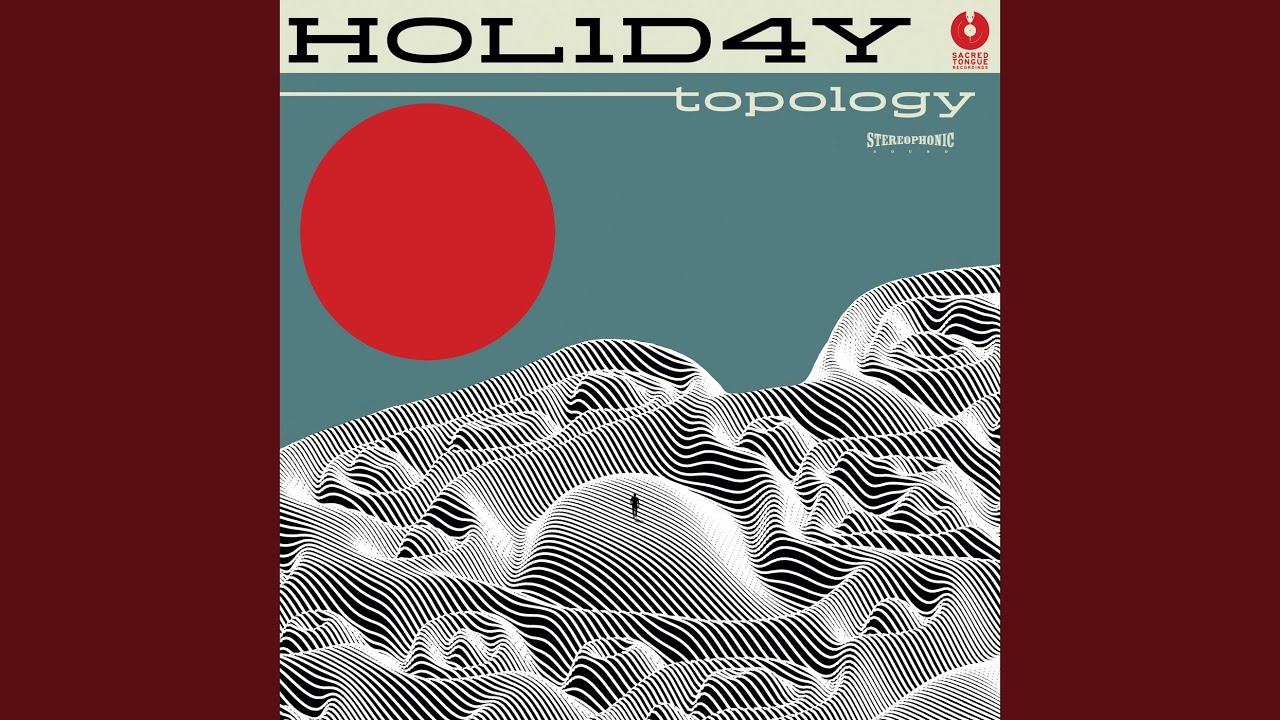
A not-so-funny but impactful thing happened to Rival Sons’ Scott Holiday on the way to making his first solo album, the just-released Topology.
The album was already well underway last October 17, when the guitarist spent an evening hanging out with friends at a bar about a block away from his house in Huntington Beach, California.
“Not getting obliterated or going too big or anything. Just hanging out and having a social night,” Holiday explains.

Shortly after midnight, he hopped on his electric bike to head home and began pulling out of the parking lot.
“The only thing I remember is a flash, and then I have a wake-up from paramedics,” Holiday tells Guitar Player via Zoom. “I have a little blank spot there, which is just no fun.”
Holiday was the victim of a hit-and-run, and the driver was never found. The guitarist broke six ribs — some in multiple spots, requiring titanium plates to fix — and “had a couple pretty good knocks on the head.”
A feared year of healing turned into about 30 days. “You can’t move, you can’t breathe, you can’t clear your throat, coughing is out of the question, a sneeze is an emergency on planet Earth,” he says. “You’re kinda in this still state, just trapped.”
But in that still state, a vision for the nine-track Topology — a “psychedelic, exploratory, maybe even poppier sounding record” released under the moniker Hol1D4y — began to coalesce.
“I’m just kind of in this delirious state, having to get real meditative and deep,” Holiday recalls. “And in that state I spent a lot of time thinking about a lot of things, and Topology was always percolating in the back of my head — ‘How am I going to get back? I’m in the middle of this and I’m inspired and I need to get healed, ’cause I got to get back to it.’
“I had already decided that I was going to sing on the album. I wondered, ‘If I’m going to use my voice and raise it up, is there something I care about enough to sing songs about it?’
“And there were a lot of things that were on my mind that I would want to share with people — things I talk about with my friends and my family and my wife, things that we get intellectual about and that resonate with me deeply.
“So I began to approach the album, song by song, in that state.”
Rival Sons spent 2025 on the road supporting its 2023 album Lightbringer. During the summer, Holiday began working on new music, writing some of it around drum tracks he solicited from bandmate Mike Miley.
“There was no idea for a solo record at all,” Holiday says. “I thought I was just writing for the next Rival Sons record.”
But Holiday began noticing that some of those things were not like the others.
“There were some songs that just felt like a different thing,” he explains.
When bassist Dave Beste asked for demos without the bass guitar parts on them, Holiday had a revelation.
“The second I went to remove the bass I decided, ‘I can’t take the bass off, ’cause I like the bass. I actually like what I’m playing.’ So I began to realize these tracks were a little more personal to me. I think they presented themselves to me as a solo project.
“And I just immediately ran with it … with a vote of confidence from the rest of the band, ’cause they all loved the material.”
Even then, Holiday thought he’d be making an instrumental album.
“But then I had a few of these tracks, like ‘Autonomatic,’ ‘Holotropic,’ that didn’t feel exactly like instrumentals,” he recalls. “I really felt like they were asking for a story, asking for a more traditional form.”
Rather than bring in guest vocalists “like we see a lot of guitar players do,” Holiday decided to step up to the mic himself. “I felt a close connection to these tunes,” he says, “and I didn’t want to take that closeness away by having somebody else sing them.
“And then I started thinking about what I wanted to sing about.”
Topology’s lyrics are undeniably — and unapologetically — cerebral and high-minded, as evidenced even by the titles mentioned as well as tracks such as “Panoptic,” “Equanimity” and “Metacognition.” Holiday even commissioned philosopher Dylan Trigg to write an explanatory essay for the back cover.
The album is, in a nutshell, “about connection,” Holiday explains. “It’s about aligning ourselves, waking up and optimizing ourselves in this material world.
“I know it sounds airy-fairy and far-out,” he says with a laugh, “but this is something that’s resonated with me for a long, long, long time.
“So that’s where I went. After the accident, I got into such a physically vulnerable state that it affected my mental vulnerability in a way I actually welcomed. It shook some stuff loose, literally and in an analogous way, that I was able to go, ‘Oh, man, I feel close to that mental, sensitive part of myself’ … and I wanted to hang onto that coming into the record and singing and using my voice, ’cause it’s different than the guitar, it’s different than bass. It’s different than drums.”
While Holiday brought in Jesse Nason to perform with an arsenal of vintage keyboards — including Moog, Oberheim and Prophet synthesizers — Topology is very much a guitar player’s showpiece.
That’s particularly true on “Crism,” a nearly 12-minute instrumental that cascades through mood and tempo changes, as well as some of Holiday’s most biting and soaring guitar solos. And surprisingly it was composed to a single drum track that Miley provided.
“We had just lost Jack DeJohnette, so we were all listening to a bunch of those wonderful records from the early ’70s, totally inspired,” says Holiday, who also cites John Coltrane, early Miles Davis and 1970s-era King Crimson as influential sources. “And I had just told the guys that for the solo record I wanted to do something like that.”
Miley’s drum track captured that vibe perfectly.
“It was different from anything he had ever sent me,” Holiday says. “I was completely blown away. I just told him, ‘It’s a masterpiece!’ I told him, ‘I’m not gonna edit it.’ Jesse came over and we plugged in and played all the way through the song five times, full takes, and I took sections from each of them and made the song.”
Holiday kept the gear for Topology “pretty simple … the cream of the crop of my goodies,” including a 1961 Gibson ES-345, a 1964 “Platypus” Firebird and a 1966 ES-330. Custom Kauer and Banker models were used for overdubs, while the acoustic guitars were a Martin OM42 and Guild F412. All of the bass parts were recorded with a Supro Huntington.
For amplifiers Holiday used some Universal Audio models but primarily stuck to a pair of small Supros — an Amulet and a 1600 Supreme. He “didn’t want to go too bananas” with effects, using Fjord Fuzz Odin octave fuzz and Fjaer reverb pedals as well as an Electro-Harmonix POG octave generator on the track “Veridream.”
But the “star of the show,” Holiday says, was a prototype from effects-maker Jeorge Tripps.
“This pedal is able to make eight presets, and I used them all and it sounds like eight different pedals,” Holiday explains. “So this is the star of the show, and I love that I made a record with a pedal that’s unavailable to the world — and may never be, who knows?”
Holiday knows that between him singing and the different playing approaches, Topology presents him in a manner that might surprise Rival Sons fans. And he’s looking forward to them hearing it.
“I didn’t overthink at all when I made this music,” he continues. “This was more like, ‘This is natural. This is what I should do. This is where the color goes, this is where the texture goes, this is how long the songs need to be.’
“It was like releasing a valve, but, ‘Oh, wow, I didn’t even know that valve needed to be released, but there it is,’ and things moved a lot easier.”

As for the Hol1D4y moniker, it reflects Holiday’s interest in numerology and sacred geometry.
“I really loved this idea of using a 1 and 4. In numerology the 1 and 4 become a 5. In numerology, 5 represents: adventure, freedom, curiosity and dynamic change. In sacred geometry the number 5 represents the bridge between the physical and spiritual realms.
“So it has great significance with the things I’m talking about and felt about this project.”
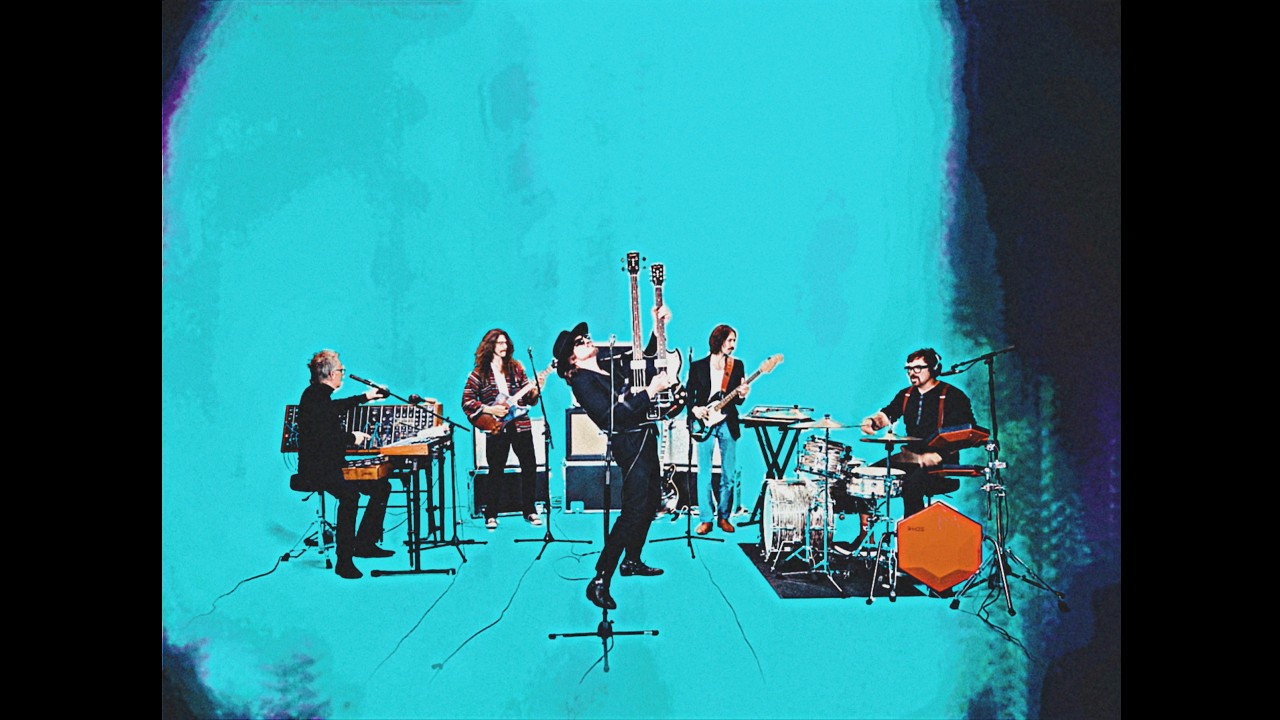
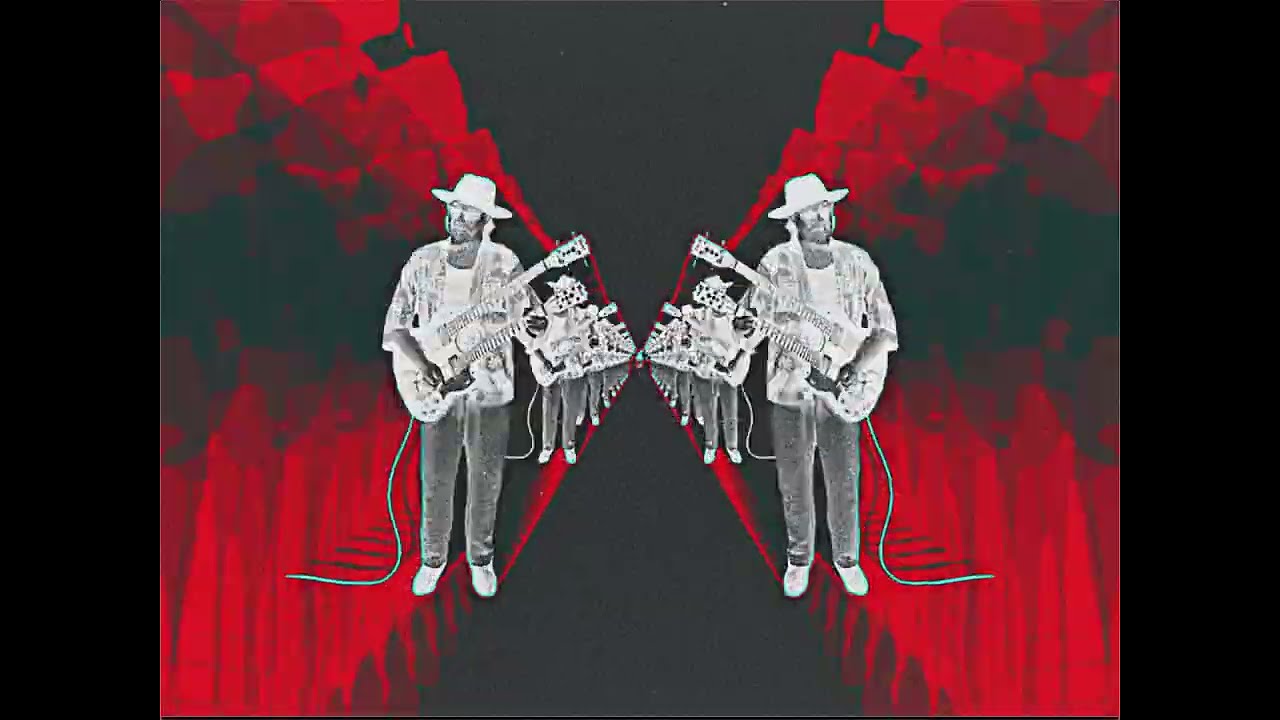
Now Holiday is preparing to make Hol1D4y a live endeavor. He’s assembled a five-member band and has built three special rigs for himself and the two others who will play guitar. He’s also worked with Banker’s Matt Hughes to create a custom double-neck guitar and bass.
“Sometimes I’ll be playing bass on a verse and then I’m playing guitar on the chorus, or vice versa,” Holiday says. “I move it all around. Basically I’m gonna be super selfish and just want to play and have fun.”
Rival Sons returns to the road in late October for U.S. dates through November, followed by studio work on a new album in early 2027. Holiday hopes to launch Hol1D4y live in February or March.
“But we are going to tour this, one way or another. I promise you that. Where there’s a will, there’s a way.”

