
As Fender’s campaign against Stratocaster-style copyists gathers momentum, PRS Guitars has confirmed it received a cease-and-desist letter from the iconic guitar maker.
Last March, a default copyright ruling in Germany established the Stratocaster as a piece of “original creative expression.” While the ruling allowed Fender to pursue infringement claims against Stratocaster-style guitars manufactured, sold or distributed within Germany and the wider European Union, it also appeared to embolden the company to pursue claims against other makers.
LsL Instruments was the first company targeted when the Santa Clarita, California guitar maker received a cease-and-desist letter in May over its Saticoy electric guitar.
Now, according to The Wall Street Journal, Fender has taken similar action against PRS over the Silver Sky, the hugely successful signature model it developed with serial Grammy-winner John Mayer.
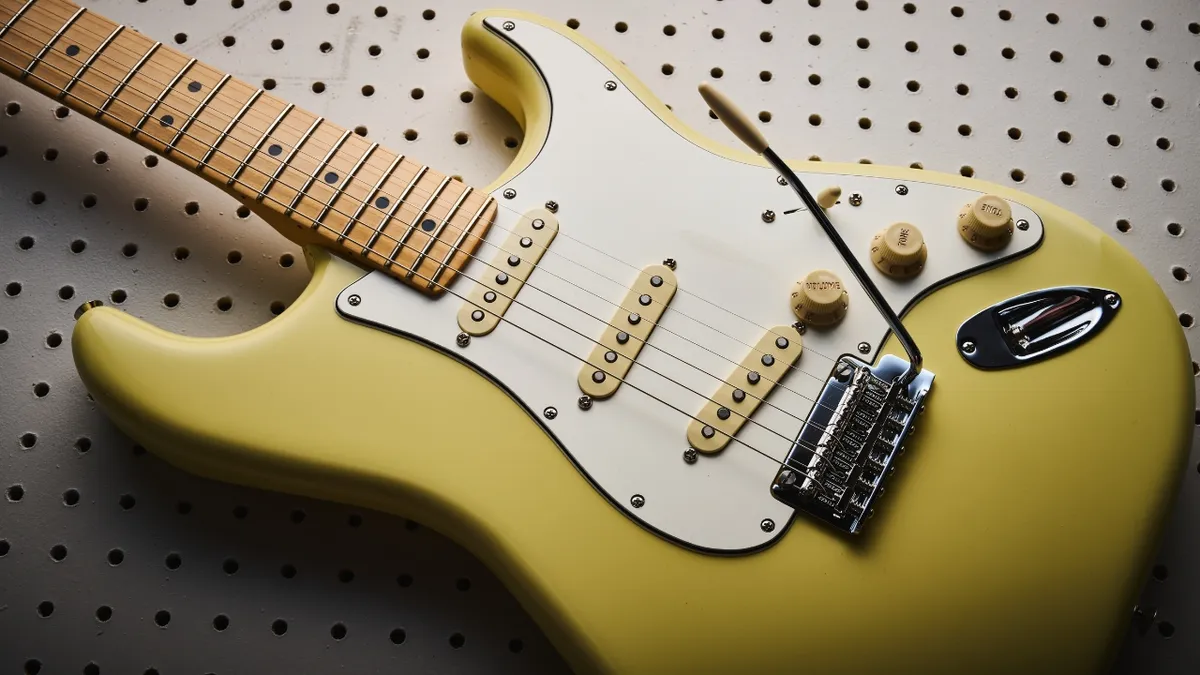
“PRS Guitars, a company endorsed by the likes of John Mayer and Carlos Santana, confirmed that it is among the companies that received a letter,” the Journal writes. “The company said it disagrees with Fender’s assessment and declined to comment further.”
Introduced in 2018, the Silver Sky has become one of PRS’s biggest commercial hits. It topped Reverb’s best-selling guitar lists in 2022 and 2023, dropped to third in 2024, and climbed back to second in 2025.
Like many modern electric guitars, the Silver Sky draws inspiration from the Stratocaster — unsurprising given Mayer’s long history playing (and reportedly freezing) Strats. But whether the PRS design crosses Fender’s legal threshold for imitation remains a gray area.
In a statement obtained by Guitar World, Fender clarified that it is not targeting all “two-horned” or “double-cutaway” guitars, but rather what it considers “close copies” of the Stratocaster design.
“Fender’s goal,” the company said, “is simply to protect one of the company’s most iconic and recognizable designs while continuing to support a vibrant and innovative guitar industry.”

With its triple single-coil configuration, white pickguard, alder body, and maple neck — plus the option of rosewood or maple fingerboards — the Silver Sky undeniably shares familiar Strat-like characteristics. PRS, however, told The Wall Street Journal it “disagrees with Fender’s assessment.”
[The Silver Sky] has things that are reminiscent of vintage guitars I love, but it also has its own voice.”
— Philip Sayce
It’s not alone. Speaking recently to British retailer Gear4music, longtime Strat devotee Philip Sayce — owner of the heavily modified 1963 “Mother” Stratocaster — argued that the Silver Sky occupies its own space despite becoming a key part of his touring rig.
“With the vintage guitars that I’m grateful to own, they’re like a ’60s muscle car. You feel that rumble. They’ve got a thing that can’t necessarily be recreated,” he said. “Whereas this [the Silver Sky] is like a modern-day electric vehicle with power windows and Wi-Fi.”
“For me, they each have their own lane,” he added. “I’m not having this replace a guitar that’s one of a kind. This has things that are reminiscent of vintage guitars I love, but it also has its own voice.”

Mayer himself has made a similar argument. Speaking to MusicRadar, he insisted the Silver Sky was never intended to replace the Stratocaster.
“This guitar is made to coexist with Fender amplifiers, with Fender guitars, with Gibson guitars, with any other guitar out there in the world,” he said. “It’s not trying to revise history; it’s just a new way forward.”
Ironically, the Silver Sky’s popularity has helped position it as one of the Stratocaster’s biggest modern rivals. The only guitar to outsell it on Reverb’s 2025 list was Fender’s own American Professional II Stratocaster.
That rivalry may say more about PRS’s breakout success than outright imitation. But with Fender escalating its legal campaign beyond smaller boutique builders, the dispute has now become a much bigger industry story.
How the situation develops remains unclear. PRS continues to maintain its innocence, while Fender has shown it’s prepared to defend the Stratocaster shape against companies of any size.

