
Ritchie Blackmore reunited with Deep Purple last night for the first time in 33 years, joining his former bandmates onstage at New York’s Jones Beach Theater for “Smoke on the Water.” It was a remarkable moment for a guitarist who has spent most of the past three decades at a distance from the band he co-founded in 1968.
But it wasn’t Blackmore’s first Deep Purple reunion — and the reason he helped bring the classic lineup back together in 1984 had, by his own account, a surprising amount to do with another group: the Police.
Blackmore had left Deep Purple in 1975 to form Rainbow with Ronnie James Dio. Nearly a decade later, he made the first move toward reuniting the classic Mark II lineup, bringing back vocalist Ian Gillan, bass guitarist Roger Glover, keyboardist Jon Lord and drummer Ian Paice.
Speaking to Metal Hammer in 1987, Blackmore explained what had convinced him that there was still a place for Deep Purple’s brand of heavy, blues-rooted rock. His explanation was blunt.
“I suddenly realized that there was a gap for this type of music because only ZZ Top were doing that aggressive stuff,” Blackmore said. “Everyone was playing like the Police. And can I state here that I hate the Police?”
The timing makes the comment even more revealing. The Police had just completed their extraordinary run of success with Synchronicity, their fifth and final studio album, released in 1983. It spawned hits including “Every Breath You Take” and “King of Pain,” topped charts around the world and led to a huge 1983–84 tour.
In other words, Blackmore was looking around at a rock scene increasingly influenced by the Police at almost exactly the moment the band was reaching the end of its own run. The trio would soon go on hiatus, eventually splitting for good in 1986.

But Blackmore clearly saw their sound as representative of something he felt was missing from rock. The Police’s polished blend of rock, reggae, new wave and pop was a world away from the hard-driving, blues-based sound he had helped establish with Deep Purple.
“There just wasn’t a band playing that earthy kind of rock,” Blackmore said. “Our music isn’t contrived, and there isn’t that sheen of gloss.”
When the interviewer reminded him that Glover had once suggested Deep Purple would always exist as long as the world needed the band, Blackmore offered his typically sardonic response.
“It’s quite a profound statement, and Roger doesn’t take drugs,” he said.
Then came the punchline: “As long as the world doesn’t need the Police, that’s all I care about.”
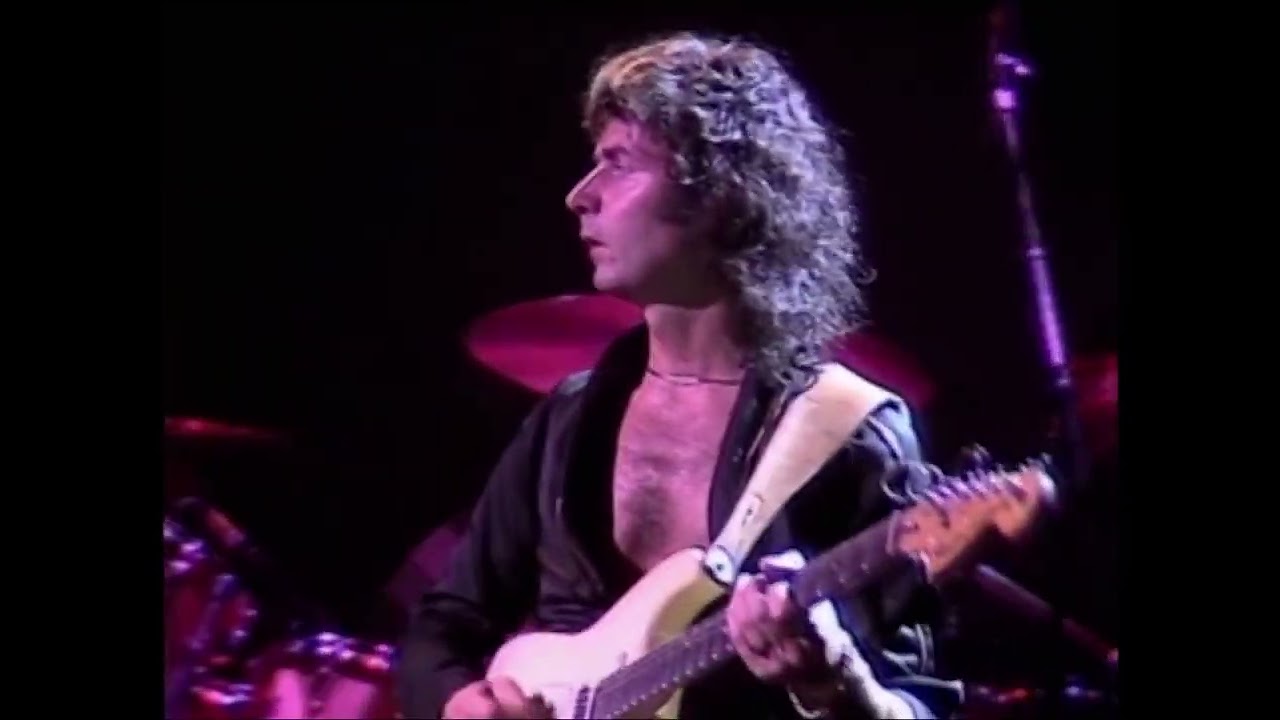
Blackmore’s comments shouldn’t be taken to mean the Police were literally the sole reason Deep Purple reunited. But they offer a revealing glimpse into what he believed was missing from rock music in the early 1980s — and why he felt there was still a place for Deep Purple’s heavier, more earthy sound.
The reunion produced Perfect Strangers in 1984, giving the Mark II lineup a second life after more than a decade apart. Blackmore would remain with the band until 1993, when he departed for the final time.
Now, 33 years after his last performance with Deep Purple, he has stood onstage with them again.

