
As the Police settled into the studio to record Synchronicity in December 1982, they were a band on the verge of breaking up. By then, the trio had spent five years rising from the ranks of London’s post-punk scene to become stadium headliners and one of the most successful acts in the world.
Most bands in that position would have been looking ahead to a long future. The Police, however, seemed determined to leave at the height of their success.
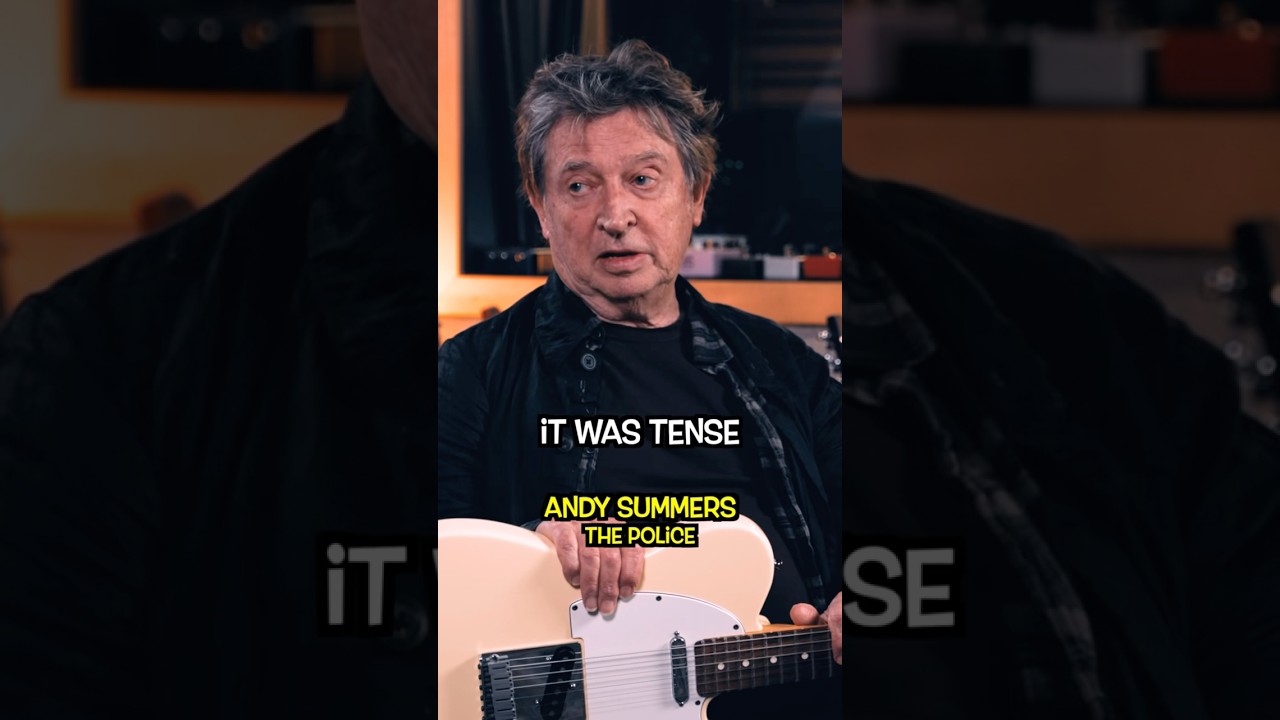
According to Andy Summers, it all came down to Sting.

“It was a tough album, period. I mean, we had been together five years and were massively successful,” he says. “Sting was obviously feeling his oats and wanted to leave the band and go out on his own. In a sort of anal way, he was ready to finish off the contract, which was five albums.”
The recording sessions at AIR Studios on the Caribbean island of Montserrat have become legendary for the near-violent tension between bass guitarist Sting and drummer Stewart Copeland. Summers told Rick Beato the atmosphere became so unworkable that he hiked across the island to find Beatles producer Sir George Martin, who was staying nearby, and ask for help.
“We said we should get George Martin to come and produce us, because he owned AIR Studios, and he was just across the valley there. And so I got the job to go and get George Martin. So I walked off in the blazing Montserrat heat, knocked on the door, and he comes out.”

Summers recalls how Martin invited him inside and listened over a cup of tea as the guitarist unloaded his frustrations.
“‘We’re having some difficulty,’” he told the producer. “‘In fact, it’s like a screaming bitch fight.’”
“‘Oh yes, right. I’ve seen that before,’ he said.”
After hearing Summers out, Martin offered a few reassuring words.
“It was like he waved his magic wand,” Summers recalls. “He said, ‘Now, I think you should walk back over there. I think it’s going to be all right.’
“I hiked back to the other side of the island, and it was all right. We got to be very polite with each other: ‘Oh, would you like to do that? Oh, yes, of course. I’ll do that. Where would you like it, on the fourth fret or the fifth fret?’
“How amazing. It was the Martin Magic, I’m sure.”
Tempers cooled enough for the band to complete what would become its biggest hit, “Every Breath You Take.”
“The whole album was difficult, but ‘Every Breath You Take’ was going to go in the trash, basically. We thought it was too light and it wasn’t very good. It reached the point where we were all getting pretty tired of it and didn’t really want to do it.”
It was Summers’ contribution that ultimately saved the song.
“Sting said to me, ‘Go on, go in there and make it your own.’ We needed a guitar and I went in and almost instantly played the guitar line that is, of course, the signature of the song.”
Summers has since argued that he deserves a co-writing credit for the song’s instantly recognizable electric guitar riff. His contributions to “Every Breath You Take” are also among the reasons he and Stewart Copeland have said they are owed additional royalties from Sting.

As Summers recalls, everyone in the studio immediately recognized the song’s potential.
“The manager heard it and said, ‘I’m going straight to A&M. This is going to be a number one.’ And it was. That was our first number one in the U.S. It was number one for eight weeks straight.”
Still, the success of the song and the album — it was the band’s biggest seller — wasn’t enough to persuade Sting to stay.
“With the band’s contract fulfilled, he was ready to strike out on his own.
“Of course, any band would stay, naturally, because it was going so brilliantly well. We dominated the world. No one wanted us to break up, but Sting wanted to go and be the thing all on his own.”
