
By the mid-1960s, the Beatles had left behind their matching suits and clean-cut image in favor of something far more bohemian. Rubber Soul was famously dubbed the band’s “pot album” by John Lennon, while increasingly mind-altering substances helped shape the psychedelic sounds of Revolver and Sgt. Pepper’s Lonely Hearts Club Band.
It was a period of constant experimentation, both musically and chemically. As Paul McCartney later told Howard Stern, “Things happened in the studio that you couldn’t always predict.”
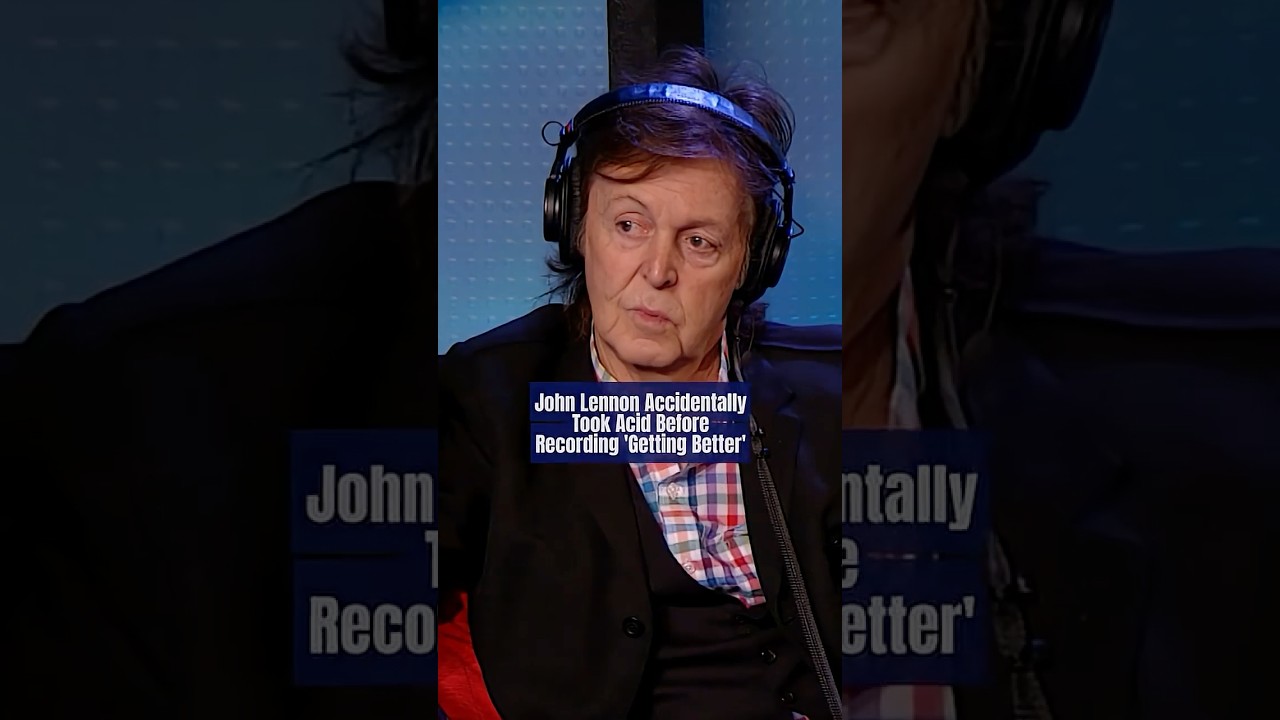
Stern asked McCartney about one of the best-known stories from the making of Sgt. Pepper: the claim that Lennon was tripping on LSD while recording the album’s fourth track, “Getting Better.”

“It was crazy, because he had a little pillbox,” McCartney recalled. “He’d have his little uppers and his little downers, and he thought he was taking a little upper, and we could get on with the session.
“[Then] he comes over to me and whispers, ‘I took the wrong pill.’
“‘What did you take?’
“‘Acid.’”
A bandmate unexpectedly taking LSD isn’t the ideal recipe for a productive recording session, but McCartney remained remarkably unfazed.
“Okay,” he remembered thinking, “let’s work around that, then.”
The bigger challenge was keeping producer George Martin in the dark.
“At one point, George Martin comes in, who knew nothing about anything,” McCartney said. “He said, ‘John doesn’t look too well.’
“‘No, he’s not feeling a little under the weather,’ because we had to hide it all from George. He was a grown-up.”
Martin’s innocence wouldn’t last forever. George Harrison later revealed that he and the other Beatles once spiked the producer’s tea with LSD during a late-’60s recording session to keep the vibe going, and Martin didn’t learn what had happened until decades later.
On this occasion, though, Martin simply tried to help. Concerned for Lennon’s wellbeing, he took him up to the roof of EMI Studios for some fresh air before leaving him up there alone.
Knowing exactly what was happening, McCartney and Harrison rushed upstairs to retrieve their bandmate before he wandered off the roof's edge and plummeted to the ground.

When Stern asked whether incidents like that were debilitating or simply part of the Beatles’ creative process, McCartney suggested it was a bit of both.
“Things happened in the studio that you couldn’t always predict, and a lot of it was very good,” he said. “So we rolled with the punches. We were pretty good at rolling with the punches; that one was quite a punch to roll with, but we did it, and we finished the track.”
It was an approach that served the Beatles well. Whether it was recording reverse electric guitar parts for “Tomorrow Never Knows” or devising Automatic Double Tracking (ADT) to spare Lennon the chore of double-tracking his vocals, the band consistently turned unexpected situations into innovations. Finishing “Getting Better” despite Lennon’s accidental acid trip was just another example of how they kept the session — and the music — moving forward.

