
When the Beatles arrived at Olympic Studios in May 1967, Eddie Kramer and the staff knew it wouldn’t be a typical session.
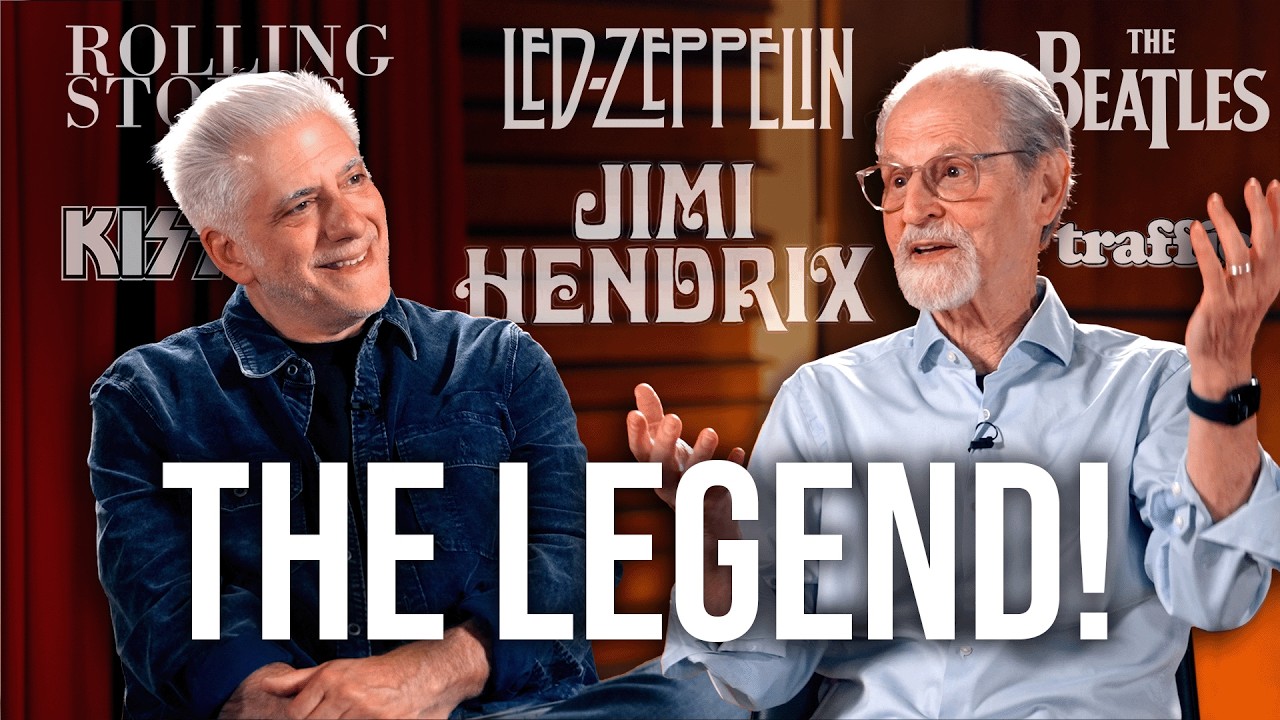
“Olympic gets the call: The Beatles are coming in,” Kramer tells Rick Beato in a new interview. “Holy shit, that’s royalty.”
The band had just completed Sgt. Pepper’s Lonely Hearts Club Band, but their creativity showed no signs of slowing. Sessions soon began for the songs that would become Magical Mystery Tour.
But when Abbey Road was unavailable, the Beatles decided to record outside their usual home for the first time. The session would produce “Baby You’re a Rich Man,” and give Kramer — who would soon go on to engineer many of Jimi Hendrix’s most celebrated recordings — a front-row seat to one of John Lennon’s most inspired studio moments.
“The session started at 7:00 p.m., and we finished at 7:00 a.m. the next morning,” Kramer recalls. “We tracked it, overdubbed it and mixed it all in one night. Bam, done. Thank you. Gone.”
What stuck with him most, however, was watching Lennon stumble across the song’s distinctive keyboard sound.
“We’ve got the table full of junk, all kinds of stuff,” Kramer says. “On ‘Baby, You’re a Rich Man,’ there’s a sound that goes [imitates the song’s warbling synth solo]. So John, being John, looks at the table and he says, ‘What’s all this, then?’ I said, ‘Well, this is left over from a previous session.’
“There was this beautiful wooden speaker cabinet with an amplifier in it and a series of little keyboards. And one was a Clavioline, a French electronic instrument for musique concrète.
“So I said, ‘Look, it’s a keyboard. You can play the note, but you can shake the keyboard from side to side to get vibrato.’ He said, ‘Oh, that’s great then. Let me have a go.’”
Lennon put on a pair of headphones and, within minutes, had worked out the part and recorded it. The Clavioline's wobbly lead remains one of the defining sounds of “Baby You’re a Rich Man” and one of the instrument’s most famous appearances on a hit record.
The session also offered a glimpse of how differently Olympic operated from Abbey Road. A former theater converted into a recording studio in 1966, Olympic prided itself on being more contemporary and rock-oriented than Abbey Road, which was built for classical and pop music.
“We were the competitors, let’s face it,” Kramer says. “And I think we had a better shot at it because I think our stuff was more aggressive, more state-of-the-art.”
According to senior engineer Keith Grant, the pace surprised the Beatles.
“I do a lot of orchestral work and you naturally push people along. The Beatles said that this was the fastest record they’d ever made,” he recalled in Mark Lewisohn’s The Complete Beatles Recording Sessions. “They were used to a much more leisurely pace. They kept on playing, version after version, then we spooled back to the one they liked and overdubbed the vocals.”

The Beatles were impressed enough to return to Olympic a few weeks later. On June 14, they recorded the backing track for “All You Need Is Love,” which they would perform on the global television broadcast Our World on June 25. Producer George Martin wanted a prerecorded track available in case technical problems derailed the live transmission.
Kramer was once again behind the console.
“I got the call: ‘Eddie, the Beatles are coming back, you wanna do it?’” he recalled to Guitar World in 2012. “I said, ‘Yeah, lovely.’
“They were so disarming and so great in the studio. They were very targeted about what they’d come in to achieve. They were wonderful.”

