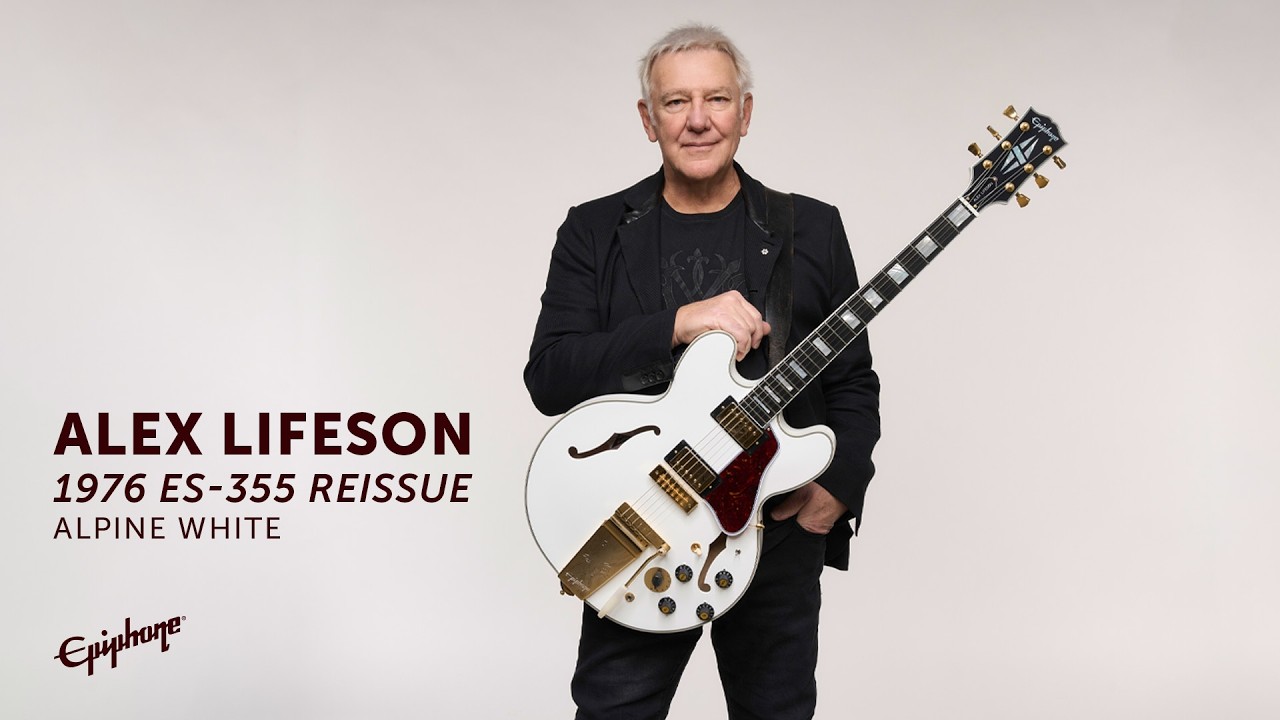


Alex Lifeson’s sonic evolution is etched into the gear he’s used on records and onstage. After launching Rush’s debut album with a 1968 Gibson ES-335, he steadily upgraded his arsenal. By the late 1970s, he had acquired a 1974 Les Paul and “Whitey” — his legendary, custom-built 1976 Alpine White Gibson ES-355 electric.
But by the time the 1990s rolled around, following a decade of experimenting with heavily modified Fender Stratocasters, Lifeson transitioned to PRS. In addition to creating a custom acoustic, he leaned heavily on modified CE24 models, frequently utilizing piezo pickups to handle the band’s complex acoustic-to-electric transitions live.
Years later, Lifeson reflected on what that era taught him about the two legendary guitar manufacturers. Speaking to Guitar Player, he admitted that PRS held a clear advantage when it came to out-of-the-box perfection:

“I don’t think you can beat a PRS for workmanship. You open the case, and the guitar is perfectly in tune and perfectly set up. I can’t say the same about Gibson. I’ve had to work on all my Gibsons — they require a fair bit of upkeep and maintenance.”
Yet, by the 2000s, Lifeson’s PRS era faded, and he returned almost exclusively to the Gibson family. Despite the structural reliability of a PRS, Lifeson realized that high maintenance was a small price to pay for a definitive sound.
“I love the way Gibsons sound,” he concluded. “I think the Gibsons sound better than the PRS guitars do.”
“I don’t think you can beat a PRS for workmanship. You open the case, and the guitar is perfectly in tune and perfectly set up. I can’t say the same about Gibson.”
— Alex Lifeson
It didn’t hurt that Gibson had won his heart long before he ever encountered a tuning stability issue. When Lifeson first received his 1976 ES-355, the instrument instantly transcended being a mere tool of the trade.
“I remember opening the case for the first time, and the truss-rod cover had my name on it,” Lifeson recalled. “That blew me away. I almost started crying.”
That emotional bond translated into musical history. Whitey became Lifeson’s definitive voice, stamped across 12 consecutive Rush studio albums—spanning from A Farewell to Kings (1977) to Test for Echo (1996). It anchored the band’s live sets for nearly 40 years, starring in iconic music videos like “Tom Sawyer” and “Show Don’t Tell” before finally retiring after the R40 tour in 2015.

In 2022, Lifeson made the bittersweet decision to part with the original instrument, selling it at a charity auction for a staggering $384,000. For years, fans assumed the legendary Alpine White semi-hollow body would remain locked away in a private collection.
However, the timing for a revival couldn’t be better. As Rush return to the road, Epiphone has officially launched the Alex Lifeson 1976 ES-355 Reissue as part of its premium Inspired by Gibson Custom line. Equipped with a classic gold Maestro Vibrola tailpiece, USA-made Gibson T-Type humbuckers, and the mandatory multi-position Varitone switch, the reissue mirrors the exact cosmetic and structural appointments of the multi-ply maple-and-poplar masterpiece.
Complete with Lifeson’s name engraved on the truss-rod cover—just like the original that brought him to tears in 1976 — the new reissue proves to everyday players that some classic sounds are well worth the upkeep.