
The corporate buyouts of Fender and Gibson in the mid to late 1960s have long been perceived as a trigger for a significant dip in the quality of musical instrument manufacturing. But a session guitarist wants to dispel that belief. In fact, he points to the Beatles’ breakout success as the cause for the era’s production chaos.
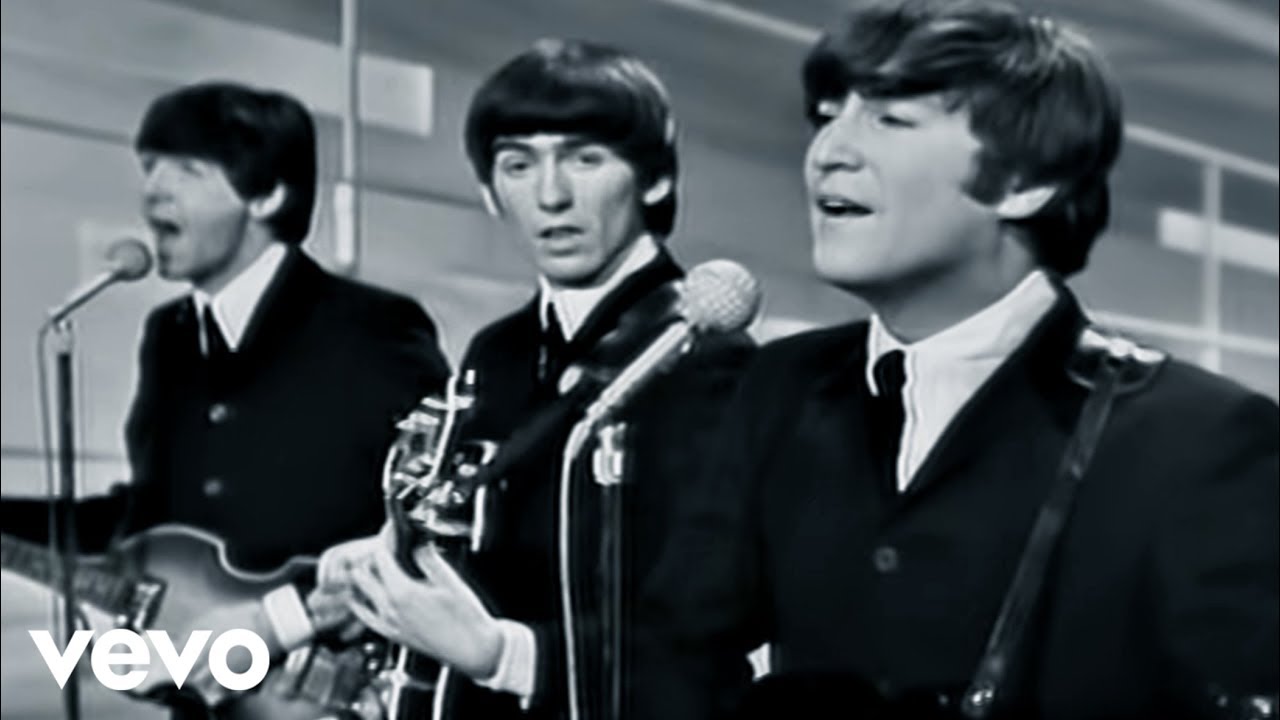
The claim comes from Brad Allen Williams, who has worked with Alabama Shakes guitarist Brittany Howard, jazz drummer Nate Smith, and soul singer Bilal, amongst others. Of course, he acknowledges that the two biggest guitar firms of the period underwent tough changes at this time, which today are blemishes on their histories. Yet he feels the root of the problems can be traced back to February 9, 1964, when the Beatles appeared on The Ed Sullivan Show.
It was the dawning of a turbulent time for instrument makers, with corporate buyouts, an overwhelming surge in demand, and experiments with production techniques creating a perfect storm that flooded the market with subpar instruments.
Two electric guitar giants, Fender and Gibson, were both on the end of buyouts that dramatically changed their operations. CBS acquired Fender for $13 million in 1965, with Leo Fender facing a staggering production backlog and health issues. He was happy to sell up. Gibson, meanwhile, was acquired by Norlin in 1969, while Baldwin assumed control of Gretsch upon the founders’ retirement.
For years, many guitarists have pointed to CBS’s cost-cutting measures as the reason its reputation started to slide, as it bid to churn out the instruments the market was ravenous for by any means necessary. Some view its moves as quantity over quality, and similar stories have been spun about the Norlin and Baldwin-era operations, too.
Williams, though, wants musicians to take a step back and assess the bigger picture.
“I don’t want to rage bait, but I am about to argue against probably one of the most widely held and uncontroversial beliefs about vintage guitars,” he says in an Instagram post. “That’s this idea that the big corporate acquisitions and mergers of the 1960s were what caused the decline in quality of the major American guitar brands. I don’t think it was.
“I do think quality was declining around the time,” he notes, “I just think that in most cases that was already well underway by the time the actual mergers happened, and if I had to affix a turning point, it would be the same date for every American guitar and drum company: February 9, 1964. That’s when the Beatles appeared on the Ed Sullivan Show.”
Culturally, the Beatles’ five-song performance was a landmark moment. It was, for the likes of Tom Petty, Gene Simmons, Joe Perry, and Nancy Wilson, among so many others, the singular moment that made them want to pick up an instrument and play. That, from a supply-and-demand perspective, was troublesome.

“This was such a seismic pop culture moment that it caused this massive overnight sudden spike in demand,” Williams says. “And all these companies were blindsided. When Ted McCarty started at Gibson in 1948, total production was around 2,000–3,000 guitars a year [other sources claim the figures are around 1,100 and 3,700].
“By the time he was burnt out and leaving in 1966, that was over 100,000 guitars a year,” he expands. “When Leopeningnder sold to CBS in January 1965, Fender was something like $9 million in inventory backordered. In a later interview, he said that with the Fender Mustang alone, they were 150,000 units backordered.
“I don’t care who owns the company; if you’re trying to ramp up your production rate that fast, something’s got to give,” he adds. “You’re going to have a lot of people making guitars, amps, and drums who have never made them before.” One of the first things CBS did once it assumed control of the Big F was to expand its production operations, with new facilities opened in hopes of chipping away at those daunting backorder numbers. But he believes by the time their new corporate owners tweaked production and processes, these companies were already on the slide.
“Vintage Gibson collectors know that, 1969 with the Norlin era is not a hard cut off of the quality,” Williams continues. “You start to notice things changing as early as 1965 or 1966.”

He uses Ludwig “flinging” drums out of its factory before their finishes had even dried as evidence of “the environment these guitars were made in.”
“So, I don’t really think that the corporate buyouts were the cause,” he concludes. “I think they were more the effect.”
It’s a fascinating perspective. Music lovers are quick to point to the incredible impact the Beatles’ success had on Western musicians, and the list of future stars seduced by rock’ n’ roll after watching the Beatles on that February evening in 1964 underscores the romanticism swirling around that night. But there was a darker side to the story that is spoken about far less.
Still, CBS produced some iconic guitars despite its mounting challenges, and Stratocaster enthusiast Walter Trout believes CBS-era builds don’t deserve the bad rep they get. The Beatles helped reshape the music industry in a myriad of ways, but did their success also come at a price?

