
Peter Buck wasn’t looking to become a defining guitar voice of the 1980s. In fact, when R.E.M. were just getting started in Athens, Georgia, he was barely a guitarist at all.
“I was really struggling to get, like, the F chord down,” Buck told Guitar Player. “I knew my five chords, and I just kind of stuck with them.”
His guitar at the time was a Fender Telecaster, “because I liked the way they look — and I still do.”

“Then I got my Telecaster stolen,” he says. “I needed to replace it real fast.”
Buck paid a quick visit to Chick Piano, a small local shop, where he found a blond Rickenbacker 360 with flat-wound strings.
That's the one that's been on every R.E.M. record. It's still the guitar I go to every day. It has real clarity of tone."
— Peter Buck
“There was this piano shop in Athens… I went in there to get a used guitar real cheap, and I found a Rickenbacker that was, like, $175. I played it and it felt too good to believe, so I bought it.”
Buck used that impulse buy to help define one of the most recognizable guitar sounds in alternative rock: bright, chiming, percussive — and deliberately anti–guitar hero.
When, like its predecessor, that guitar was stolen in 1981, Buck had become so enamored of its sound that he replaced it with another Rickenbacker: a black 360.
“That's the one that's been on every R.E.M. record except the first single, and I bring it to pretty much every session I do,” he told Reverb. “It's still the guitar I go to every day. It has real clarity of tone."
Even so, he’s never been intent on mythologizing it.
“I can basically get the sound I want with any guitar,” he told Guitar Player. “It’s just a matter of getting the feeling and the comfort.”
Buck admits he had no shred chops or formal training, nor any roadmap for success — just instinct and a band willing to build around it.

Still, anyone who’s heard early R.E.M. albums like Murmur or Reckoning knows he turned that feel into something very specific and ear-catching: rhythmic, interlocking electric guitar work that dodged traditional lead playing entirely.
And he did it at a time when shredding was all the rage. But Buck never saw himself as a shredder and didn’t want to be one.
“I think I’m a good rhythm guitar player in that I’ve got a good sense of where the beat is and how to play against it,” he says. “And I can play kind of pithy lines that are both melodic and rhythmic.”
That philosophy put him on a completely different wavelength from the guitar heroes dominating the era. No endless solos. No technical showboating. Just tight, strange, hypnotic rhythm parts that locked into Mike Mills’ bass lines and Bill Berry’s drums.
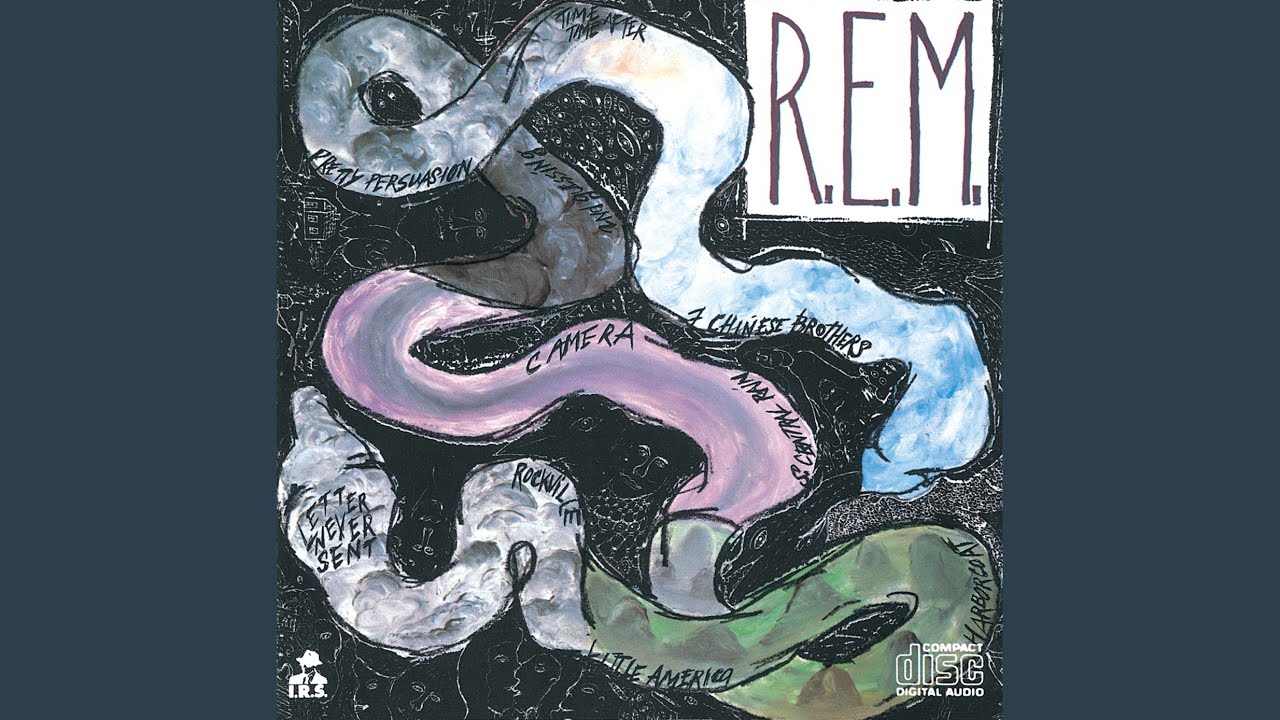
Buck’s influences weren’t exactly shred school either. His favorite guitarists include Chuck Berry, Steve Cropper and the Lovin’ Spoonful’s Zal Yanovsky, served up with a heavy dose of Velvet Underground attitude.
“I really like Steve Cropper a bunch,” he says. “He’s kind of playing these rhythmic lines. That’s something I tried to adopt.”
And it shows. R.E.M.’s early records — from their earliest releases to 1980s hits like “The One I Love” — don’t sound like traditional rock guitar albums; they sound like a cohesive system in which every part leaves space for the others. But it’s Buck’s guitar that pulls it all together.
Even the recording approach reinforced that philosophy. The band often cut tracks fast — sometimes before they’d fully figured them out.
“We just went in and played,” Buck says. “Songs we’ve never played, we’ve recorded them on the first takes a lot of times.
“When we did “Talk About the Passion” [from Murmur], we’d never played it all the way through before. It was like a rehearsal take, and [producer] Mitch Easter said, “That’s fine.”

In that context, the $175 Rickenbacker was the right weapon at exactly the right time. Cheap, unexpected, and completely unglamorous, it ended up helping shape one of the most influential guitar sounds of the decade.
Buck, however, still rejects the idea that gear or genius is the story.
“I think any person who had my history of listening to music — if they picked up an instrument and got into this band — would probably be playing similarly to what I’m doing,” he says.
Perhaps. But not many of them bought a $175 guitar and unintentionally helped define a genre.
