

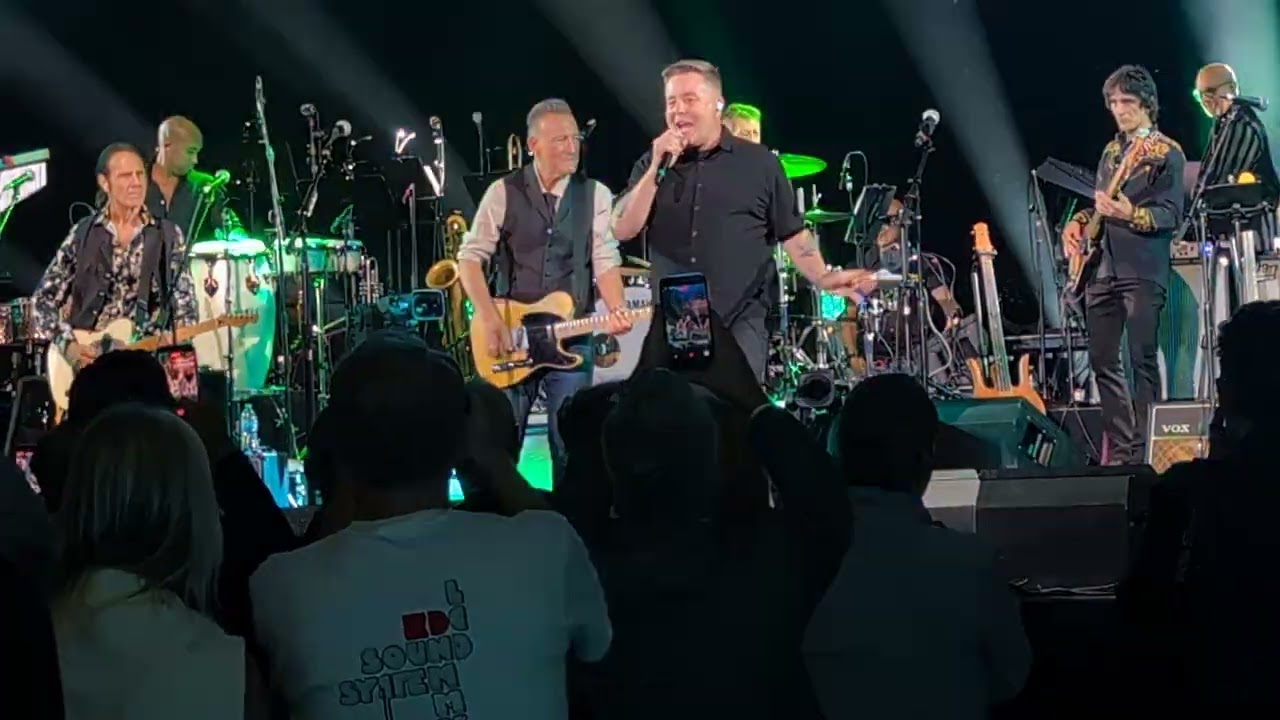
Bruce Springsteen rallied an army of guitarists to celebrate America’s 250th anniversary and the opening of the Bruce Springsteen Center for American Music on June 4 and 5. Over two nights, an eclectic mix of artists — including Jimmie Vaughan, Gary Clark Jr., Sheryl Crow, Rosanne Cash, Jon Bon Jovi and Jackson Browne —interpreted musical selections representing the history of American music.
Part academic history lesson, part Ken Burns documentary, part TED talk — and with 100 percent commitment from every artist onstage — Music America: The Songs That Shaped Us was a joyous homage to the power of song and the melting pot of artists responsible for America’s rich musical heritage.
Instruments as varied as tribal percussion, drums, horns, guitar, voice and turntables fleshed out a song list that encompassed jazz, folk, rock, Irish, blues, gospel, bluegrass, country, hip-hop and R&B.
A highlight of the concerts was the time-honored blues jam, which featured Springsteen trading licks with Clark, Vaughan, Nils Lofgren and Disciples of Soul guitarist Marc Ribler (the show’s musical director) on the Bobby ‘Blue’ Bland classic “Farther On Up the Road.”
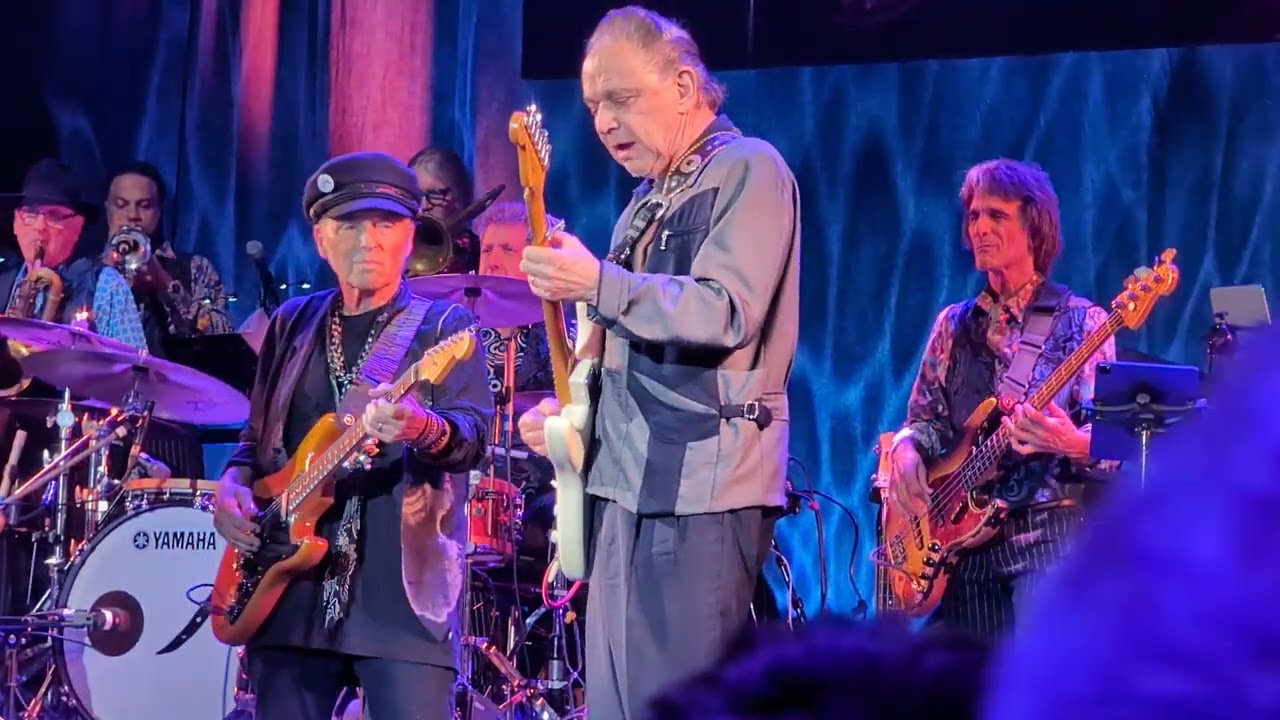
In addition to jamming with the Boss, Vaughan represented the electric blues genre, and specifically Texas blues. As part of the second night’s show, Vaughan brought his Texas swagger front and center with a solid performance of “Texas Flood,” the Larry Davis-penned classic famously recorded by his late brother, Stevie Ray Vaughan.
How do you talk about something so vast and worldwide? You couldn’t have Texas without the blues. But we couldn’t do it without every state.”
— Jimmie Vaughan
“Electric guitars were invented right here in America,” Vaughan told Guitar Player In a pre-show interview. “I’m a student of the Texas guitar players, and the Mississippi/Louisiana area. I love all the guitar playing. There’s a lot of guitar players in Texas and the Southwest, and all over America.
“How do you talk about something so vast and worldwide? You couldn’t have Texas without the blues. But we couldn’t do it without every state. It’s American and it spread all over the world.”
While the electric guitar was the link for most performances on the closing night, the acoustic guitar was front and center for most of the first night’s musical selections. Jazz, blues, folk, country and early gospel were highlighted. Narration and historical context provided in between songs by the Center’s Executive Director and historian Bob Santelli as well as by performers, like Keb’ Mo’.
“A whole lot of us would be doing nothing without Robert Johnson,” the guitarist noted before launching into Johnson’s classic “Crossroads.”

The spirit of Woody Guthrie was well-represented, with Springsteen and Kenny Chesney duetting on “This Land Is Your Land,” while Springsteen and Rosanne Cash sang the immigrant ballad “Deportee.” Boston’s Dropkick Murphys performed a raucous “Shipping Up to Boston,” which features lyrics by Guthrie, and then joined Springsteen for an energetic performance of the Boss’ Guthrie-inspired “American Land.”
Cash also performed the Appalachian ballad “The Parting Glass” and the Carter Family’s “Bury Me Beneath the Willow,” with her husband, John Leventhal, joining her on guitar. Cash — who is the daughter of Johnny Cash and step-daughter of Carter Family core member June Carter Cash — recognized the importance of Mother Maybelle Carter’s pioneering pick-strum style. She recalled learning the technique directly from the source.
“When I was 18, I went on tour with my dad," she said. “The Carter Family and Carl Perkins were on that tour. I spent a lot of time in the dressing room with the Carter women, and they took the time to teach me those old Appalachian ballads. I owe a tremendous debt to those women. I learned those songs and my vision expanded.”

Springsteen kicked off night two’s tribute to pop, soul and rock music with a pair of Elvis Presley songs from different eras: the ’50s hit “Jailhouse Rock” and his early ’70s rocker “Burning Love.”
The significance of Chuck Berry’s guitar playing and lyrical wordplay was captured by Jon Bon Jovi on “Johnny B. Goode” and Steve Van Zandt on “Bye Bye Johnny.”
“Chuck Berry. He wrote the lyrics, baby,” Van Zandt told the crowd.
Sheryl Crow showed her musical depth with admirable interpretations of “I Fall to Pieces,” the 1961 Patsy Cline country-pop crossover hit, a solo acoustic rendition of Bob Dylan’s “A Hard Rain’s A-Gonna Fall” and then inviting Springsteen, former Dylan guitarist Larry Campbell and his wife Teresa Williams on stage for an emotional take on “I Shall Be Released.”

Gary Clark Jr. showcased the funkier side of Jimi Hendrix with a fuzz and phaser-filled version of the relatively obscure “Power of Soul” (a.k.a. “Power to Love”), from Band of Gypsys, while rock pioneer Dion performed his classics “The Wanderer” and “Abraham, Martin and John.”
Nils Lofgren paid tribute to his longtime friend Neil Young with “Rockin’ in the Free World,” shredding guitar leads and sharing vocals with Bon Jovi.
The shows were a kickoff for the opening of the museum, a 30,000-square-foot facility situated on the Monmouth University (NJ) campus. The Center serves as a hub for research, education, exhibitions, and public programming focused on American music and its role in American history and culture.
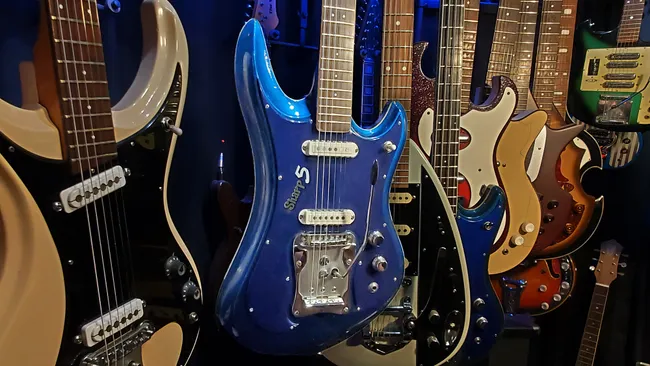
An exhibit titled America's Instrument: The Evolution of the Electric Guitar includes a variety of guitars Springsteen has used over the years, including the Fender Telecaster he purchased for $185 in late 1972/early 1973 from Jersey Shore guitar shop owner and luthier Phil Petillo. The guitar — which features a 1953 Esquire neck and a 1951 Telecaster body — is seen on the cover of his 1975 breakthrough album, Born to Run. Springsteen retired it in 2005 and it now resides in the Center.

The Center’s opening celebration was a two-week event and included two smaller shows that preceded the main event.
The first of these was The Native American Music Experience, which celebrated Indigenous musicians’ contributions to popular music. It featured performances by a solid roster of artists from multiple tribes across America, a group Santelli says has been “under-appreciated, disrespected and ignored for far too long.”
Colorado acoustic fingerstyle guitarist Cary Morin played deft bluesy licks on a detuned guitar on his original “Live a Little.” Using a Weissenborn lap steel, Pura Fé’s soothing melodic playing, subtle slide riffs and ethereal vocals were a highlight of the evening’s performances.
New Mexico’s Levi Platero, a Navajo Nation native and 2016 Native American Music Award recipient for Best Blues, ripped explosive minor blues and volume swell riffs on his Fender Stratocaster on his originals “Start Over” and “Work Hours.”
Florida’s Osceola Brothers high-energy set featured aggressive guitar playing and explosive fuzz-driven riffs and solos from guitarist Cameron Osceola. Celebrated Mohawk guitarist and two-time Juno winner Derek Miller performed with actor and vocalist/harmonica player Gary Farmer.
In addition, a visual gallery paid tribute to key Native American artists that include blues pioneer Charley Patton, Jesse Ed Davis and Link Wray. The evening ended with a singalong jam on the Redbone top-five hit “Come and Get Your Love,” written by Native Americans Pat and Lolly Vegas.
The second event was America 250: A Jersey Shore Celebration of the Nation’s Music Heritage, which featured a cast of locals and legends performing songs in a format similar to the two larger events. They included blues guitarist Sonny Kenn, ace acoustic picker Pat Guadagno and recent American Idol finalist and indie singer/songwriter Jake Thistle, with musical direction coordinated by guitarist/songwriter Gordon Brown.
