GuitarPlayer Verdict
The DSL1CR nails its mission of delivering genuine tube tones at home, with impressive versatility and smart modern features. While the compact speaker brings a slightly boxy character and limited low-end, it remains a compelling option for players wanting an authentic Marshall feel without excessive volume or cost.
Pros
- +
0.1W setting is perfect for home use
- +
Ultra Gain can get very saturated
- +
Footswitch for ergonomic channel switching
- +
Emulated out for home recording
- +
Lightweight and doesn’t take up much room
Cons
- -
Lacks low end due to the smaller speaker
- -
Tone is quite ‘boxy’
You can trust Guitar Player. Our expert reviewers spend hours testing and comparing guitar products so you can choose the best for you. Find out more about how we test.
Marshall’s DSL series, or Dual Super Lead to give it its Sunday name, has been around for the best part of two decades. Sitting somewhere between the affordable MG series and the more expensive UK-made JVM amplifiers, the DSL range has long been a popular choice for guitarists chasing authentic Marshall grit, complete with plenty of mid-range bite whilst not leaving your wallet sore.
Boasting not only the title of the smallest combo in the DSL range, but in Marshall’s entire catalog, the DSL1CR is a 1-watt, all-tube combo designed with home use in mind. It’s also the most affordable tube amp in Marshall’s lineup, making it an accessible entry point for players looking to get into tube amps without it hurting their bank account.
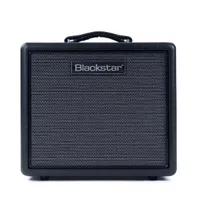
Marshall isn’t alone in this space. Its most obvious competitor is the Blackstar HT series, which also includes a 1-watt tube amp, the HT-1R. During my time working in a guitar store, the HT-1R was consistently one of the best sellers, and I demoed it more times than I can count, making it a natural point of comparison here.
The DSL1CR is equipped with two ECC83 preamp valves and an ECC82 power amp valve, paired with an 8-inch Celestion Eight 15 speaker. On paper, it shares some familiar DNA with larger Marshall designs. As someone who owns a Marshall 1987x Reissue head, which also runs ECC83s in the preamp, I was particularly interested in how that translates into a much smaller, home-friendly format.

When my long-suffering courier turned up with the parcel, there were no words of complaint about how heavy the box was, being used to many cumbersome boxes (and letting me know). This was a good sign in a home-friendly amplifier, as decent portability and dimensions are looked on more favorably, particularly with tube amps that typically weigh a tonne.
It’s compact as well as lightweight and much smaller than my Peavy Classic 30 I placed beside it. At 7.9kg, this isn’t a heavy tube amp. If you’re used to carrying something like an AC30 to gigs, it will feel featherweight.
For most of my testing, I had the DSL1CR on my desktop for ease of access to controls. It’s not quite in the traditional desktop amp dimensions, nor would I call it a mini amp, but certainly the right size for a practice amp. Although you’ll be unlikely to take it out of the house much, it feels very durable. It’s instantly recognizable as a Marshall, with the iconic gold panel and script logo.
Although only a little detail, the on/off switch provides a satisfying click each time you reach for it, whilst the control knobs are large enough for proper control. The white piping is a small but effective touch that gives Marshall vibes in its entirety. When added up altogether, it certainly looks the part.

Like any tube amp worth its salt, the DSL1CR is incredibly easy to use, and even easier to dial in a decent tone. Starting off with the Classic Gain channel, there’s simply a volume control, easy-peasy. The channel switch comes in the form of a button, and when pressed, a red light (red for danger) indicates you’re on the Ultra Gain channel, which has both volume and gain controls.
Both channels share a 3-band EQ, covering treble, middle, and bass. There’s also a global digital reverb that works across both channels, although it can’t be set independently. The tone shift switch reshapes the mids for a more scooped sound, and I found, works particularly well with the Ultra Gain channel.
Around the back reveals a few more modern options. There’s an FX loop and footswitch input, with the included footswitch letting you switch between channels on the fly. You also get a Softube emulated output, allowing you to plug straight into a computer for recording while still using the amp’s tone.
There is absolutely zero lag when switching from one channel to another
On that topic, there is absolutely zero lag when switching from one channel to another. Although you're not going to be gigging this Marshall, that’s a big positive if you ever plan on recording with it whilst switching between channels. The footswitch’s cable is also incredibly long, which allowed me to position the amp at a further distance than I usually would, whilst taking into account its dispersion.
Although 1 watt doesn’t sound like much, this is still a valve amp, and it can get surprisingly loud. That’s why the power reduction switch ended up being my (and my partner’s) favourite feature. Anyone who lives in an apartment will know the struggle, so when I was testing this at 8 pm, dropping it down to 0.1W meant I could play to my heart’s content without annoying anyone. Although the cleaner Classic Gain channel was less aggressive, anything past the 3 o’clock mark on either channel was just too much for home practice.
There’s also a 3.5mm aux input for playing along to backing tracks. It’s not something I used a great deal, but it’s a handy addition if you want to practice with backing tracks or play along to songs.

Out of habit, and perhaps reading habits, I plugged in my Fender Modern Player Starcaster and started from left to right. This guitar is equipped with a pair of The Creamery humbuckers and I was surprised at the warm, clean tone of the Classic Gain channel. I think letting the amp warm up was a good shout and it worked equally well with the single coils of my American Standard Stratocaster.
Hooking up my pedalboard, I opted to go into the front of the amp, instead of the FX loop and my MXR Carbon Copy delay alongside Walrus Audio Slo Reverb was getting plenty of ethereal tones. I was genuinely having a fun time getting lost on the clean side of the DSL1CR.
However, when it turned around midday, and my partner had vacated the building, I started to see what it could do when pushed. It started breaking up around the 4 or 5 mark with the volume, right to the edge of breakup, but when I dug in, there were plenty of creamy tube tones on display. Although I did hear my upstairs neighbors shuffling about after my third rendition of Ain’t Talking About Love – this amp is pretty darn loud – so I decided to switch over to the Ultra Gain Channel.
This channel can get very saturated at low volumes
That may seem counterintuitive when trying to keep it down, but with a gain control, this channel can get very saturated at low volumes. Even more so when the 0.1W low power mode is on. I was having fun playing heavier riffs, and checked out the tone shift a bit more. This switch worked well on the Ultra Gain channel, scooping out the mid-range. It worked very well whilst I was messing around with Sum 41 riffs, but overall, I preferred the natural EQ of the amp; it sounded fuller to my ears.
Also, to my ears, there was a bit of a boxier tone, rather unsurprising considering this amplifier is exactly that, a little box. The 8-inch speaker struggled slightly with low-end, so I was constantly adjusting the bass knob for that added depth. Plus, when I kicked on my Earthquaker Devices Plumes overdrive pedal (which is cranked itself), the speaker did struggle with handling the low-end. However, there are a few compromises you have to make if you want an amplifier this size, and the DSL1CR has plenty of positives that convince me it’s worth it.
Lastly, although Marshall doesn’t state what the digital reverb is emulating, it's got hall characteristics to me. It doesn’t blow me away, but it does the job. Plus, it covers just a touch of ‘verb, to full on cascading waves of lushness, so breadth is certainly something it boasts.

Considering the DSL1CR has one pretty clear mission statement, to make tube tones achievable at home, it certainly earns a pass mark. Having not one, not two, but three genuinely usable tones, clean, overdriven, and distorted, in a tube amp this size and at this price point is a commendable achievement. For players who want tube amps or nothing, it’s a clear winner.
If, like me, you use a 50-watt Marshall head or any other valve amp for gigs, and don’t have something for home, this is a brilliant option. With an accompanying footswitch, FX loop, and emulated out, it blends classic tube simplicity with a few modern features that genuinely add value, without overwhelming you with options.
That said, the tone can sit slightly on the boxy side, with a noticeable lack of low-end. It’s not a deal breaker given the quality of tones on offer, but it may leave some players wanting a little more depth.
Guitar Player verdict: The DSL1CR nails its mission of delivering genuine tube tones at home, with impressive versatility and smart modern features. While the compact speaker brings a slightly boxy character and limited low-end, it remains a compelling option for players wanting an authentic Marshall feel without excessive volume or cost.
Specifications
- Price: £239/$399/€275
- Type: Tube combo amplifier
- Tubes: 2x ECC83, 1x ECC82
- Origin: Vietnam
- Output: 1W (with 0.1W reduction switch)
- Speaker: 1x8" Celestion Eight 15
- Channels: 2, Classic Gain and Ultra Gain
- Controls: Classic gain channel volume, channel select button, ultra gain channel volume and gain, tone shift switch, low power mode button, treble, middle, bass and reverb
- Connectivity: 1/4-inch input, FX loop, footswitch input, 3.5mm emulated out, 3.5mm audio input
- Footswitch: Yes, included
- Weight: 7.9kg/17lbs
- Dimensions: 360x340x215mm
- Contact: Marshall
Also try