
Todd Rundgren was all of 23 when his reputation as a boy-wonder producer landed him a high-profile gig with the star act of the Beatles’ Apple Records. Badfinger were a quartet of British musicians whose name and debut single under that moniker — the Paul McCartney–penned “Come and Get It” — had been selected by the Beatles themselves.
In early 1971, they were riding high on “No Matter What,” a top-10 hit in the U.S., Canada, the U.K. and several other countries. What they needed was a hit album to follow it up.
The result would be Straight Up, the Rundgren-produced album widely regarded as the British quartet’s finest, thanks in great part to its two big hits: “Baby Blue” and “Day After Day.”
But as Rundgren explains, getting there was anything but straightforward. Badfinger — guitarists Pete Ham and Joey Molland, bass guitarist Tom Evans and drummer Mike Gibbins — had already started the album twice.

The initial sessions began in January 1971 with Geoff Emerick, the Beatles’ visionary engineer on albums like Revolver and Sgt. Pepper’s Lonely Hearts Club Band. Emerick had coproduced Badfinger’s previous album, No Dice, which included “No Matter What.”
Unfortunately, the new sessions failed to satisfy Apple’s American arm.
“Apparently the distributor was not satisfied with it,” Rundgren tells Guitar Player. “They didn't think they could promote it, or didn't hear a single or something, and said, ‘Okay, start over.’ So the band started over with George Harrison.”
Harrison approached the project roughly six months after releasing his own landmark solo effort, All Things Must Pass. Production began in May, but Harrison was soon swept up in organizing the Concert for Bangladesh after his friend Ravi Shankar brought the humanitarian crisis to his attention.
They got maybe five songs in and George got completely involved in the Concert for Bangladesh. That’s when I got the call — producer number three.”
— Todd Rundgren
“They got maybe five songs in and George got completely involved in the Concert for Bangladesh and told the band, ‘I’m finished. I can't do this.’ That’s when I got the call — producer number three.
“At the time I was developing a reputation for getting things done very quickly, no nonsense. The label was looking for some assurance that the record would actually get finished. That’s when I inherited the project.”
By then, Rundgren had established himself as a rising production talent through his work at Bearsville Records — the upstate New York label run by Bob Dylan manager Albert Grossman — and on projects like the Band’s 1970 album Stage Fright. He’d also launched his own solo career under the name Runt, releasing two albums that showcased his increasingly adventurous songwriting talents and production style.

With Apple demanding a fast turnaround, Rundgren took stock of what had already been recorded.
“There was a whole album by Geoff Emerick. I think we lifted a couple tunes from that,” he says. “‘Flying’ was one of them. Then the George Harrison tunes — we used some of those, although most had to have parts re-recorded. It all sounded like Phil Spector. That was George’s thing at the time.”
Spector had, of course, overseen the heavily layered Wall of Sound production on All Things Must Pass, and Harrison brought a similar approach to Badfinger’s sessions.
“So when he produced Badfinger’s record he was doing all these Spectory things, like having three acoustic guitars playing — all this overdubbing and swampy reverb printed on the drums and stuff like that,” Rundgren explains. “I had to undo some of that.
“And then we recorded probably five new songs, of which ‘Baby Blue’ was one of them — the very first thing we recorded,” he reveals. “Then somehow I had to make it all sound cohesive.”

Rundgren ultimately completed the album at Bearsville Studio.
“I took it all back to Bearsville and somehow got it to sound like one record,” he says. “Geoff Emerick was not credited, but for some reason George Harrison was credited on ‘Day After Day.’”
Fifty-five years on, the slight still irritates him.
“He gave up on the project,” Rundgren says. “The only time I ever met him he said, ‘I’m done. Do whatever you want with it. Use it or don't use it.’
“Essentially he had no time to shepherd it. I heard nothing from him during the rest of the production.”
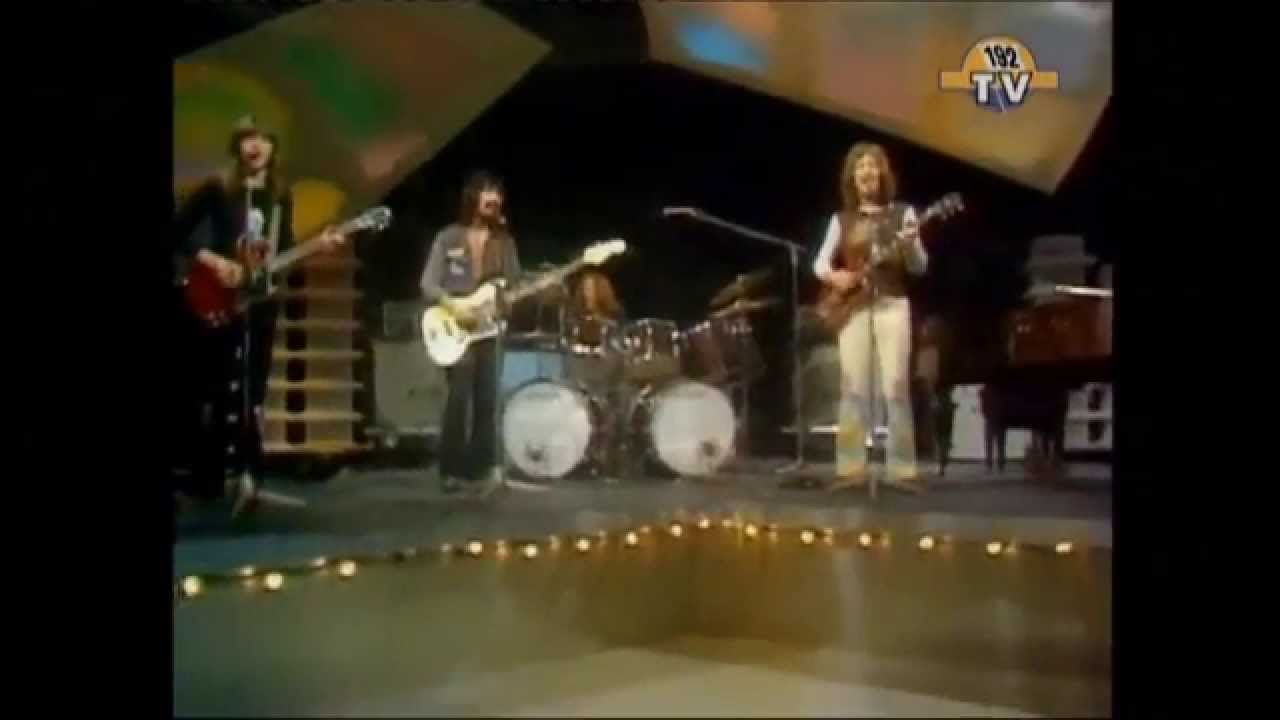
Straight Up would go on to produce two major hits in “Baby Blue” (number nine in the U.S.) and “Day After Day” (number three). Although critics were lukewarm at the time, the album would eventually come to be regarded as Badfinger’s finest work. “Baby Blue” would enjoy a a massive cultural resurgence in September 2013 when it was used in the final scene of the hit series Breaking Bad.
Despite their remarkable good fortune to land in the Beatles’ orbit, Badfinger were plagued by disastrous management. Pete Ham died by suicide in 1975, followed by Tom Evans eight years later.
Rundgren didn’t have an opportunity to revisit the album with Harrison in the years that followed.
“I never had reason to run into him, even though I was spending a lot of time in Hawaii,” he explains. “I would always come out to Kauaʻi, and he lived on Maui, I believe. But we never did cross paths.”

