
When Eric Clapton asked Phil Collins to produce Behind the Sun in 1985, he wasn’t looking for someone to reinvent him. He’d already worked with legendary producers, played with everyone from John Mayall to Derek and the Dominos, Cream and Blind Faith, and long since earned his place among rock’s greatest electric guitar players.
Behind the Sun would become an important turning point in Clapton’s career. After a period in the early 1980s when he remained highly respected but had slipped from the commercial heights he’d reached in the previous decade, the album marked the beginning of a renewed run of mainstream success. Its eventual hit single “Forever Man” helped reintroduce Clapton to a wider audience and set the stage for the resurgence that would follow later in the decade.
But Collins understood something important: his job was not to show Eric Clapton how to play guitar. It was not to impose his own identity on one of rock’s most distinctive musicians. It was to find what was missing — and help bring it back.

Looking back years later, Collins recalled listening to Clapton’s previous album, Money and Cigarettes, and feeling that something wasn’t quite connecting. The playing was unmistakably Clapton, but Collins felt the guitarist had stopped pushing himself creatively.
“Money and Cigarettes was a little lame,” Collins told Rock and Roll Garage. “I think he was on automatic pilot. I kicked him out of that and made him start writing.”
Home recording was beginning to transform the way musicians worked, and Collins was one of its biggest advocates. He encouraged Clapton to keep some basic recording equipment at home so ideas wouldn’t disappear before they became songs. Clapton never became the home-recording enthusiast Collins hoped he might, but he did start keeping a cassette recorder close by. Song ideas accumulated, melodies were captured before they were forgotten, and little by little they became the foundation of Behind the Sun.
It was great with Phil, because he’s a real fan.”
— Eric Clapton
The same instinct shaped the way he approached Clapton’s guitar playing. Many producers earn an artist’s trust by identifying what needs to change. Collins seemed to earn it through enthusiasm — but that enthusiasm was backed by a willingness to make decisions.
“It was great with Phil,” Clapton told Guitar Player in July 1985, “because he’s a real fan.”
Whenever Clapton played a solo and asked what Collins thought, the answer rarely varied. “It’s dynamite, man. Dynamite!” Collins would say. Clapton would shake his head. “No, it isn’t.”
The exchange became almost comical, but it revealed something important. “I felt like I could have played anything, and he’d love it,” Clapton admitted. “That’s great from a producer.”
Far from flattering Clapton, Collins was attempting to quiet his inner critic and help rebuild his confidence. It worked. Rather than laboring over a single “perfect” guitar solo, Clapton would attempt a handful for his producer’s consideration.
“I’d do three or four solos on a song and say, ‘You sort it out,’” he told Guitar Player.
Clapton admitted that after hearing the same solo several times, he’d become tired of it, unable to judge it objectively anymore. Collins, by contrast, delighted in the painstaking work of listening, comparing, and assembling performances from multiple takes. On “Just Like a Prisoner,” Clapton recalled, Collins edited the finished solo together from a much longer performance, choosing the moments that best served the song rather than insisting on a flawless take from beginning to end.

It’s an aspect of Collins’ production style that’s often overlooked. Known publicly as a drummer, songwriter and frontman, he approached the studio less as a taskmaster than as a curator, convinced that the best performance was usually already there if you listened carefully enough.
One of Collins’ favorite memories came after the album was supposedly finished. Clapton rang to say he’d written one more song. It was “Behind the Sun.”
Instead of returning to a commercial studio, Clapton arrived at Collins’ house carrying little more than an acoustic guitar. Collins later laughed at the irony of finding himself responsible for recording Eric Clapton’s guitar without the experienced engineers he normally leaned on. For a producer who had spent years behind the drum kit, the prospect was both exhilarating and faintly terrifying.
The song they captured that day became the album’s title track.
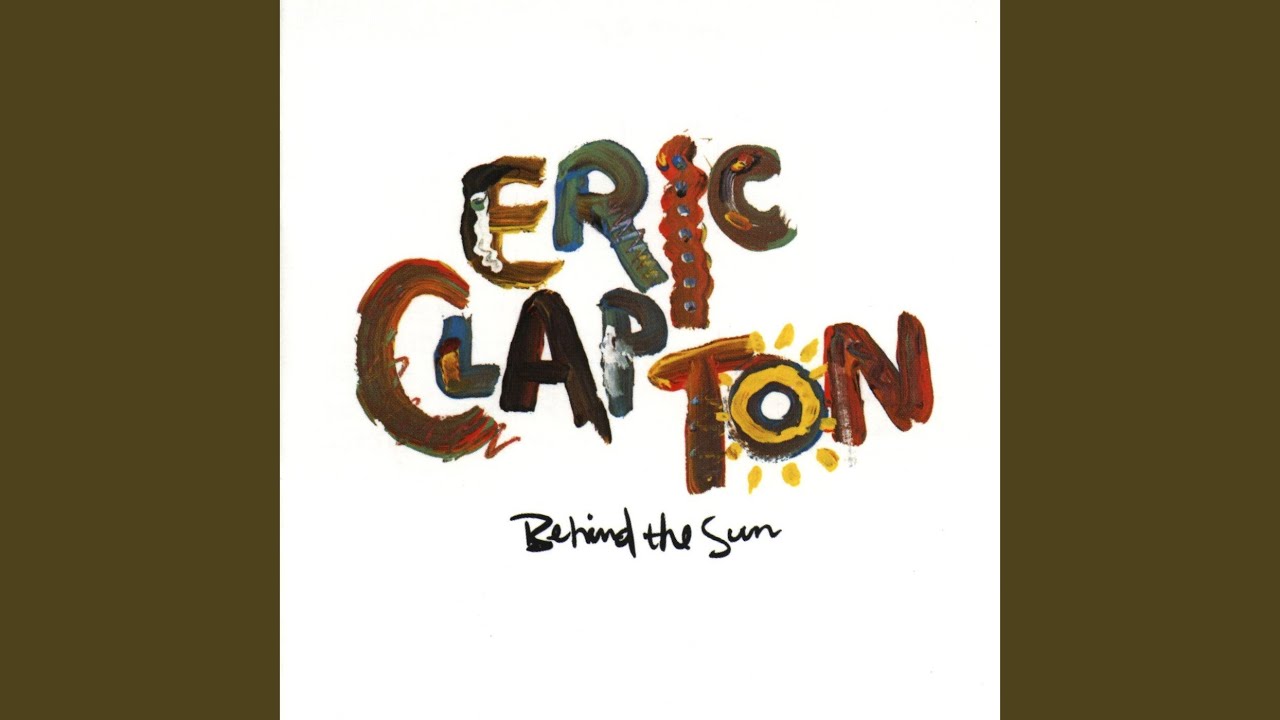
Perhaps the clearest indication that Collins’ approach had worked came not years later in an autobiography or retrospective interview, but while the album was still new. Asked where Collins ranked among the producers he’d worked with, Clapton first named the legendary Tom Dowd before immediately adding, “Phil is a different kettle of fish. I love him, and he’s a great musician also, so he’s got another angle.”
Then he offered a compliment few producers ever receive.
“If I could get the two of them to produce a record together,” he laughed, “that would be it for me. They’re my ideal producers.”
For a guitarist who had worked with some of the most respected producers of the previous twenty years, it was remarkable praise. It also confirmed something Collins himself understood about production: it wasn’t about imposing your personality on another artist. It was about creating an environment in which they could become more fully themselves.

The irony, of course, is that the only people who weren’t completely convinced were the executives at Warner Bros. After hearing the completed album, the label decided it needed stronger commercial singles. Clapton returned to the studio with Ted Templeman and Lenny Waronker, recording additional tracks — including “Forever Man” — before Behind the Sun was finally released.
It’s easy to view that episode as a rejection of Collins’ work. In reality, it says more about the priorities of mid-1980s record companies than it does about the album he and Clapton had made. By the label’s standards, the record needed bigger hits. By Clapton’s standards, he’d just worked with one of his ideal producers.
Nearly forty years later, that’s the story that endures. Phil Collins never taught Eric Clapton how to play guitar. He simply reminded one of the greatest guitarists in rock history that he already knew how.
