

When Steve Khan arrived at Automated Sound Studios in New York on March 18, 1981, to record with Donald Fagen, he expected to work with the meticulous musician he’d come to know through Steely Dan. What he encountered was something rather different: a songwriter in transition, still figuring out exactly what he wanted his music to sound like.
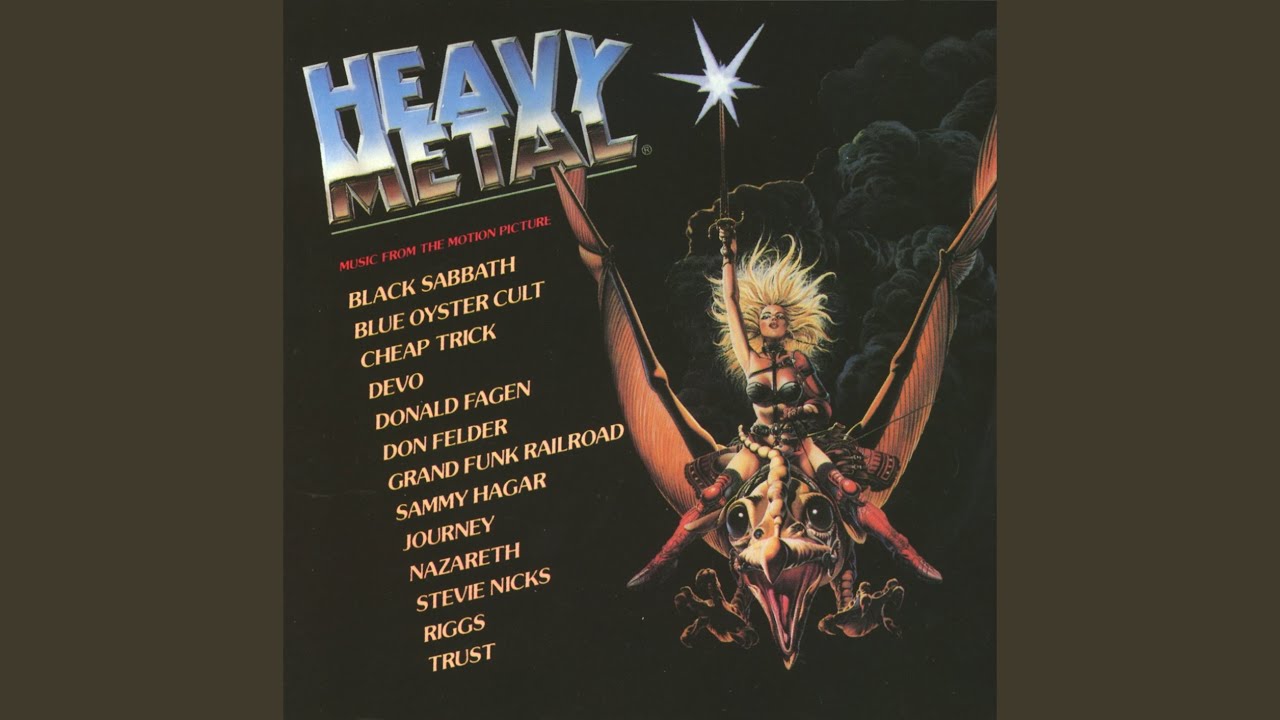
Fagen was recording “True Companion,” a track for the soundtrack to the animated science-fiction film Heavy Metal. With Steely Dan’s partnership with Walter Becker winding down, the session offered Fagen an opportunity to explore working independently. And, as Khan remembers, the singer wasn’t necessarily arriving with all the answers.
“I’m not at all certain that Donald knew what form or style this piece was going to take on,” Khan tells Guitar Player. “But he was surrounded and supported by players with a great sense of arranging, structure and dynamics.”

Those players included Khan on guitar, keyboardist Don Grolnick, bassist Will Lee and drummer Steve Jordan. It was an accomplished lineup, and their collective instincts would help give the track its shape.
Khan had already established a working relationship with Fagen and Becker, having first played with Steely Dan on their 1977 album Aja, contributing guitar to “Peg.” He returned for the Gaucho sessions, although the experience of working with the band’s two principals hadn’t always been comfortable. Their exacting studio methods could make for difficult sessions, but Khan gradually came to appreciate their attention to detail.
After 14 years of working together, Walter and I felt we needed a break from each other. Frankly, we thought that the last album, Gaucho, was sort of, uh, lacking in spark.”
— Donald Fagen
By early 1981, however, Becker and Fagen were moving in different directions. In a January 1983 interview with Richard Cook for the U.K.’s New Musical Express, Fagen explained why the partnership had reached a crossroads.
“After 14 years of working together, Walter and I felt we needed a break from each other. Frankly, we thought that the last album, Gaucho, was sort of, uh, lacking in spark.”
Fagen’s contribution to Heavy Metal was an early opportunity to see what he could accomplish outside the Steely Dan framework. The soundtrack — whose title track included the Don Felder hit of the same name — brought together a roster of guitar-oriented rock acts, including Black Sabbath, Blue Öyster Cult, Sammy Hagar, Nazareth and Journey. Fagen took a different approach, delivering an atmospheric track that featured some particularly inventive guitar work from Khan.

The guitarist remembers the recording as a collaborative process, with Fagen gradually settling on the sounds and arrangements he wanted.
“It took him a long time to decide upon a ‘melodic voice’ for this piece — eventually arriving at the kalimba sound, which I believe synth expert Ed Walsh programmed for him,” Khan says.
“It took him a long time to decide upon a ‘melodic voice’ for this piece — eventually arriving at the kalimba sound, which I believe synth expert Ed Walsh programmed for him.”
— Steve Khan
“As always, Steve Jordan came up with his own approach to the drums and the groove, probably with some input from Donald. Especially great was Steve’s use of the foot-closed hi-hat on all the upbeats, giving the piece a double-time feel when it’s really in half-time.
“Of course, whenever Don Grolnick was present, he always became the bandleader, no matter whose session it was. His playing gave shape and feeling to everything. And Donald’s vocal arrangement was spectacular, too.”
There was also a significant change in Khan’s guitar arsenal. During the Gaucho sessions, Fagen had encouraged him to try a Gibson Les Paul, telling him, “In your hands, it would sound great.” Khan took the suggestion seriously, purchasing a Les Paul from Gibson’s Heritage Series shortly before the “True Companion” session.
He used it for all the electric guitar parts, alongside a David Russell Young acoustic guitar for the track’s acoustic passages. His other familiar instruments included a ’70s Fender Telecaster Custom, a 1963 Fender Stratocaster and a Gibson ES-Artist.
Fagen also gave Khan considerable latitude in developing the guitar parts.
“Donald sought my input about the guitars and their solo spots,” he recalls. “I don’t think that he originally heard the acoustic guitar in there, as that was my idea. As for the electric guitar solo, I did a number of passes through it and I think that we ended up making a composite and he had me add in some phrases where he wanted it to be different. But I had a lot of freedom. The power chord stuff was all my idea, too.”
Khan used the studio’s own amplifiers rather than bringing in his usual equipment. “As this was New York and not Los Angeles, I just played with the house amps at Automated Studios,” he says. “I’m guessing that I might have had a Roland Jazz Chorus JC-120. For all of the volume pedal stuff that I did, I used a MXR Flanger.”

Perhaps the most striking aspect of the session, though, was how different Fagen seemed when working without Becker.
“Donald was great to work with on this session,” Khan says. “He was free of any distractions — other than us, the players — and he felt free to ask for what he wanted, even if he wasn’t sure of that himself. At that moment, I think that he enjoyed working that way.”
Fagen would soon channel that creative freedom into his first solo album, The Nightfly, released in 1982. Khan returned to contribute acoustic guitar to “The Goodbye Look,” one of the record’s standout tracks.
In retrospect, Fagen acknowledged that making the album had helped him move beyond a creative impasse that had developed during Steely Dan’s final years.
“I had come to the end of whatever kind of energy was behind the writing I had been doing in the ’70s, and The Nightfly sort of summed it up for me in a way,” Fagen told Richard Cromelin of the Los Angeles Times in November 1991.
“And although I would work every day, I essentially was blocked because I didn’t like what I was doing. I’d write a song and then a week later I just wouldn’t connect with it at all. It seemed either I was repeating myself or it just bored me. It wasn’t relevant to what I was going through at the time.”

