

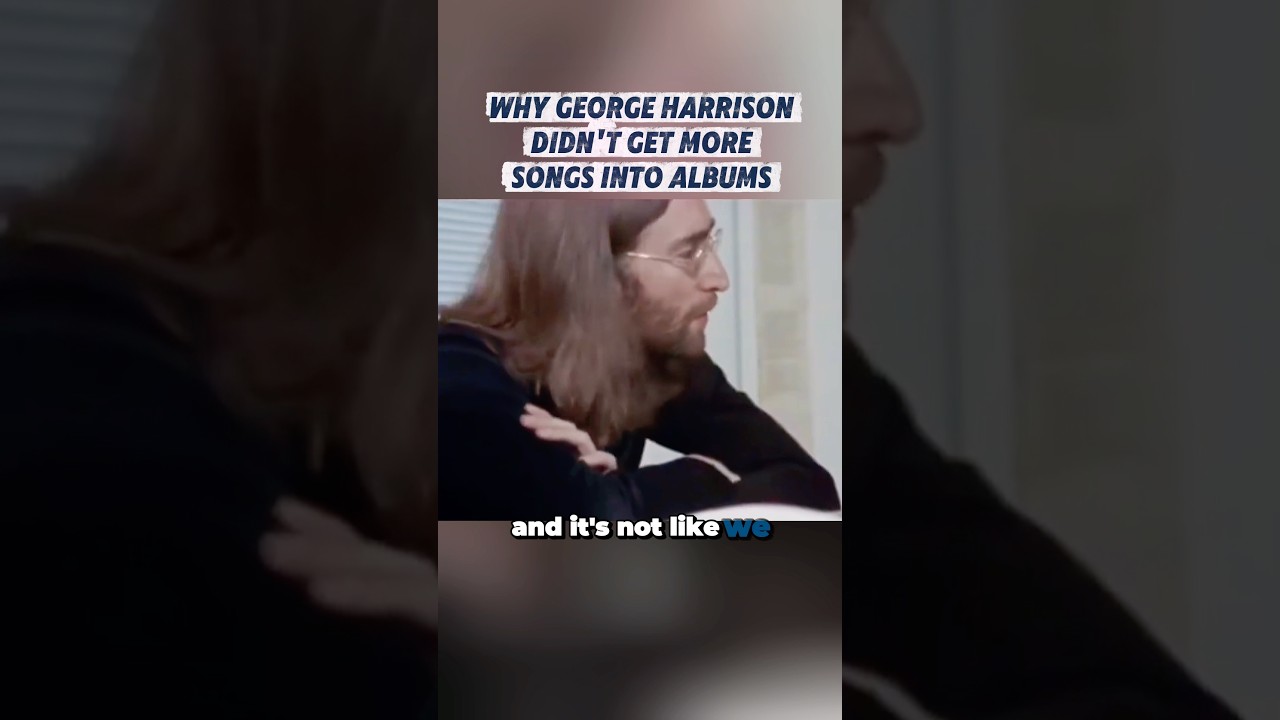
John Lennon knew George Harrison had been getting a raw deal in the Beatles. In a candid 1969 interview, he acknowledged that Harrison regularly lost out when it came to getting his songs onto the group's records — not because of personal animosity, but because Lennon and Paul McCartney were more forceful about getting their own material heard.
“That’s the hang-up we have,” Lennon admitted.
Younger and less forthright than the Beatles’ chief songwriters, Harrison had spent much of his time in the group fighting for space. Even as his songwriting developed into one of the band’s great creative assets, his contributions repeatedly took a back seat to those of Lennon and McCartney.

He had famously enlisted Eric Clapton to help bring “While My Guitar Gently Weeps” to life, producing a hit that demonstrated his growing stature as a songwriter. But the imbalance remained. Across the Beatles’ final three albums, Yellow Submarine, Abbey Road and Let It Be, Harrison received just two songwriting credits on each, while Lennon and McCartney continued to dominate the track listings.
Lennon was well aware of the problem. Speaking to the New Musical Express in 1969, as speculation about the Beatles’ future intensified, he offered a candid explanation for why Harrison’s songs had so often been overlooked. It wasn’t necessarily personal, he suggested. It was simply a matter of numbers — and who was better at getting their way.
“In the old days, when we needed an album, Paul and I got together and produced enough songs for it,” Lennon said (via Rolling Stone). “Nowadays, there’s four of us, three of us writing prolifically and trying to fit it all into one album. Or we have to think of a double album every time, which takes six months.”
The competition for space had become a genuine problem. Lennon acknowledged that neither he nor McCartney wanted to spend months making records on which they barely featured, but recognized that Harrison had been getting the worst of the arrangement.
“That’s the hang-up we have,” he continued. “It’s not a personal, ‘The Beatles are fighting’ thing, so much as an actual, physical problem. None of us want to be background musicians most of the time. We didn’t spend 10 years making it to have the freedom of recording studios, to be able to have two tracks on an album.”
For Harrison, who McCartney has admitted was nearly deemed too young to join the group in the first place, that frustration had been building for years.
“It’s nothing new. It’s human,” Lennon added. “I’m more interested in my songs, Paul’s more interested in his, and George is more interested in his, that’s always been the case. It’s just that usually in the past, George lost out because Paul and I are tougher.”
Harrison’s relative reluctance to fight for his place had undoubtedly contributed to the imbalance. A meeting with Bob Dylan helped him recognize just how much his talents had been underused, with Dylan later suggesting that, had Harrison been fronting his own band, “he’d have been probably just as big as anybody.”

Intriguingly, Lennon had also devised a proposal to keep the Beatles together beyond 1970. Seemingly sympathetic to Harrison’s predicament, he suggested a more equitable arrangement for how the group’s songwriters would contribute to future albums, giving Harrison a greater share of the creative space. But the idea never progressed beyond the band’s final meeting.
Harrison would soon have the opportunity to demonstrate what he could do without those restrictions. His first major solo statement, All Things Must Pass, arrived in November 1970 and became a major commercial success, topping the U.S. and U.K. album charts. The sprawling triple album was a remarkable vindication for a songwriter who had spent so long struggling to get his material onto Beatles records. Its sheer size also suggested just how much music he had accumulated while in the group.
Yet, ironically, freedom from the Beatles wasn’t quite what Harrison wanted. Despite establishing himself as a successful solo artist, he reportedly missed the experience of playing in a band. And there was one former bandmate in particular with whom he would have happily formed a new group.

